Azure Power refinances its 600MW Rajasthan solar project at the lowest rate of interest in its portfolio to date
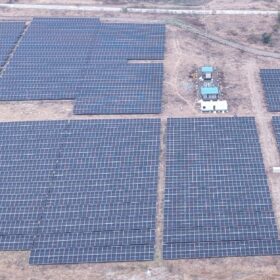
The Indian developer has refinanced its existing term loan of INR 23.50 billion (US$ 313 million) for the 600MW solar project at an interest rate of 7.2% per annum, fixed for 42 months.
IFC to support development of a 600MW solar park in Uttar Pradesh
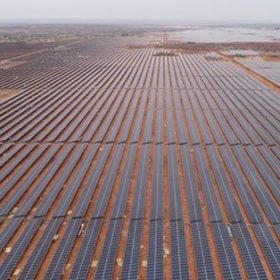
The solar project-ready site will be developed by state-run hydropower company THDC in a joint venture with the Uttar Pradesh New & Renewable Energy Development Agency. The International Finance Corporation will lend its expertise to attract private investment for the public-private partnership.
IIFL Home Finance signs $68 million loan agreement with ADB
The funding is aimed to boost women’s access to affordable green housing in India. It includes up to $58 million direct loan by the Asian Development Bank and a $10 million concessional loan by the Canadian Climate Fund for the Private Sector in Asia.
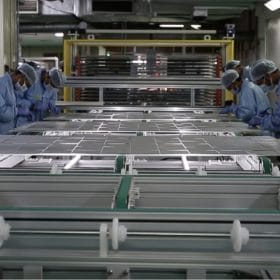
ICRA expects strong demand outlook for domestic solar manufacturers
As domestic solar manufacturers relying on imported cells remain exposed to price fluctuations, timely commissioning and ramp-up of on-going capex in module manufacturing value chain remains critical in the near to medium term.
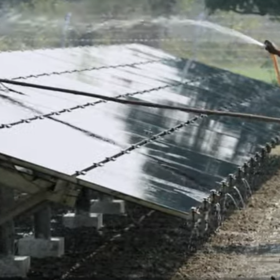
Husk Power Systems secures largest-ever debt finance for solar microgrids in rural India
The Bihar-based rural clean energy services provider has received US$4 million from India Renewable Energy Development Agency (IREDA) to construct 140 microgrids in the states of Uttar Pradesh and Bihar.
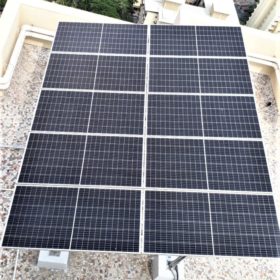
Rooftop solar price to keep rising this year
British analyst GlobalData has predicted residential and commercial rooftop panels will not return to a declining price trend until next year, with post-Covid logistics headaches the cause, rather than a polysilicon shortage.
India, Denmark to fund joint R&D projects on green hydrogen fuels
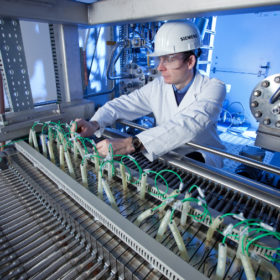
The Department of Science & Technology, Government of India, and the Innovation Fund Denmark (IFD) have collaborated to fund Indian and Danish researchers on the joint development of green fuels including green hydrogen.
New poly fabs could head off first-half solar project slowdown
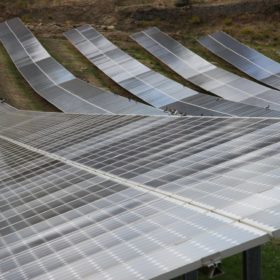
Norwegian analyst Rystad Energy has warned the solar industry could suffer the same effects of rising input prices as onshore wind developers grappling with ever more costly steel, with much hinging on how much solar panel raw material polysilicon can be manufactured.

Rajasthan signs pacts for over 90 GW of renewable energy projects
State-owned power producers THDC India, NTPC, NHPC, and SJVN have committed investments to build 10 GW of renewable energy capacity each. Among private firms, Reliance plans 20 GW and Axis Energy Group 28 GW of solar projects and 4 GW solar module manufacturing facility.

Solar manufacturers request early allocation of INR 19,500 crore boost to PLI Scheme
All stakeholders are expecting the Indian Renewable Energy Development Agency Limited (IREDA) to expedite and issue letters of award to balance companies that have bid under the production-linked incentive (PLI) scheme for solar. Most players have already acquired land and some have even done the land development work and basic construction in anticipation of the award pending for the last three months.