Nuanced renewables need novel risk solutions: India Ratings
While stress in the renewable sector can only be averted if long-term viability of the project is intact, prevention of default due to issues temporary in nature is also the need of the hour—says a report by the ratings agency.

Azure Power raises $75 million from Canadian investor CDPQ
The investment raises CDPQ’s equity interest in Azure Power to 49.4% from 41.4%. The proceeds will be used by the developer to fund its current projects.
Fourth Partner Energy secures US$ 50 million loan from Bank of America
The revolving credit facility will help the Hyderabad headquartered distributed solar developer finance new projects as it looks to add about 250 MW of capacity this year.
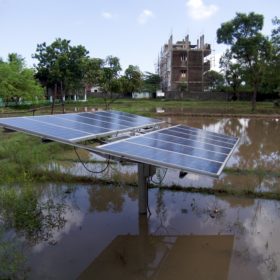
Uttar Pradesh govt aims to support 75 MW farmland solar plants in 2019-20
Under KUSUM scheme, the state government will help farmers in setting up an aggregate 75 MW capacity of grid-connected solar plants—in capacities of up to 2 MW—on their barren or cultivable land.

“Our LFP battery technology is ideal for the Indian market”: SimpliPhi Power CEO
California-based SimpliPhi Power, which designs and manufactures lithium ferro phosphate (LFP) energy storage systems, has brought off-grid power to everything from the giant moon on Conan O’Brien’s talk show set to U.S. troops in Afghanistan and Iraq, to rooftops for Whole Foods and Airbnb. As the company prepares to enter into India, CEO and President Catherine Von Burg tells pv magazine why their LFP technology is best suited for India and their plans for the country.
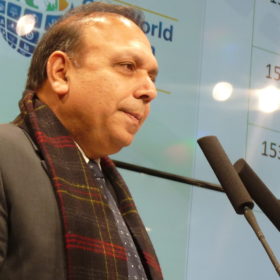
Government committed to de-risking renewable energy investments: MNRE Secretary
The minister’s statement comes at a time when analysts fear that potential disregard of past contractual agreements in Andhra Pradesh, along with the regular curtailment of renewable energy facilities and delayed payments to developers, may drive foreign investors away from India’s renewable energy sector.

Indian government leading by example in renewable energy adoption: IEEFA
Government incentives driving state-owned enterprises’ investment away from the soon-to-be stranded fossil fuel based assets are a way of further boosting investment in the renewable energy sector.
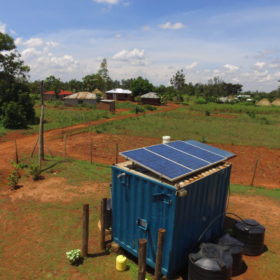
COP25: India calls for speedier expansion of International Solar Alliance
Launched in November 2015, the alliance aims to collectively address key challenges to the scaling up of solar energy in member countries that fall between Tropic of Cancer and Tropic of Capricorn. Out of 121 prospective member countries, over 83 have already joined it in a period of just four years.
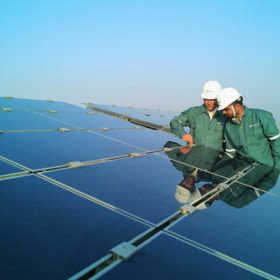
Sembcorp to buy remaining stake in Indian arm for Rs 4060 million
Following equity injection of about Rs 5169 million, Singapore-based integrated energy player has signed an agreement to invest another Rs 4060 million in Sembcorp Energy India Ltd to gain complete control over it and pursue growth in the India renewable energy business.
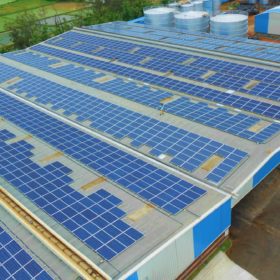
Corporate renewable power procurement: Global models and their suitability for India
Commercial and industrial (C&I) sector consumes 51% of the total electricity generated in India, with a mere 3% of this consumption coming from renewable energy. To increase renewable energy uptake among C&I consumers, India needs to explore new models like virtual power purchase agreements, green tariffs, internationally tradable RECs that have already been successfully tried and tested in many countries—according to a report by climate advocacy group WWF India.