Waaree completes supply of 300+ MW solar modules for American project
The Indian solar manufacturer supplied its 385Wp and 390Wp mono PERC solar PV modules for US-headquartered CIM Group’s 250 MW solar photovoltaic project.
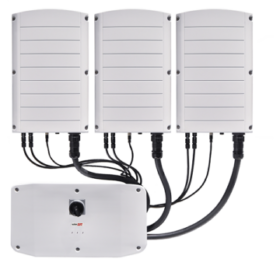
Israel’s SolarEdge launches expanded line of commercial inverters
SolarEdge’s new three-phase inverters are available in variants up to 120 kW, with integrated monitoring and a modular design.
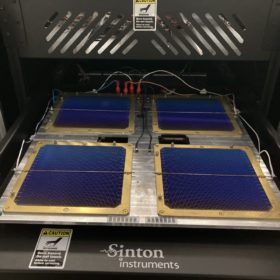
New tech may bring heterojunction solar cells based on p-type wafers closer to mass production
An Australian-Russian research group has developed a silicon heterojunction solar cell based on p-type gallium-doped wafers with an efficiency of 22.6% and an improved stability. The scientists are convinced that these wafers may become a mainstream solution for the SHJ segment within the next decade.

‘Polysilicon shortage will continue through 2021’
The latest global PV industry outlook published by trade group SolarPower Europe, has indicated tight supply of the solar panel raw material is expected to persist this year but the trade body said it would be unlikely to drive further price rises.

CEO survey shows renewable energy industry in upbeat mood
A survey conducted among top executives in the renewable energy industry elicited positive feedback on most fronts, including government policies, demand for renewable power as well as land.
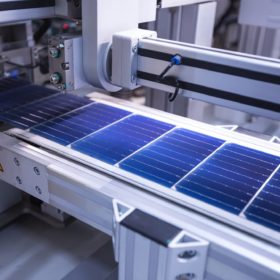
Longi claims 25.19% efficiency for p-type TOPCon solar cell
Longi’s 25.19% efficiency rating for its new p-type TOPCon solar cells, confirmed by the Institute for Solar Energy Research in Hamelin, is reportedly a world record.

GameChange Solar to set up India operations
The New York-headquartered solar racking solutions provider is opening an India office with an eye on business development, engineering, and manufacturing support. The company has more than 12 GW of projects either operating or under development across the world.

Vikram Solar opens 1.3 GW mono PERC module factory
Vikram Solar has reached an overall module production capacity of 2.5 GW with the opening of a 1.3 GW fab in Chennai. The Chennai facility will produce mono PERC modules with a peak output up to 640 watts.

Grevol to use CATL lithium cells for EV battery packs
The New Delhi-based electric mobility firm has launched electric vehicle (EV) battery packs using lithium-ion cells from China’s Contemporary Amperex Technology Co. Ltd. (CATL).
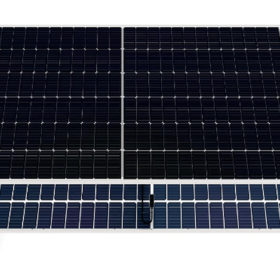
Solar module for floating PV from Hyundai
The bifacial panel has a power output of up to 485 W and an efficiency of up to 21%. It relies on a transparent backsheet and is encapsulated with polyolefin elastomer (POE).