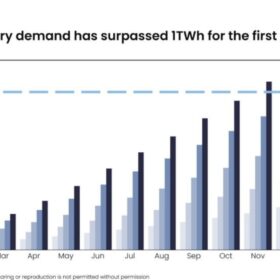
Annual lithium-ion demand surpasses 1 TWh for first time
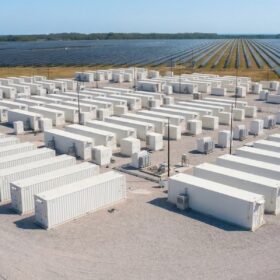
The big milestone comes on the back of a record month for electric vehicle sales and strong battery energy storage system (BESS) deployment. However, EV demand remains far behind BESS with the latter’s impressive growth reaching a year-on-year increase of 175% and cumulative 19.4 GWh deployed in November alone.
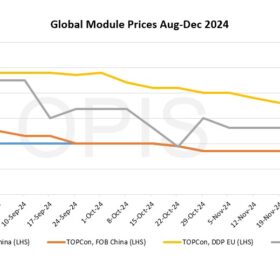
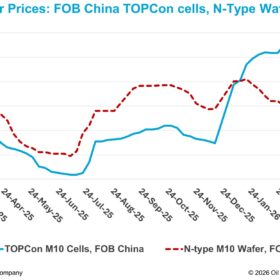
Global solar module prices stable-to-firm as markets wind down for year end
In a new weekly update for pv magazine, OPIS, a Dow Jones company, provides a quick look at the main price trends in the global PV industry.

Waaree starts solar module production at its USA facility
Waaree Solar Americas has started trial production of PV modules at its facility in Texas. The facility is set to fully commission its Phase-1 manufacturing capacity of 1.6 GW in the next few months.
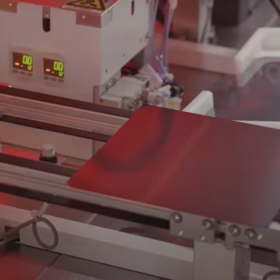
India’s solar PV cell manufacturing capacity to reach 60 GW by FY 2027
India’s solar cell manufacturing capacity will reach 60 GW by FY 2027 from 8 GW as of March 31, 2024. The resultant capacity growth will make India a surplus market, given the annual module requirement of 40-50 GW, necessitating that the domestic players tap the export markets.

Antidumping investigation could more than double cost of U.S. EV battery, energy storage
Anti-dumping, countervailing duties on battery materials could have serious effects on the EV and energy storage markets, as the battery material and manufacturing markets in the U.S. are still in very early stages.
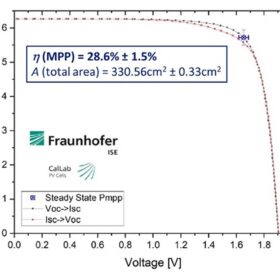
Qcells hits 28.6% efficiency with scalable perovskite-silicon solar cell
South Korea-based solar module manufacturer Qcells has set a new efficiency world record for a commercially scalable perovskite-silicon tandem solar cell, produced at its pilot line in Germany.

Nexwafe claims 24.4% efficiency for heterojunction solar cell built with its ultrathin wafers
The German wafer manufacturer said the efficiency was achieved with an unspecified M6 HJT commercial production line, without specifying if the result was certified by an independent third party.
New US solar manufacturer to open 2.5 GW HJT factory
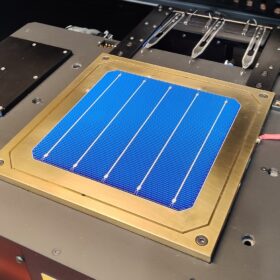
NuVision Solar – a newly formed, US-owned and operated manufacturer – has revealed plans to produce heterojunction (HJT) solar cells and modules.
ALMM cell mandate will drive up capital cost for solar developers, says Crisil report
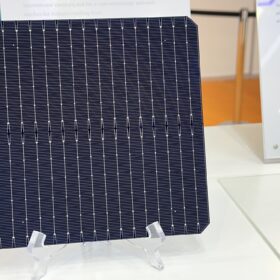
The prices of domestically manufactured solar cells are 1.5-2 times more than alternatives from China even after basic customs duty. Such high prices can drive up the capital cost of solar power projects by INR 5-10 million/MW and, in turn, tariffs by 40-50 paise per kWh, says CRISIL Market Intelligence and Analytics.

Trump touts solar trade tariffs
While the Inflation Reduction Act (IRA) is reshoring solar manufacturing in the United States, raising import tariffs may slow momentum. The actions of the incoming Trump administration are tough to forecast at this point.