7 GW solar tender gets one-week extension—but will it help?
The manufacturing linked ISTS tender may face a ‘no bid’ situation even with amendments and bidding extensions, industry insider Gopal Lal Somani tells pv magazine as he explains the major reasons for developers’ cold response to some of the recent tenders.
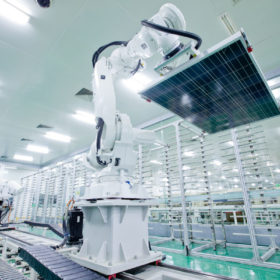
JinkoSolar launches Tiger module Down Under
The Chinese manufacturer officially unveiled its high-efficiency product in Melbourne after celebrating a 13.6 MW panel order from the nascent Hungarian PV market.
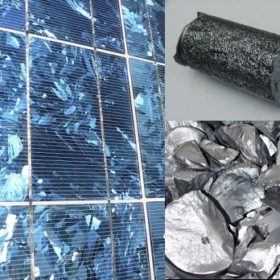
Solar cells using imported blue wafers will not qualify as domestically manufactured: MNRE
The decision is likely to push upstream solar manufacturing in India, which currently has negligible wafer and cell production capacity to meet domestic content requirements for government projects.
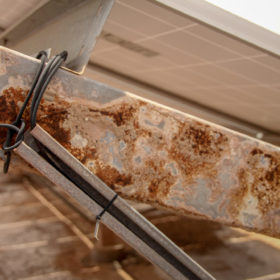
Bangladeshi developer accuses India of dumping poor quality panels over the border
Visitors to this year’s Solar Bangladesh Expo have called for the implementation of quality standards on solar imports – action which the government is currently pursuing – with one industry insider rubbishing Indian-made products.
Manufacturing-linked solar tender scaled up to 7 GW
Solar generation capacity aggregating to 7 GW—as against 6 GW earlier—will now be awarded against setting up of 2 GW of annual manufacturing capacity. Tariff ceiling has also been increased to Rs2.93/kWh, from Rs2.75, for a period of 25 years. Bids can be submitted till October 31.
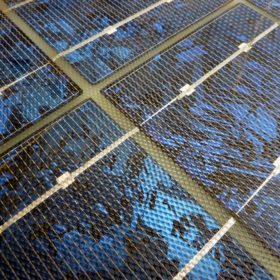
Central Electronics Ltd now tenders for supply of monocrystalline solar cells
Bids are invited for supply of 5-busbar cells with peak power output of 5.1W or greater and an efficiency of minimum 18.8%. The quantities to be supplied are 1000. Bidding closes on October 16.
Central Electronics Ltd tenders for supply of multicrystalline solar cells
Bids are invited for supply of cells using 5 busbars, providing an efficiency of minimum 18.8%. The quantity to be supplied is 500,000. Bidding closes on October 15.

Shell acquires 20% stake in Orb Energy
The fossil fuel giant, like many of its global peers, is making inroads into renewable energy activity and has invested an unspecified amount in becoming a significant shareholder in a business which installs rooftop PV systems for commercial and industrial clients.
Is India ready for solar waste mountain?
Opinion is divided over the urgency of addressing the issue. While some developers feel the 25-year lifetime of modules offers plenty of time to prepare an action plan, other industry voices claim Indian-made products don’t last half that long and one recent report pointed out waste is already piling up thanks to defects and faulty installation.

India prepares to embrace agrivoltaics
Take-up has been slow considering the nation’s mammoth agricultural industry but, as a packed session on the topic at the recent REI show illustrated, attitudes may be changing in a nation which is already installing solar greenhouses.