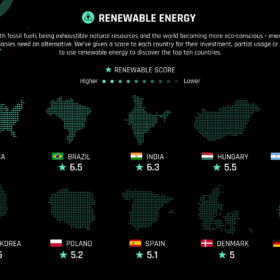
India ranks third on renewable energy investment
The country earned a score of 6.3 on a 10-point scale on the basis of its investment, partially usage or plans to use renewable energy in the near future—in a study by UK based analytics firm British Business Energy. The USA ranks first with a score of 7, followed by Brazil at 6.5.

Drones can drive down operational solar costs—Frost & Sullivan Interview
The market for drones in the power and utility industry will grow 23.6% annually, reaching $515 million by 2030—according to a Frost & Sullivan report.
The report, Drones in the Global Power and Utilities Industry, Forecast to 2030, cites ongoing digital transformation, remote monitoring, and the need to optimize operational costs as the factors driving increasing adoption of drones in the power and utility industry.
“Drones minimize the need to send human employees onsite and can be deployed for monitoring, operations, and maintenance services. As the global power and utility industry continues to tackle the impact of the ongoing Covid-19 pandemic, drones can be potential game-changers in combating the challenges it poses,” as per the report.
pv magazine spoke to Supreeth Srinivasa Rao, Associate Director, Industrial Practice, Frost & Sullivan, to find out the role of drones in the solar sector, especially for India.

Solar, wind and hydro resilient during Covid-19 crisis
A study by the International Energy Agency into the chilling effect of the Covid-19 pandemic on energy demand states renewables will be ‘the only energy source likely to experience demand growth for the rest of 2020’. The slower the economic recovery, the more the fossil fuel industry will suffer.
LCOE from large scale PV fell 4% to $50 per megawatt-hour in six months
Analysts at Bloomberg New Energy Finance say the lowest-cost projects financed in Australia, China, Chile and the UAE in the last six months hit a levelized cost of energy of just $23-29/MWh and the best solar and wind projects will produce electricity for less than $20/MWh by 2030.
Indian solar generators largely unaffected amid Covid crisis, says Fitch Ratings
Liquidity of solar generators remains largely unaffected as they have been receiving payments from Discoms regularly. Azure and Adani Green Energy restricted groups, in particular, have comfortable liquidity position and will be able to meet their mandatory expenditure in the next six to 12 months.

Indian Railways tenders 1 GW of ground-mounted solar projects
Developers have until June 30 to lodge bids to develop plots of solar capacity across the national rail network paying no more than Rs2.71/kWh for the electricity generated under a 25-year contract.

US investor KKR to acquire 317 MWp of SP Infra solar assets
Marking its second infrastructure investment in India, KKR will acquire Mumbai-based Shapoorji Pallonji Infrastructure’s 169 MWp solar assets in Maharashtra and 148 MWp in Tamil Nadu for a sum of Rs 15.54 billion (approximately US$204 million).
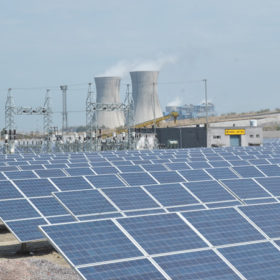
NTPC 23 MW solar project: Bidding extended for inverter-transformer package
Bids can now be submitted till May 29 for supply and installation of the inverter-transformer package for the power generator’s Solapur solar project in the state of Maharashtra.
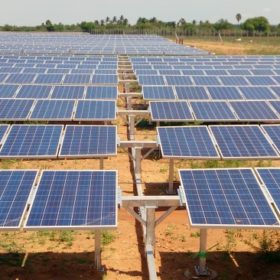
Covid-19 pandemic puts 150 GW of PV, wind at risk in Asia
Up to 150 GW of PV and wind projects could be postponed or canceled throughout the Asia-Pacific region by 2024 if the coronavirus-triggered recession continues beyond the current year, according to new research by Wood Mackenzie.
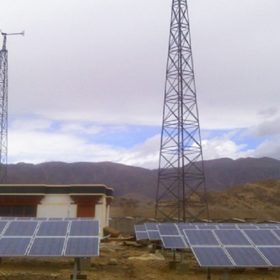
Mega-scale solar farms Vs distributed generation with battery storage
Distributed generation with battery storage can revolutionize solar development in India in the shortest time period with minimal investment.