India, Vietnam sign MoU on solar energy cooperation
The National Solar Energy Federation of India and Vietnam Clean Energy Association signed the pact to exchange best practices and explore business opportunities in solar energy.
Solar tariff drops below INR 2/kWh
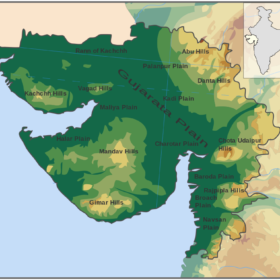
The solar electricity price in India has dipped further to an all-time low of INR 1.99/kWh in a 500 MW Gujarat auction held recently, which is 0.5% lower than the previous record of INR 2/kWh set a month ago.
Structural factors driving down solar tariffs in India
An analysis by India Ratings and Research (Ind-Ra) says improvements in PV panel designs and costs, lower financing costs, and state-specific sectors such as the location’s solar potential and certain waivers have driven the decline in Indian solar tariffs.
Ecoppia robotic cleaners selected for Azure Power’s 450MW solar project
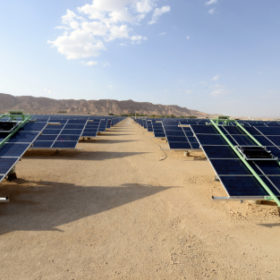
The Israeli developer of module cleaning robots has bagged an order from Indian solar developer Azure Power to deploy its water-free cleaning solution across a 450 MW solar project in Rajasthan.

The world has 53 million hectares of abandoned cropland suitable for solar PV deployment
Researchers in Norway have mapped all cropland areas that were abandoned between 1992 and 2015 and found that the vast majority is suitable for PV and bioenergy deployment. Around 30% is located in Asia, followed by the Americas, with a 28% share, and Africa, with a percentage of 22%. Europe and Oceania had shares of 20% and 5%, respectively.

Novel financing model gives competitive advantage to international renewable energy players
India Ratings says innovative measures to mitigate financing risks, optimize financing costs, and reduced currency risks leading to higher equity returns and better coverages provide international renewable energy players an edge over domestic peers.
SJVN, IREDA sign MoU for green energy projects
As per the agreement, the Indian Renewable Energy Development Agency (IREDA) will undertake techno-financial due diligence of renewable energy, energy efficiency and conservation projects for state-owned hydropower producer Satluz Jal Vidyut Nigam Ltd (SJVN).
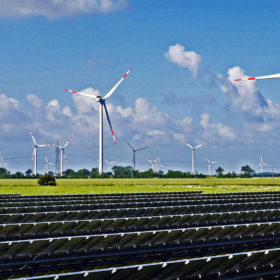
India’s path away from climate disaster lies in the rapid growth of renewable power
The nation is already firmly positioned to lead the world in the clean energy revolution. Consolidating this position would unlock significant economic growth and competitiveness by attracting domestic and foreign investment, creating jobs, and improving public health.
Gujarat tenders for 159 MW of solar EPC work
EPC contractors have until December 24 to bid for development of a cumulative 140 MW (AC) solar capacity across Gujarat Energy Transmission Corporation Limited’s substations, and 15 MW plus 4 MW (AC) at Charanka Solar Park.
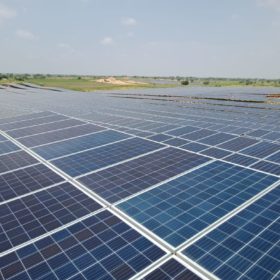
SJVN seeks installers for at least 100 MW of solar
The state-owned hydropower producer has issued an Expression of Interest (EoI) to select potential engineering, procurement and construction (EPC) service partners for building solar capacity of at least 100 MW (AC) anywhere in India on a turnkey basis.