Indraprastha Gas Ltd tenders EPC for 200 MW solar project with battery storage in Rajasthan
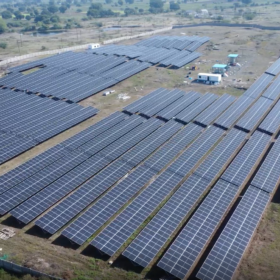
Indraprastha Gas Ltd (IGL) has invited bids for the engineering, procurement and construction (EPC) of a 200 MW DC (160 MW AC) solar power project integrated with a battery energy storage system (BESS) in Rajasthan.

“India’s battery energy storage market is transitioning from aggressive tendering to execution-led scale” — Ratul Puri, Chairman, Hindustan Power
Ratul Puri, Chairman of Hindustan Power, speaks to pv magazine about the key challenges in scaling renewable energy deployment, the growing role of battery storage and carbon markets, and Hindustan Power’s strategy in supporting India’s clean energy transition.

Renewable energy central to India’s industrial competitiveness: Pralhad Joshi
Union Minister for New and Renewable Energy Pralhad Joshi highlighted that renewable energy is becoming a critical determinant of competitiveness in key industrial sectors such as steel, aluminium, chemicals, automotive and textiles. He emphasised the importance of emerging areas including green hydrogen, battery storage, pumped hydro, offshore wind and round-the-clock renewable energy solutions in the next phase of growth.
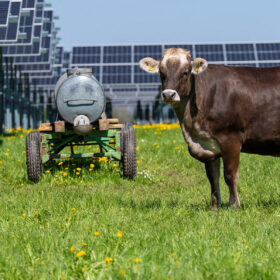
Germany allocates 2.3 GW in latest ground-mounted PV tender, lowest bid comes in at €0.039/kWh
The latest round of Germany’s PV tender scheme was largely oversubscibed.
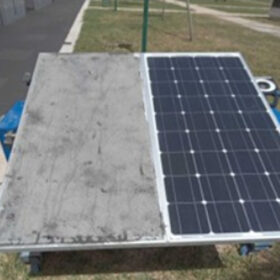
The impact of fly ash-induced soiling on PV panel performance
Scientists in Morocco have conceived an experimental–numerical model to quantify how fly ash soiling affects photovoltaic (PV) modules, capturing both optical losses and thermal effects. Their findings show that while dust layers can reduce panel temperature, fly ash significantly degrades efficiency in a non-linear way, highlighting the need for predictive models for real-world solar performance.
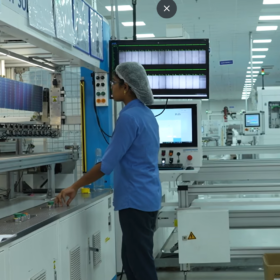
Tata Power reports FY26 PAT of INR 5,118 crore, up 7% YoY
Renewables business PAT increased 59% YoY to INR 1,994 crore (including INR 857 crore from solar cell and module manufacturing unit).

Hybrid energy systems: Combining solar, wind & storage for maximum efficiency
Hybrid energy systems are set to play a crucial role in shaping the future of energy infrastructure. With advancements in smart grid technologies, artificial intelligence, and predictive analytics, these systems will become even more efficient and adaptive. They offer a scalable and sustainable solution to meet rising energy demands while reducing carbon emissions and enhancing energy security.
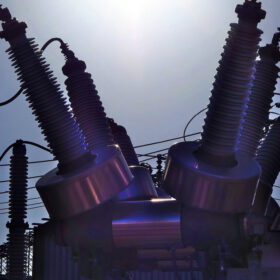
U.S. transformer market faces severe supply constraints
Severe shortages of power transformers are stalling grid expansion as developers face skyrocketing prices and four year wait times for critical equipment.
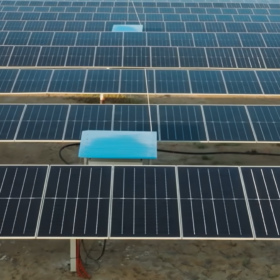
Adani Green commissions 150 MW solar capacity at Khavda
Adani Green Energy Ltd (AGEL) has commissioned a 150 MW solar power project at Khavda, taking its total operational renewable energy generation capacity to 19,735.8 MW and its operational battery energy storage system (BESS) capacity to 1,376 MWh.

The hidden engine: Why testing infrastructure is the real bottleneck in India’s green energy race
India’s 500 GW renewable energy target by 2030 dominates every policy conversation. Capacity additions, auction pipelines, transmission corridors; these are the metrics that make headlines. But there is a quieter, less glamorous constraint that could undermine all of it: the country’s under-investment in testing and certification infrastructure for clean energy equipment.