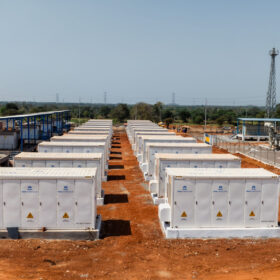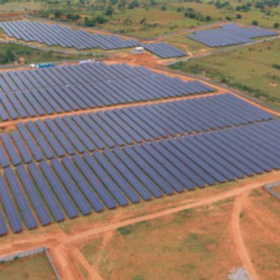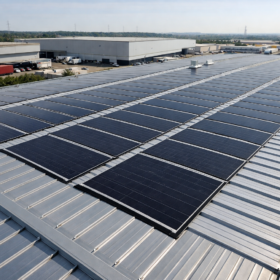
India could attract $4.1 trillion in green investments by 2047: CEEW
Around 92% of the required investments—about $3.79 trillion—would flow into the energy transition, spanning renewable energy, storage, clean mobility, and green hydrogen.
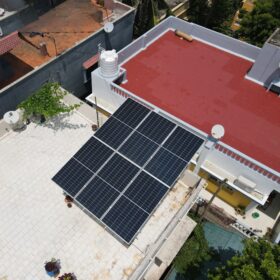
India installed record 4.9 GW rooftop solar in 9M 2025, says Mercom
India added a record 4.9 GW of rooftop solar capacity in the first nine months (9M) of calendar year (CY) 2025, with 2.1 GW installed in Q3 alone.
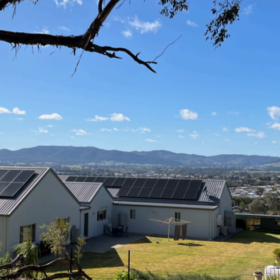
Australia breaks record with 5.2 GW solar installations in 2024: IEA report
An International Energy Agency survey of solar power applications in Australia shows 5.2 GW of installations in 2024 were achieved and the total capacity of solar at 40 GW, includes 26.1 GW of distributed systems and 13.4 GW of centralised installations.

India adds ‘record’ 20.1 GW renewable energy capacity in 5M FY26: A paradigm shift and its impact
India’s energy story has moved beyond ambition to acceleration. Between April and August 2025, a 123 percent YoY jump in renewable energy capacity additions is not just a headline, it’s a signal of structural maturity, industrial resilience, and policy coherence. If the country sustains this trajectory through FY26 and FY27, it could well emerge as the world’s third-largest market for renewable deployment, behind only China and the United States.

Oscal releases 2 kWh battery for home, off-grid, on-grid use
The Chinese company said its 2,016 Wh portable LiFePO₄ energy-storage system is expandable to 22,176 Wh with additional battery modules. It delivers 2,400 W output, offers 16 ports, app-based control, and includes built-in audio and lighting features for home, travel, and off-grid use.
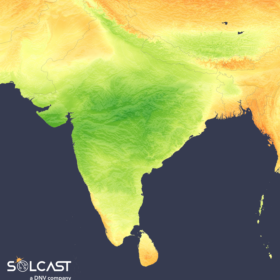
India’s strong monsoon cuts solar generation by 15% in September to October
In a new weekly update for pv magazine, Solcast, a DNV company, reports that India’s solar generation potential was significantly hampered during September and October due to an intensified southwest monsoon, resulting in a 15% decrease in irradiance compared to the long-term average.

“Renewable energy emerging as India’s next big jobs engine”
Balasubramanian A, senior vice president at TeamLease Services, shares insights on workforce requirements, skill gaps, and the key trends shaping India’s renewable energy industry.
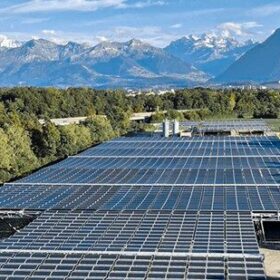
World’s largest foldable rooftop PV system comes online in Switzerland
A wastewater treatment plant in the canton of Bern has been inaugurated with what dhp Technology claims is the world’s largest foldable rooftop solar installation to date. The 3.6 MW array spans several treatment basins, allowing the existing site to serve dual purposes: wastewater treatment at ground level and solar power generation overhead.
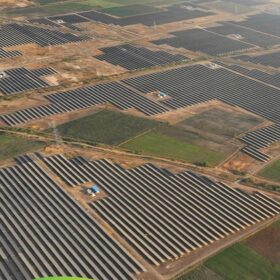
India installed 26.6 GW solar power capacity in first nine months of 2025
India installed solar power generation capacity totaling 26.6 GW in the first nine months (9M) of the calendar year 2025, an increase of 53.7% compared to 17.3 GW added in 9M 2024, according to Mercom India’s newly released report. Large-scale solar accounted for 81.5% of the capacity commissioned in 9M 2025, while rooftop solar contributed 18.5%.
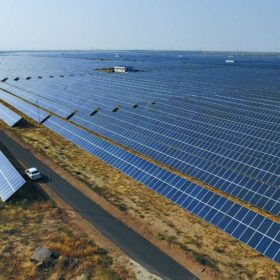
What can South Korea learn from India’s rapid solar deployment?
Korean policy analyst focusing on solar power plant siting and permitting, Daun Kim, has reported on her recent trip to India’s Bhadla Solar Park. The analyst highlights how clear siting policies and streamlined permitting helped India scale renewables, something that South Korea can learn as it pursues a 100 GW renewable energy target by 2030.