Israel hits 51% renewable production for first time
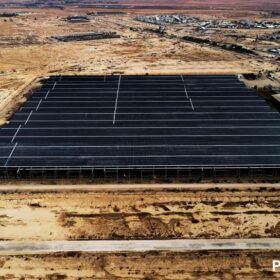
The Israeli government said that earlier this month, for several minutes, renewable energy accounted for most of the nation’s energy production. In particular, solar covered 45% of total generation.
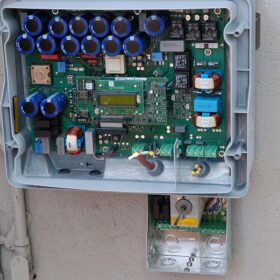
Inverter undersizing not universally effective to reduce soiling losses
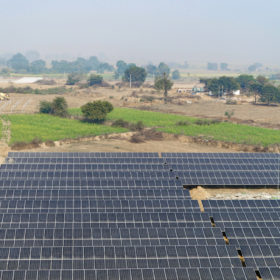
An international research team explained that, although inverter clipping is initially effective in mitigating soiling losses, these losses could become more visible with time, as solar module degradation makes clipping less frequent. They also warned that inverter undersizing alone may not be enough to mitigate soiling losses and suggested cleaning as an additional way to reduce them.

RCRS Innovations to scale lithium battery manufacturing capacity, launch new product lines
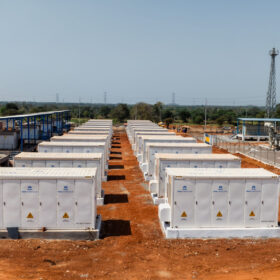
Noida-based RCRS Innovations Ltd, the parent company of lithium-ion battery manufacturer EXEGI, plans giga-scale expansion. It will also launch container-sized energy storage solutions with megawatt-hour level capacities and add TOPCon products to its range of solar panels.

Tesla’s new power play
The first installations featuring the Tesla Powerwall 3 are currently being completed in the United States, with the company promoting a fully integrated solar-plus-storage and electric vehicle (EV) residential system, with big backup power capacity. While the first Powerwall created a new market segment, the latest iteration enters a marketplace in oversupply.

More than one lakh people register for PM Suryaghar Yojana in Rajasthan so far
The state government stated that more than 100,000 people have been registered on the portal under the PM Suryaghar Yojana for residential rooftop solar systems in the state so far.

Mahindra Group and Johnson Controls launch net zero buildings initiative in India
Under the Net Zero Buildings Initiative, Mahindra Group and Johnson Controls have launched a cost-free toolkit that will help building and facility owners to learn about the best practices of sustainable buildings, implement tools to assess building parameters, identify and implement conservation measures, and understand building regulations in India, available incentives, technology, financing models, and more.
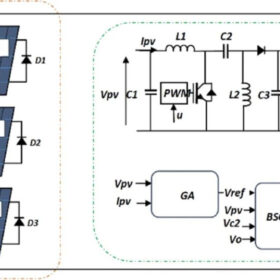
New approach to improve MPPT in partially shaded PV systems operating at high temperatures
The novel methodology is reportedly able to track global maximum power point and reduce power losses in partially shaded PV systems by up to 33%. It uses a backstepping controller (BSC) algorithm to adjust the pulse width modulation signal and a genetic algorithm to compute the BSC gains to achieve an optimal PV system outcome.
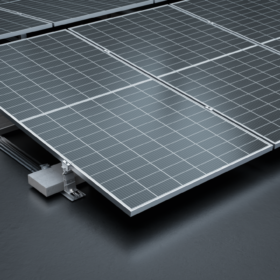
Aerocompact releases new portrait mounting system
Austrian manufacturer Aerocompact has developed the SN2 Q PLUS solar mounting system, which can support PV modules measuring up to 1,310 mm x 2,500 mm. It has an installation angle of between 5 degrees and 10 degrees.
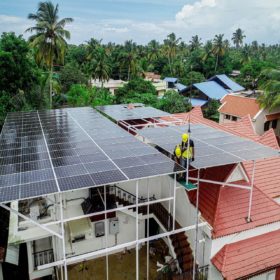
Cabinet approves scheme for installing rooftop solar in ten million households
The residential rooftop solar scheme provides a central financial assistance (CFA) of 60% of the system cost for 2 kW systems and 40% of the additional system cost for systems between 2 to 3 kW capacity. The CFA will be capped at 3 kW. At current benchmark prices, this will mean INR 30,000 subsidy for 1 kW system, INR 60,000 for 2 kW systems, and INR 78,000 for 3 kW systems or higher.

Perovskite: The next breakthrough in solar panel technology for India
Perovskite technology, with its potential for large-scale deployment and local production, presents a compelling pathway towards a more secure and sustainable energy future.