Bridging the skill demand-supply gap in solar and green hydrogen sectors
The demand-supply gap for skilled workers in solar and green hydrogen sectors is a significant challenge for India’s transition towards a sustainable future. However, by prioritizing comprehensive skilling initiatives and fostering strong collaborations between the government, educational institutions, and industry stakeholders, the nation can effectively bridge this gap and unlock the full potential of its renewable energy and sustainability ambitions.

India surpasses 75 GW of installed solar capacity
India’s cumulative solar PV installations hit 75.58 GW at the end of February, according to the latest figures from the Ministry of New and Renewable Energy (MNRE).

Greenfuel Energy launches wall-mount lithium batteries for home inverters
Greenfuel residential lithium batteries are available in 12.8V 100Ah, 25.6V 100Ah, and 48V 100Ah configurations, catering to power requirements ranging from 1 kW to 5 kW.

The next 100 years of energy
Solar is poised to be the leading energy source in the next century. In terms of cost, renewables are almost at par with their dirtier counterparts, and within a few years will soon overtake them in terms of the volume of the overall worldwide energy produced.
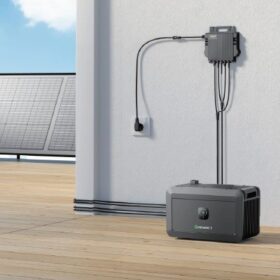
Growatt launches new balcony storage solution
The new product combines the NEO 800TL-X Microinverter and the NOAH 2000 Battery. Up to four batteries can be stacked, for up to 8,192 Wh of storage capacity.
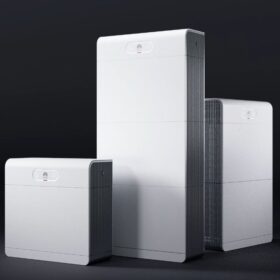
Huawei debuts all-in-one storage solution for residential PV
Huawei says its new, all-in-one storage solution for residential PV comes in three versions with one, two, or three battery modules, offering 6.9 kWh to 20.7 kWh of usable energy. The the Luna2000-7/14/21-S1 system also includes an inverter, an optimizer, and an energy management system.
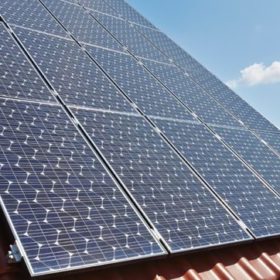
India is seeing record demand for rooftop solar systems
India is seeing record demand for rooftop solar both from residential and industrial consumers. While the recently announced Pradhan Mantri Suryodaya Yojana (PMSY) Scheme is driving adoption among residential consumers, industries seek to add clean energy to meet climate goals amid falling panel prices.
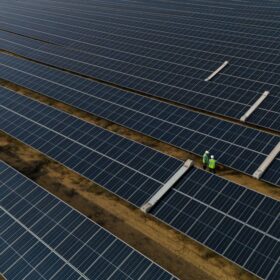
India expected to install more than 20 GW of solar this year: JMK Research
India’s annual solar installations in 2024 will surpass 20 GW, with 15.9 GW of capacity likely to be added in the utility-scale segment and 4.2 GW on rooftops, says a new report by JMK Research.
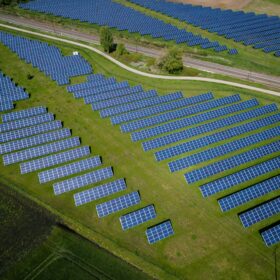
IRENA says global solar capacity rose by 345.5 GW in 2023
The International Renewable Energy Agency (IRENA) says developers installed 345.5 GW of solar throughout the world in 2023. China mainly drove the surge, accounting for nearly three-quarters of all new renewable energy, but IRENA says more equitable growth will be needed to hit 2030 deployment targets.
Hydrogen batteries vs. lithium-ion batteries
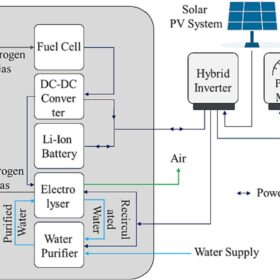
Researchers in Australia have compared the technical and financial performances of a hydrogen battery storage system and a lithium-ion battery when coupled with rooftop PV. They evaluated two commercially available systems – LAVO and Tesla Powerwall 2 – and found that the lithium-ion battery provides better financial profits, whereas the hydrogen battery offers more battery lifespan for long duration of energy storage.