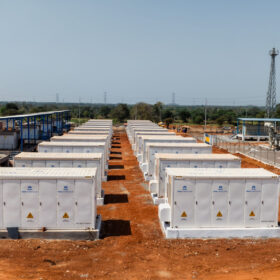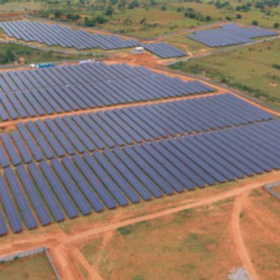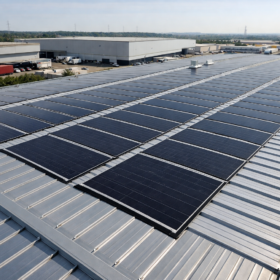
Modi government propelled renewable growth: CEO survey
In a recent survey, an overwhelming 73% of respondents said they remain upbeat about India’s renewable growth prospects, despite recent policy reversals and various other operational challenges the industry faces.
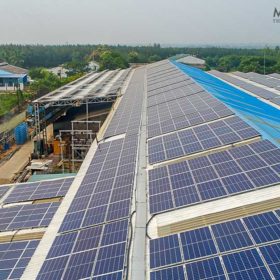
Rooftop solar needs greater push to reach 2022 target: IEEFA
Policy certainty and more financial subsidies would incentivise the market, as would support for domestic manufacturing and simplifying the net metering application process.
IEA warning against stagnation of renewables
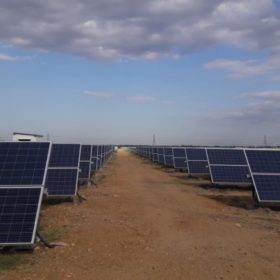
After two decades of growth, the amount of newly installed renewable energy capacity is no longer rising and, despite a 7% growth in electricity generation from clean energy sources, global energy-related carbon emissions have risen 1.7%.
Power-surplus Karnataka state says no to new solar
India’s leading solar region has been forced to apply the brakes to new solar with its power distribution companies having fulfilled their renewable purchase obligations for the next two years. Projects driven by federal agencies will continue, however.

Tackling India’s solar waste challenge
As the nation aims for 100 GW of solar capacity by 2022 it is staring at up to 1.8 million tons of PV waste by 2050. A solar waste management seminar organized by consultancy Bridge To India in New Delhi brought stakeholders together to discuss how a PV waste management system could help.
Tata Power added 200 MW renewables in FY 2018-19, another 400 MW in pipeline
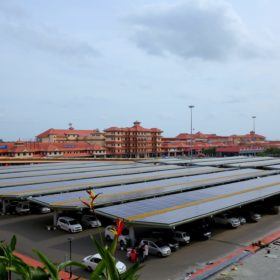
The company has identified renewables, transmission and distribution, and value-added businesses such as rooftop solar, smart metering, electric vehicle (EV) charging stations and micro grids in rural areas as key growth areas.

Interview: Damian Miller, CEO of rooftop solar supplier Orb Energy
Founded in 2006, Bengaluru-based Orb is a rooftop solar provider that manufactures panels and provides finance for SMEs through a collateral-free loan that matches the payback period for its solar systems. Orb has sold more than 160,000 units in India, with cumulative installations of around 65 MW of PV rooftop capacity.

China confirms FIT level payments – but they will be ‘subject to competition’
The Beijing authorities have confirmed the payment levels to be made according to type of project and region from July onwards but an auction process will be involved so the figures are for guidance only. No decision has yet been made on the 30 GW of capacity added since the end of May.

ITBP, Sikkim tenders 10 KW and 5 KW solar projects for border outposts
The Indo-Tibetan Border (ITB) Police Force at Lingdum in East Sikkim has invited bids for supply and installation of 10 KWp and 5 KWp solar power plants at its five border outposts.
Tata Power exemplifying the Indian energy transition: IEEFA
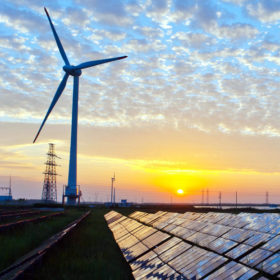
The private-sector integrated power company will cease to build new coal-fired capacity. Instead, it eyes 70% of new capacity additions coming from solar, wind and hydro through to year 2025.