India added 2.5 GW in Q1, 18.4 GW in pipeline: Bridge to India
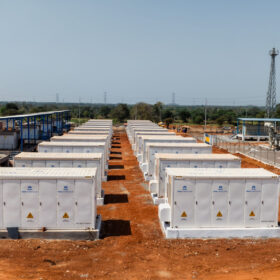
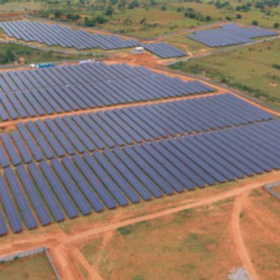
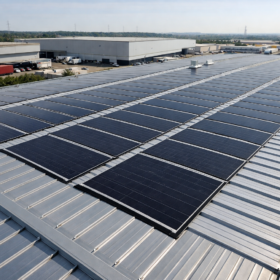
Solar installations picked up significantly in the January-March period, with 1.89 GW of utility-scale PV projects providing 76% of the quarterly total. Rooftop PV accounted for the remaining 590 MW of new capacity additions. Looking ahead, Bridge to India expects the uptrend to continue, as the first quarter ended with a record amount of capacity in the national pipeline.
India’s growth slows as developers add 1.7 GW in Q1
Solar installations fell 49% year-on-year in the first three months of 2019, with rooftop PV additions plunging as installers struggled to secure approval for projects immediately before the general election, according to new statistics from Mercom India Research.
Japanese firm Mitsui invests in Mahindra Susten to support its solar expansion
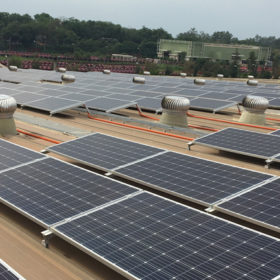
The Mahindra Group cleantech firm will continue to have majority 51% stake in its subsidiary Marvel Solren, with Mitsui owning the balance. Currently, Marvel operates four distributed solar projects in India with a combined capacity of 16 MW, which the two partners aim to expand to 150 MW by 2023.
ISA invites bids for solar PV project development in member countries
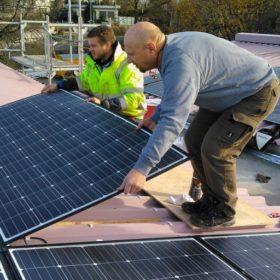
Following Indian utility National Thermal Power Corp.’s proposal for PV projects in International Solar Alliance member countries, the organization has invited bids from companies in such nations with comparable credentials and experience, as long as they own at least 250 MW of solar capacity.
TERI and Cadmus launch rooftop solar market aggregator program
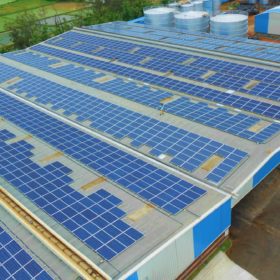
The I-SMART program aims to aggregate demand for 1 GW rooftop solar systems across four states and two union territories. It simplifies rooftop solar installation by providing a range of services both to the partner installers and prospective customers on a single-window web portal.

Himachal Pradesh announces generic solar PV tariff
The Himachal Pradesh Electricity Regulatory Commission (HPERC) has followed the lead of the authorities in Tamil Nadu, Bihar and Maharashtra in setting generic levelised tariffs for PV projects.
India’s solar industry digests the election results
With Narendra Modi’s government stunning pollsters with another huge victory, the solar industry expects renewable power momentum to be maintained with steps including anti-dumping duty on solar module imports, a national policy for rooftop solar and an emphasis on easing private-sector participation in the power sector.

SECI tenders 2 MW solar project for army posts in Jammu & Kashmir
Solar Energy Corporation of India (SECI) has invited bids for development of 2 MW solar PV power projects—1 MW each for Siachen and Partapur army posts—in Leh region of Jammu & Kashmir. The projects are to be developed on ‘build, own operate’ basis.

Off-grid solar plants can be connected to the grid, says MNRE
The Ministry of New and Renewable Energy (MNRE) has said that off-grid solar plants that have been installed under its own programmes can be connected to the grid in locations where net-metering provisions are in place.
Global cumulative PV capacity may reach 1.3 TW in 2023, SolarPower Europe says
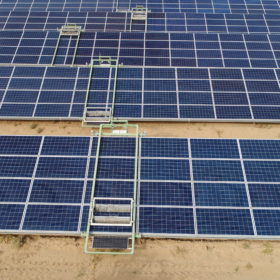
The European solar trade body expects 128 GW of new PV capacity in 2019, with China likely to bring around 43 GW online and Europe experiencing enough demand to deploy about 20.4 GW. In 2020, global solar demand is expected to reach 144 GW, while in the following three years new PV additions are forecast to total 158 GW, 169 GW and 180 GW, respectively.