Afghanistan starts building 40 MW of solar
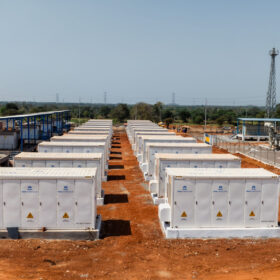
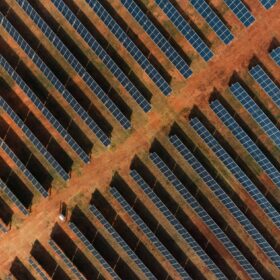
Afghanistan has started building a 40 MW solar project, with completion expected within 18 months.

Siemens Energy India profit up 80% YoY for quarter ended June 30, 2025
Siemens Energy India Ltd (SEIL) has reported a robust financial performance for the quarter ended June 30, 2025, with net profit soaring 80% year-on-year (YoY) to INR 263 crore. Revenue from operations rose 20% YoY to INR 1,785 crore. New orders for the quarter surged 94% to INR 3,290 crore.
L&T secures order for 116 MW/241 MWh solar-plus-battery storage plant in Bihar
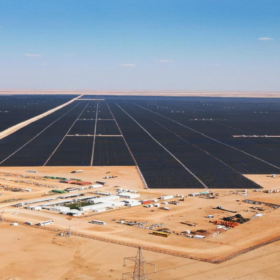
Larsen & Toubro’s renewables business vertical has secured the engineering, procurement and construction (EPC) contract for the development of a grid-connected 116 MW AC solar PV plant integrated with a 241 MWh battery energy storage system (BESS) in Bihar.
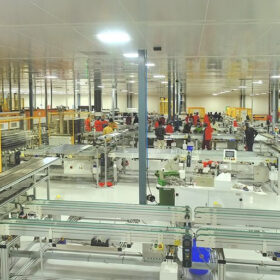
Vikram Solar secures 250 MW PV module order from Bondada Group
Vikram Solar will supply its n-type high-efficiency pv modules for Bondada Group’s solar project in Maharashtra.

Using Sudoku to improve power yield in PV systems under partial shading
Indian researchers have developed a Sudoku-based technique to reduce power losses in PV systems operating under partial shading. They claim the method increases energy efficiency and revenue generation more than conventional reconfiguration techniques.
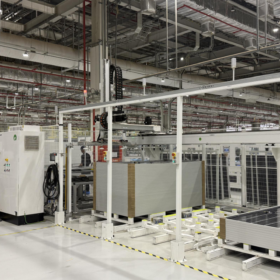
NTPC tenders PV module supply for 2.5 GW of solar projects
NTPC Group companies have issued tenders for the supply of PV modules for a total of 2.5 GW of solar power projects in Rajasthan and Uttar Pradesh.

Tata Power’s renewables business PAT up 95% YoY in Q1
Tata Power’s net profit from renewables business soared 95% YoY to INR 531 crore. Segment-wise, INR 226 crore came from renewable energy generation, INR 198 crore from solar EPC, INR 100 crore from solar manufacturing, and INR 7 crore from other income.
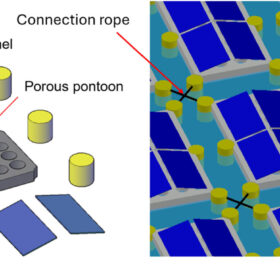
‘Soft-connected’ floating PV for offshore scenarios
An international research team has tested a floating PV system with a “soft-connected” configuration under offshore conditions, using six modular pontoons linked by elastic bar elements to simulate mooring lines and connection ropes.
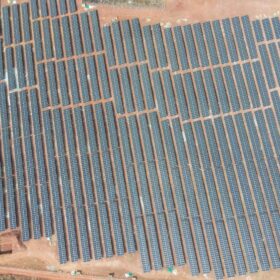
How IPPs are revolutionizing India’s energy market
Independent power producers have captured a significant share of India’s clean energy capital, with projects often backed by substantial financing from institutions like the Indian Renewable Energy Development Agency (IREDA). Additionally, these have the ability to raise money in a cautious global market because of their capacity to lock up bankable power purchase agreements (PPAs), which provides financial predictability.

Navigating the ripple effects of renewable energy variability on grid stability
integrating variable renewable energy sources into conventional power systems requires a delicate balance of technology, operational excellence, and regulatory compliance. While AI and ML have become indispensable tools in the modern energy toolkit, they are most effective when paired with on-ground human insight and proactive asset management.