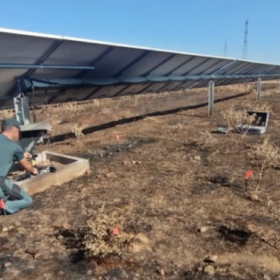
Electrical fault at PV plant triggers forest fire in Spain
A forest fire in southern Spain that burned roughly 800 hectares of pasture, crops, and oak forests originated in an electrical box of a photovoltaic plant’s tracking system, according to the Civil Guard’s Nature Protection Service (SEPRONA).
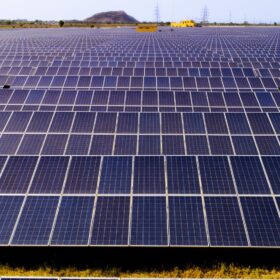
India installed 18 GW solar in first half of 2025, says Mercom report
India added 18 GW of new solar power capacity in the first half of 2025, with over 11 GW installed in the second quarter alone.
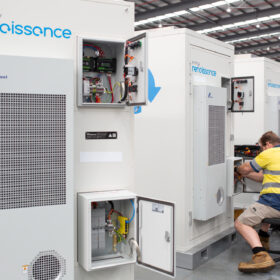
Lithium ion battery company Energy Renaissance goes into administration
The New South Wales-based lithium ion battery company Energy Renaissance has gone into administration, just months after celebrating a decade in business.
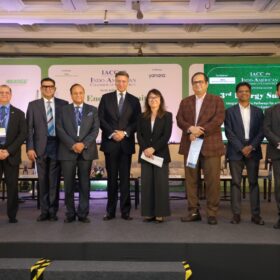
India finalizing CCUS Mission roadmap, outlay
The Union Government is finalizing the roadmap and financial outlay for the much-anticipated Carbon Capture, Utilisation and Storage (CCUS) Mission, said Rajnath Ram, Adviser for Energy, Natural Resources & Environment at government policy thinktank NITI Aayog.
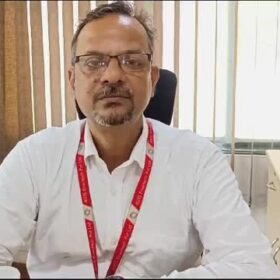
India’s solar EPC evolution: Why boutique firms are attracting institutional capital
Boutique EPC companies prioritize efficiency, customization, and site-specific solutions, and they frequently outperform their larger counterparts in terms of cost-performance ratios.
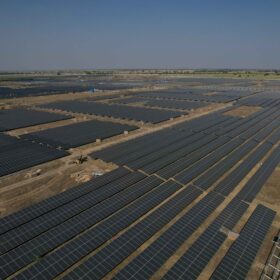
NTPC REL launches 300 MW solar EPC tender
NTPC Renewable Energy Ltd (NTPC REL) has invited bids for an engineering, procurement, and construction (EPC) package, including land acquisition, for the development of a 300 MW grid-connected solar PV project near NTPC Anta natural gas-fired power station in the Baran district of Rajasthan.

Jordan to install solar at homes of disabled people
Jordan’s government will fund a five-year program to install grid-connected solar systems at 1,000 homes of disabled people and their families, starting in 2026.
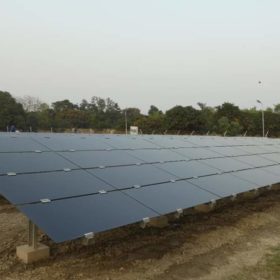
TCIL seeks EPC partner for solar microgrid projects in Agalega Islands
Telecommunications Consultants India Ltd (TCIL) is seeking an EPC partner for a pre-bid tieup to set up three solar microgrids with modular battery energy storage systems at Agalega Islands, Republic of Mauritius.

Malaysian partners to develop 1.5 GW of solar
Subsidiaries of Gentari and Gamuda will develop 1.5 GW of solar with battery storage in Malaysia to supply hyperscale data centers under the Corporate Renewable Energy Supply Scheme (CRESS), supporting the country’s push to expand clean energy and meet rising tech-sector demand.

Building 500 GW: Powering India’s clean energy transition and energy independence
India is already investing in energy storage solutions such as batteries and pumped storage to enable greater integration of renewable energy into the grid. However, this alone may not be sufficient. It’s time to also look at demand management to enable dovetail between renewable energy generation and demand.