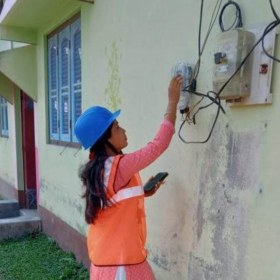
Apraava Energy secures $92 million from BII, Standard Chartered to install smart meters in India
Standard Chartered and British International Investment’s (BII) financing will enable Apraava to install around two million smart meters in homes and businesses. The smart meters will help make India’s grid more efficient, reliable, and sustainable by enabling better integration of renewable energy sources and reducing aggregate technical and commercial losses.
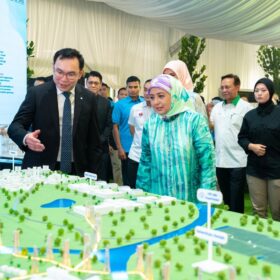
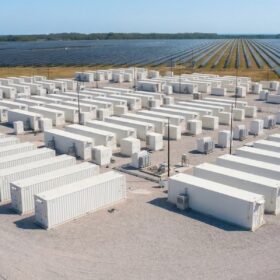
Malaysia’s 4 GW/5.12 GWh solar-plus-storage complex gets World Bank funding
The Southern Johor Renewable Energy Corridor (SJREC) forms part of a $6 billion project developing a 2,000 kilometer-squared hybrid solar and battery energy storage system zone set to connect South East Asia.
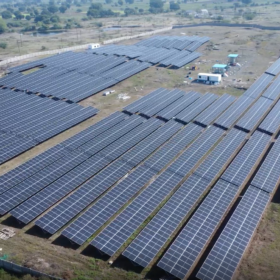
Bondada Engineering commissions 48.47 MWp solar projects across India
Bondada Engineering Ltd has announced the successful commissioning of 48.47 MWp of solar power projects for Paradigm IT, MAHAGENCO, and NLC India Ltd.
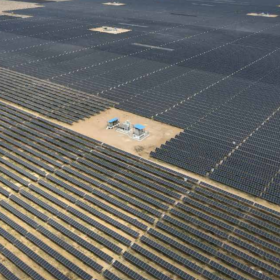
India installed 6.1 GW open-access solar in 9M 2025, says Mercom
India added 6.1 GW of open-access (off-site commercial and industrial) solar capacity in the first nine months (9M) of calendar year (CY) 2025, up around 13% from the 5.4 GW installed during 9M 2024—according to a new report by Mercom.
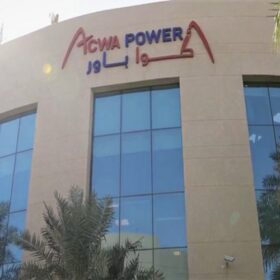
Saudi Arabia secures financing for 15 GW of new solar and wind capacity
A consortium led by Acwa Power, Water and Electricity Holding Co. (Badeel) and Saudi Aramco Power Co. has secured a $5.9 billion senior debt facility for seven Saudi Arabia renewable energy projects totaling 15 GW across solar and wind.
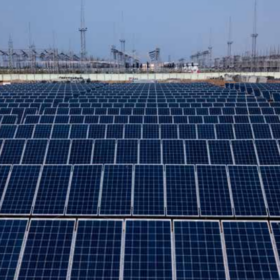
Adani Green Energy switches on 200 MW solar at Khavda
With the recent commissioning of 200 MW of solar plants, Adani Green Energy Ltd’s (AGEL) total operational renewable generation capacity has increased to 16,929.8 MW.
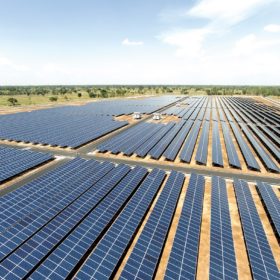
SWREL secures INR 1,381-crore solar BoS orders from Adani Green Energy
Sterling and Wilson Renewable Energy Group has entered into a strategic 5-year partnership framework agreement with Adani Green Energy for their future India RE rollout. Under the agreement, it has secured a Balance of System (BoS) package for three solar power projects at Khavda.
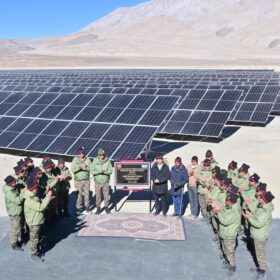
NTPC inaugurates solar-hydrogen-based microgrid at Chushul
NTPC has developed a standalone solar microgrid system that uses hydrogen as the storage medium to deliver 200 kW of round-the-clock power year-round. Designed to replace diesel gensets at off-grid Army locations, the system provides a reliable and sustainable power supply even in harsh winter conditions, where temperatures drop to -40°C at an altitude of 4,500 meters.

Candi Solar secures $58.5 million from IFC
Candi Solar, a provider of distributed solar solutions for commercial and industrial (C&I) businesses, has secured $58.5 million in funding led by the International Finance Corp. (IFC), a member of the World Bank Group. The facility will directly finance nearly 200 MWp of new projects.

Renewable energy assets life-cycle management through tech-enabled maintenance strategies
Modern wind turbines and solar plants generate large volumes of operational data. By leveraging analytics, inefficiencies can be identified, performance assessed in real-time, and emerging issues addressed before they escalate. A dynamic operations and maintenance (O&M) support system builds on this intelligence to provide a strong grip on performance levels while minimising downtime.