Serentica Renewables secures 600 MW in SECI assured peak power tender
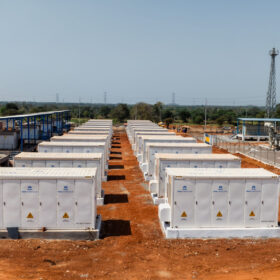
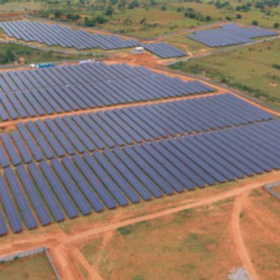
Serentica Renewables has secured 600 MW in the Solar Energy Corp. of India’s (SECI) FDRE VII assured peak power tender, the largest allocation awarded to a single bidder in the auction.
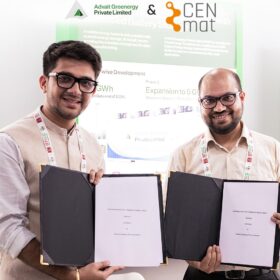
Advait Greenergy signs MoUs for green hydrogen technology, storage, and EPC
Advait Greenergy has partnered with electrolyser technology providers Switzerland-based CENMAT and US-based Power to Hydrogen Inc. (P2H2), India-based EPC firm JESCO Projects, and hydrogen storage specialist VJ Industries to support the development of green hydrogen projects in India.
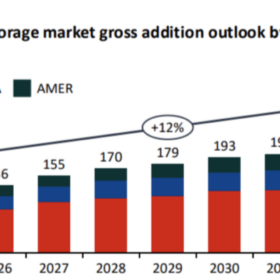
Global BESS capacity tops 250 GW, overtaking pumped hydro for first time
Rystad Energy says it expects global battery energy storage system (BESS) additions to exceed 130 GW/350 GWh in 2026, led by China, the United States, the United Kingdom, Australia, and Germany.
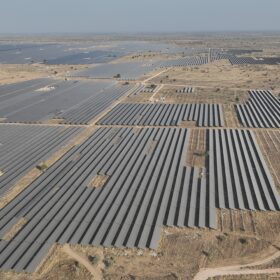
ACME Solar secures 301 MW renewables with 1,204 MWh storage in SECI peak power tender
With the latest addition, ACME Solar’s overall contracted renewable energy portfolio has crossed 8 GW across solar, wind, firm and dispatchable renewable energy (FDRE), round-the-clock (RTC), and hybrid projects.
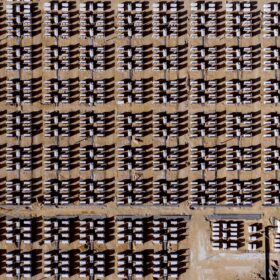
World’s largest AI-powered battery storage cluster comes online in China
The multi-project cluster includes the world’s largest single-site electrochemical energy storage facility: the 4 GWh Envision Jingyi Chagan Hada Energy Storage Power Station.
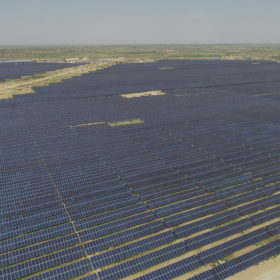
SECI concludes 1.2 GW/4.8 GWh renewables-plus-storage tender at INR 6.27/kWh
The Solar Energy Corp. of India (SECI) has concluded its tender for the development of 1.2 GW of renewable energy projects coupled with energy storage systems (ESS), designed to provide 4.8 GWh of assured peak power supply daily (1,200 MW for four hours). The lowest discovered tariff under the auction was INR 6.27/kWh.
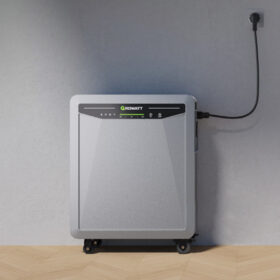
Growatt launches 5 kWh AC-coupled balcony storage system
The IP66-rated Aura 5000 system features bidirectional inverter functionality and an AC output of up to 2.5 kW.
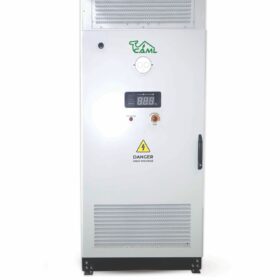
Loom Solar launches 125 kW/261 kWh BESS for C&I applications
Indian solar manufacturer Loom Solar has launched a 125 kW/261 kWh CAML battery energy storage system (BESS) for commercial and industrial (C&I) applications. The BESS is scalable up to 1 MWh.
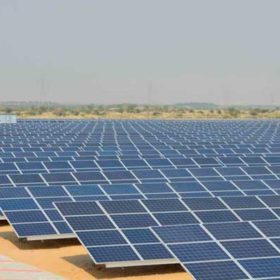
NLC wins 600 MW solar-plus-storage project from SECI
NLC India Ltd has secured a 600 MW solar project coupled with a 300 MW/1,800 MWh energy storage system (ESS) from the Solar Energy Corp. of India (SECI). The company said its wholly owned subsidiary, NLC India Renewables Ltd (NIRL), has received a letter of award for the project.
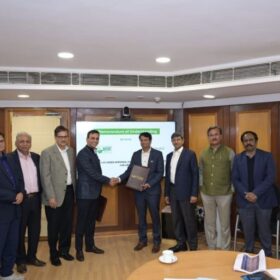
The Hydrogen Stream: NTPC Green signs MoU with Assago Industries for green ammonia supply
NTPC Green Energy Ltd (NGEL) has signed a Memorandum of Understanding (MoU) with Assago Industries for the supply of green ammonia, CO₂, renewable power, and other utilities to support the production of 1,000 tonnes per day (tpd) of green urea.