Financing solar projects amid the Covid-19 crisis – thinktank interview
Vaibhav Pratap Singh, senior analyst at the CEEW Centre for Energy Finance, tells pv magazine about the impact of the Covid-19 pandemic on the Indian solar sector, green finance and investment down the line.
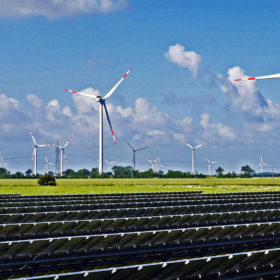
Hybrid and RTC projects to boost India’s RE and energy storage market
The global hybrid energy market, including energy storage, is projected to touch $40 billion by 2025. It is an opportunity that India has capitalized upon, earlier than others.
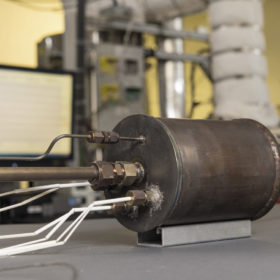
The long read: Scientists at Argonne develop new kind of thermal battery
Scientists at the U.S. Department of Energy’s (DOE) Argonne National Laboratory have developed a new kind of thermal battery that can greatly increase the energy efficiency and cost-effectiveness of many industrial processes and shows great promise for use in the solar industry. Liz Thompson reports that Argonne’s Thermal Energy Storage System (TESS) can rapidly capture and store surplus heat so that it can be used as needed. With its pioneering modular design and material advancements resulting in greater efficiency, TESS is a big step forward in thermal battery technology.
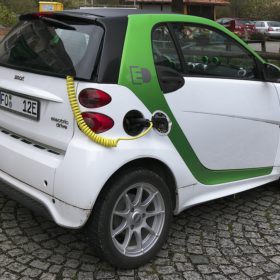
India can become electric vehicle manufacturing hub within five years: Nitin Gadkari
The industry needs to cut a dependence on electric vehicle battery imports from China, according to the road transport minister, who said the government is looking to support research into alternatives to lithium-ion technology.

Supply chain concerns will drive EV battery recycling policies
With electric vehicles starting to gain traction, the International Energy Agency’s updated, ten-year e-mobility forecast has suggested geopolitical and economic concerns will trump environmental niceties when it comes to encouraging recycling. But what price ever-cheaper batteries?
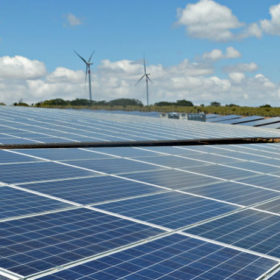
India to add 15 GW of wind-solar hybrid capacity in five years
Almost 10 GW of hybrid generation capacity is already under implementation despite India having only 100 MW of combined wind and PV projects at present, according to analyst Crisil.
Historic-low interest rates will power ahead astonishing solar cost reductions
An Ieefa report has suggested the cost of generating electricity from solar will be near zero in the world’s sunniest regions by 2030-40 – despite what the naysayers at the International Energy Agency might think.
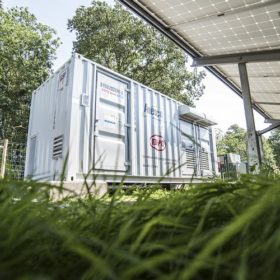
IESA proposes a policy framework for energy storage in Electricity Act
Defining energy storage under the Electricity Act could help start ancillary services and frequency regulation through energy storage as a flexible asset. It will also help to enable electric vehicle charging infrastructure, vehicle-to-grid (V2G) concepts and microgrids integration with expanded grid connectivity in the long run, according to the industry body.
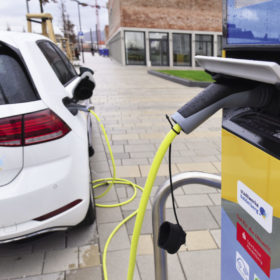
Tata Power to set up superfast EV chargers at MG Motor outlets
The 50KW DC chargers will be accessible by both MG ZS electric vehicle (EV) customers as well as other EV owners whose automobiles are compatible with the CCS/CHAdeMO charging standards.
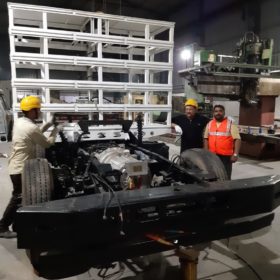
India’s IPLTech to use Faradion sodium-ion batteries for commercial vehicles
The Gurgaon-based data-driven fleet service provider—which launched India’s first all-electric heavy-duty truck last year—will use Faradion’s sodium-ion batteries in its commercial vehicles.