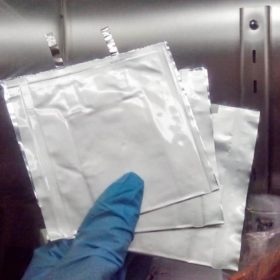
Lithium saturation to make old batteries new
Scientists investigating the aging mechanisms affecting today’s lithium-ion batteries observed that the loss of lithium over time is one of the main causes of performance loss. With this in mind, they developed and tested a “relithiation” process that promises to eliminate much of the cost and complexity from recycling battery components and materials.
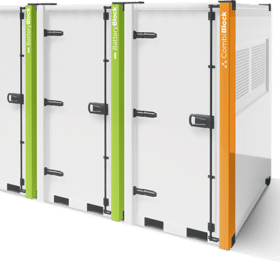
Leclanché unveils modular, plug-and-play solution for utility scale storage
The proposed solution is claimed to be able to mitigate potential fire risk, improve logistics and reduce costs. It consists of a series of interchangeable wide blocks that are said to be easily movable for simplified transportation.

Graphene aluminum ion batteries with ultra-fast charging
The “graphene revolution” is almost here. Australian scientists specializing in aluminum-ion batteries are now working with Brisbane-based Graphene Manufacturing Group to commercialize a technology that could transform energy storage.

US-based EverGreen Power to assess feasibility of 300MW wind-solar-storage project in Gujarat
The U.S. Trade and Development Agency (USTDA) is funding the 300MW wind-solar-storage project as part of its mission to promote sustainable infrastructure projects in partner countries like India.

Ola to provide 100,000 charging points for electric two-wheelers
Ola has announced it will set up a Hypercharger Network for its electric two-wheeler customers. The company claims the charging network would be the world’s largest and densest, spread over 400 cities with more than 100,000 charging points.

Indian firm purchases American hydrogen cylinder maker Catalina Composites
New Delhi-headquartered Uttam Group of Companies has purchased California-based Catalina Composites as it sees a surge in demand for clean energy solutions, including hydrogen. The company will invest at least $20 million in staff, equipment, and research and development of high-pressure cylinder production for hydrogen and compressed natural gas.
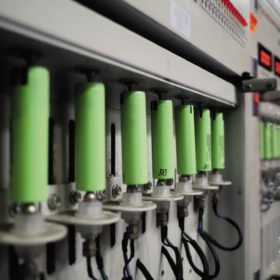
The long read: Battery testing builds certainty
Owners and operators of energy storage systems, as well as investors, need transparent ways to evaluate battery performance. They need certainty that the selected batteries for their ESS projects will perform reliably, have predictable life expectancies, and meet projected revenue and contractual obligations over their lifetimes. The economic viability of entire projects depend on this confidence, writes Michael Kleinberg of DNV.
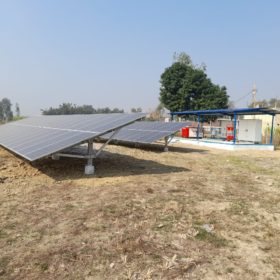
CSC partners Tata Power on installation of solar-powered microgrids and water pumps
Tata Power brings technology and financial strength to set up the distributed, small-scale solar power systems in rural areas and provide round-the-clock power supply to households and businesses. CSC brings to the partnership village-level entrepreneurs to provide quick, low-cost service support.
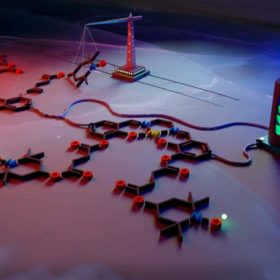
Nickel-salen for a battery that charges in 10 seconds
Scientists in Russia introduce a promising new material for battery energy storage, the product of more than three years of research. Incorporating a nickel-salen polymer into the cathode, the group demonstrated a battery that can charge and discharge ten times faster than today’s lithium-ion batteries. And though the battery still lags in terms of overall capacity, the group is confident that its discovery will lead to big improvements for lithium batteries.

Waaree Energy Storage System secures seed funding of US$2 million
The energy storage manufacturer will use the funds to expand its manufacturing capabilities, and aid product development with emphasis on smart Internet of Things (IOT) based batteries and telematics.