OXMIQ, AM Intelligence Labs partner for renewable-powered AI compute platform in India
OXMIQ Labs will provide data center and system infrastructure advisory for AMI Labs’ upcoming gigawatt-scale AI computing facility powered by renewable energy in India.
RWE, Peak Energy to deploy first sodium-ion battery in US grid
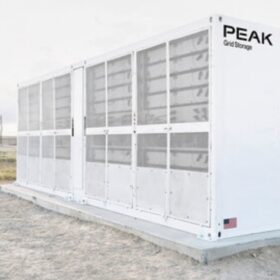
Peak Energy says it will deploy the first sodium-ion battery in the Midcontinent Independent System Operator (MISO) service area with RWE Americas in eastern Wisconsin, using passively cooled grid-scale storage that cuts auxiliary power use by 90% and lowers lifetime storage costs by $70/kWh.
Advait Greenergy opens 30 MW alkaline electrolyser assembly facility in Gujarat
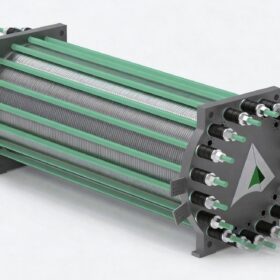
The facility is designed as a scalable platform, with a roadmap to expand from 30 MW to 100 MW by the end of 2026, 300 MW by 2027, and ultimately 1 GW of annual manufacturing capacity.

Why Gujarat continues to attract large-scale renewable energy investment
As India’s clean energy ambitions scale, investment will increasingly follow regions that can deliver outcomes, not just intent. Gujarat’s experience suggests that long-term renewable growth depends as much on institutional preparedness and grid integration as it does on natural resources.

From 132kV to 765kV: How higher voltage levels are redefining grid efficiency
Ultra high voltage transmission corridors, including 765kV networks, are increasingly becoming the backbone of this energy transition. These corridors enable bulk power transfer across long distances while maintaining system availability. By consolidating large volumes of electricity onto fewer transmission lines, they also reduce the need for extensive land acquisition and infrastructure duplication, which are often major constraints in transmission expansion.
Saatvik Green sets up energy storage subsidiary
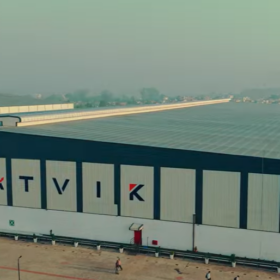
Saatvik Green Energy has incorporated a wholly owned subsidiary, Saatvik Power Storage Solutions. The newly formed entity will focus on the development and deployment of battery energy storage systems for utility-scale, commercial & industrial, residential and distributed renewable energy applications.
New simulation platform lets energy operators train against realistic cyberattacks
Researchers at Germany’s Fraunhofer FKIE institute developed PowerRange, a virtual simulation platform that helps power grid operators safely test cybersecurity measures and respond to realistic cyberattacks. The platform supports both traditional and renewable grids, offering immersive training across IT, OT, and control systems while highlighting the importance of coordination, communication, and practical defense strategies.

ACME Solar commissions 143 MW/481 MWh battery energy storage system in Rajasthan
ACME Solar Holdings has commissioned 142.67 MW/481.49 MWh of battery energy storage system (BESS) in the Indian state of Rajasthan through its subsidiaries. The installation represents Phase 1 of its planned 585 MW/2,011.24 MWh BESS capacity under these special purpose vehicles.
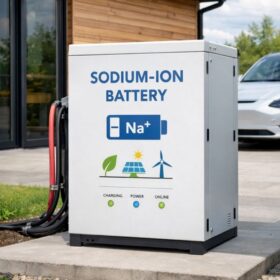
NanoMalaysia unveils sodium-ion prototype surpassing 300 Wh/kg
The new prototype ranks among the most advanced sodium‑ion battery systems reported worldwide.

Vikram Solar’s PowerHive launches lithium battery range for electric mobility and residential power backup
PowerHive, the battery and energy storage arm of Vikram Solar, has launched its VION lithium battery product range, marking the company’s entry into distributed battery storage for electric mobility and residential energy backup.