How distributed energy resources can help India meet its 2030 clean energy targets faster
Distributed energy resources, rooftop solar, C&I open-access systems, behind-the-meter storage, solar agricultural pumps, microgrids, share one decisive advantage: deployment speed. And speed is not the only advantage. Power consumed where it is generated avoids the 15-22% aggregate technical and commercial losses in India’s distribution networks.
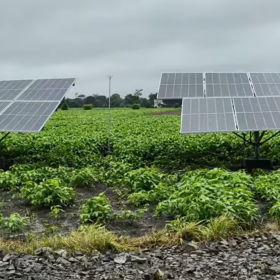
Oswal Pumps secures INR 162 crore solar pump order from MSEDCL
Oswal Pumps has secured an order from Maharashtra State Electricity Distribution Co. Ltd. (MSEDCL) for the supply and installation of 6,869 off-grid solar PV water pumping systems in Maharashtra. The solar pumps will be deployed under Component B of the PM-KUSUM scheme, also known as the Magel Tyala Saur Krishi Pump Yojana.
From awareness to action: How communities are driving and benefiting from clean energy jobs
The communities that engage earliest with the clean energy transition benefit most deeply from it. But community engagement does not happen automatically. It requires deliberate investment in workforce development, accessible training, and policies that channel economic benefit back to the localities where energy is generated.
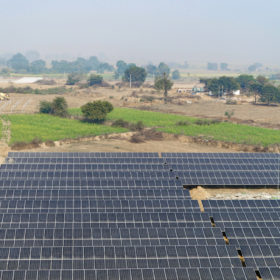
Uttar Pradesh’s installed solar capacity surges by 1,150% from 400 MW to 5,000 MW in nine years
Uttar Pradesh has now surpassed 5 GW of installed solar capacity, marking an impressive increase of 1,150% from 400 MW in 2017.
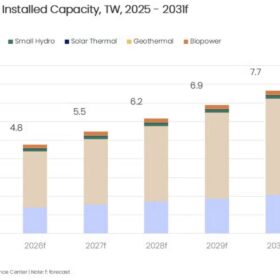
Global solar capacity to reach 6 TW by 2031, says GlobalData
GlobalData says global renewable capacity will more than double to 8.4 TW by 2031, with PV reaching nearly 6 TW, a 13% compound annual growth rate from 2025 levels of 4.1 TW.
Clean-tech startups are quietly turning India’s air pollution crisis into a renewables opportunity
Startups are rewriting the narrative of India’s environmental challenge by building a bridge between air quality restoration and renewable energy expansion—a synergy that promises to fundamentally reshape how India confronts both crises simultaneously.
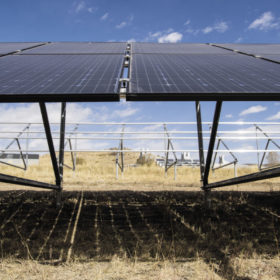
Luminous Power Technologies secures 350 MW solar project under PM-KUSUM Scheme
The 350 MW solar power project, comprising multiple PV plants of varying capacities across several districts of Rajasthan, will be executed in a staggered manner starting in the first quarter of 2026.
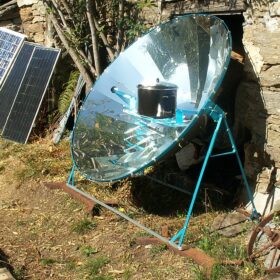
Efficient solar PV cooking with sand-based thermal energy storage
Scientists in Ghana have developed a device that combines a conventional solar PV-powered steam cooker with sand-based thermal energy storage. The system can achieve a thermal efficiency of 38.9% and has a payback period of 4.5 years.
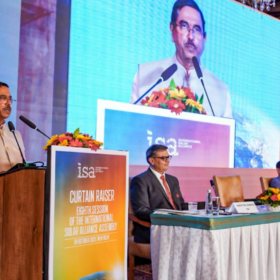
Eighth Assembly of International Solar Alliance scheduled from Oct. 27-30 in New Delhi
The International Solar Alliance (ISA) Assembly will focus on four key areas: catalyzing finance for solar projects, building global capability centres and advancing digitization, enhancing regional and country-level engagement, and developing technology and policy roadmaps.
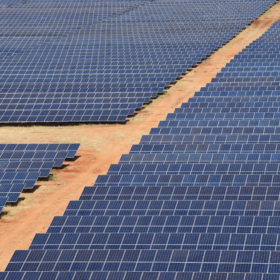
Avaada unveils 11 solar plants in Maharashtra’s Yavatmal under MSKVY 2.0 Scheme
Diversified energy firm Avaada Group has inaugurated 11 solar power plants in Maharashtra’s Yavatmal district under the Mukhyamantri Saur Krushi Vahini Yojana (MSKVY) 2.0—a scheme aimed at providing farmers with reliable daytime power for irrigation while advancing the state’s clean energy transition.