NTPC tenders 10 MW and 3 MW solar projects for Uttar Pradesh and Bihar
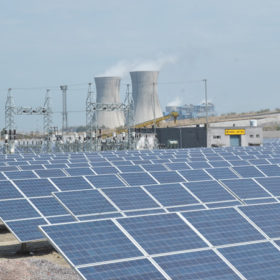
The state-owned power generator has invited bids for operations and maintenance of 10 MWp solar plant at Unchahar in district Rai Bareilly of Uttar Pradesh, and also for setting up of 3 MW plant at its Kahalgaon plant in Bhagalpur district of the state of Bihar.

NHPC tenders 1082.16 kW solar capacity in Himachal Pradesh
The state-owned hydropower generator has invited bids for setting up of rooftop and small solar power plants of total 1082.16 kWp capacity at its power stations/units in the state of Himachal Pradesh. The projects will be awarded through domestic competitive bidding followed by e-reverse auction.
Tata Power exemplifying the Indian energy transition: IEEFA
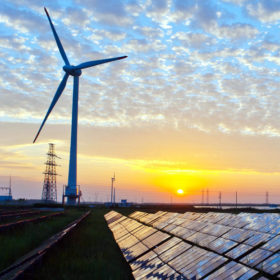
The private-sector integrated power company will cease to build new coal-fired capacity. Instead, it eyes 70% of new capacity additions coming from solar, wind and hydro through to year 2025.
India will add 144 GW renewables by 2022, exceed 275 GW by 2027: IEEFA
Given the existing trajectory of wind, solar and other renewable sources, India will reach 144 GW renewable energy capacity by FY2021-22—not far from the aspirational 175 GW target set back in 2015. This places India on track for exceeding its 275 GW target in 2027.
India could add 7-7.5 GW solar capacity this fiscal, predicts ICRA
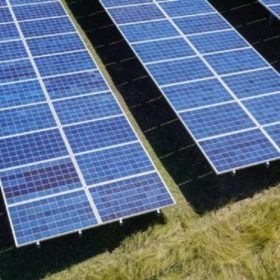
The solar capacity addition of 7-7.5 GW in FY2019-20 will be 15% higher than a subdued 6-6.5 GW in FY 2018-19. Of the total, 1 GW would come through open access/group captive route and grid-connected rooftop.
Waaree Energies eyes 15% of off-grid solar inverter market
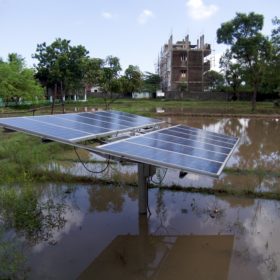
The EPC contractor and solar PV module manufacturer aims to capture over 15% of India’s Rs 600 crore off-grid solar inverter market by 2022, thus becoming one of the largest solar inverter players in the segment.
Bid submission deadline extended for 1.2GW hybrid and 200MW solar projects
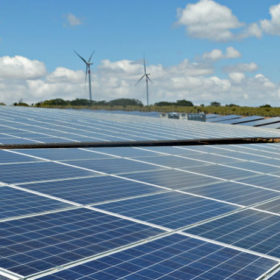
The Solar Energy Corporation (SECI) has pushed back the bid submission deadline for ISTS-connected 1.2 GW wind-solar hybrid projects by two weeks. On the other hand, the revised deadline for 200 MW grid-connected solar PV power capacity in Uttarakhand is now April 30.
CleanMax Solar raises Rs 275 crore from Macquarie-managed UK Climate Investments
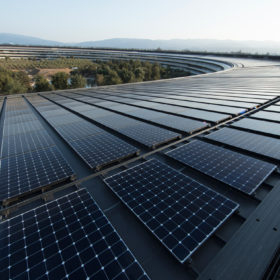
The Mumbai-based commercial solar player—which aims to more than double its customer base from 120 corporates to 300 by 2022—will use the amount to support its expansion of renewable energy portfolio from 500 MW to 2 GW in the next three years.

Maldives — a sinking paradise with solar ambitions
In September 1988, the United Nations spelt doom for the Maldives when the organization predicted that a gradual rise in average sea levels would leave the Indian Ocean nation of 1,196 small islands completely covered by water within 30 years.
SECI tenders 100 MW grid-connected solar capacity in Telangana
The Solar Energy Corporation of India (SECI) has invited bids for setting up of 100 MW (AC) grid-interactive solar PV power plants at the premises of state-owned coal mining company Singareni Collieries Company Limited (SCCL) in the state of Telangana. The project would be awarded through reverse auction. The deadline for bid submission is June 7.