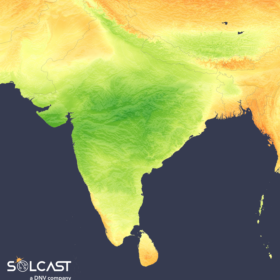
India’s strong monsoon cuts solar generation by 15% in September to October
In a new weekly update for pv magazine, Solcast, a DNV company, reports that India’s solar generation potential was significantly hampered during September and October due to an intensified southwest monsoon, resulting in a 15% decrease in irradiance compared to the long-term average.

“Renewable energy emerging as India’s next big jobs engine”
Balasubramanian A, senior vice president at TeamLease Services, shares insights on workforce requirements, skill gaps, and the key trends shaping India’s renewable energy industry.
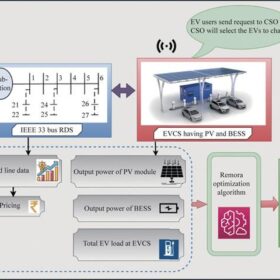
How to balance power losses, cost effectiveness in PV-BESS-driven EV charging stations
Scientists in India have developed a novel method to optimize the placement of an EV charging station on the grid, along with the size of its PV generation and battery storage. They have also created a framework for an innovative slot offering.
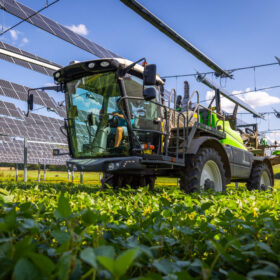
France agrivoltaics trials show early crop and livestock gains
Data from agrivoltaic canopy trials in France, developed by energy producer TSE and the French National Research Institute for Agriculture, Food and the Environment (INRAE), indicate measurable temperature, water-balance, and yield effects that reinforce the role of managed agrivoltaics in farm-level climate adaptation.
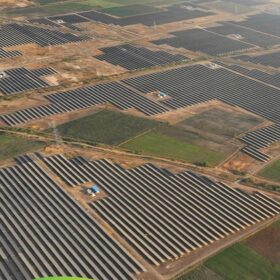
India installed 26.6 GW solar power capacity in first nine months of 2025
India installed solar power generation capacity totaling 26.6 GW in the first nine months (9M) of the calendar year 2025, an increase of 53.7% compared to 17.3 GW added in 9M 2024, according to Mercom India’s newly released report. Large-scale solar accounted for 81.5% of the capacity commissioned in 9M 2025, while rooftop solar contributed 18.5%.

South Korea mandates solar systems at public parking lots from late November
The South Korean government says all public parking lots larger than 1,000 square meters will be required to install solar power systems from the end of this month, as part of a nationwide policy to accelerate renewable energy adoption in urban areas.
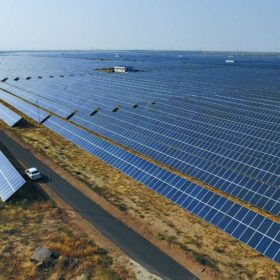
What can South Korea learn from India’s rapid solar deployment?
Korean policy analyst focusing on solar power plant siting and permitting, Daun Kim, has reported on her recent trip to India’s Bhadla Solar Park. The analyst highlights how clear siting policies and streamlined permitting helped India scale renewables, something that South Korea can learn as it pursues a 100 GW renewable energy target by 2030.
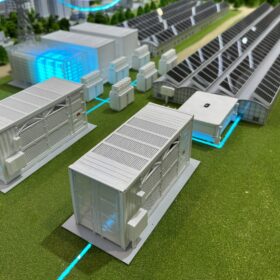
Three emerging structures for solar-plus-storage PPAs
The PPA price for pure photovoltaic projects has fallen by 20% over the past year, making such contracts less competitive. However, clear structures for bankable hybrid PPAs are now beginning to take shape, says Pieter van der Meulen, Senior Account Manager at LevelTen Energy, in an interview with pv magazine.
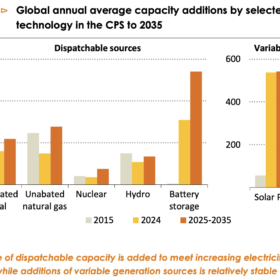
IEA warns global solar growth may plateau at 540 GW annually to 2035
The International Energy Agency (IEA) said global solar capacity additions are projected to average 540 GW a year through 2035, as outlined in its World Energy Outlook 2025 report.
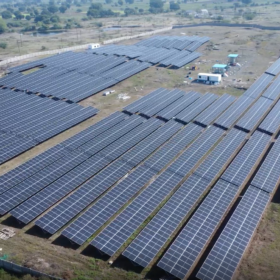
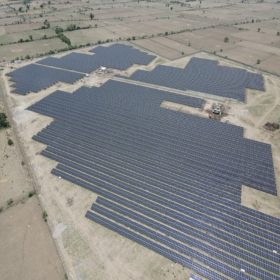
Bondada Engineering commissions 56.9 MW solar projects in Maharashtra
With the latest additions, the company’s cumulative commissioned capacity crosses the 1 GW milestone.