U.S. transformer market faces severe supply constraints
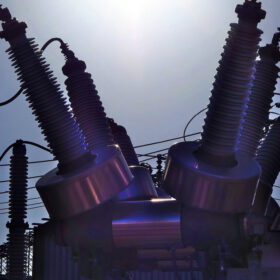
Severe shortages of power transformers are stalling grid expansion as developers face skyrocketing prices and four year wait times for critical equipment.
Coal India scraps solar manufacturing arm
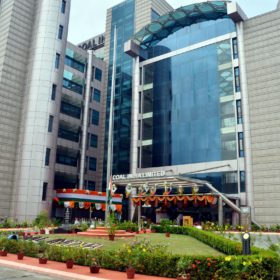
Coal India Ltd said today that the name of its arm CIL Solar PV Ltd has been struck off from the Register of Companies under Section 248(5) of the Companies Act, 2013, and that the subsidiary now stands dissolved.
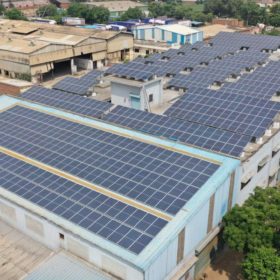
NHPC REL launches rooftop solar tender for govt buildings in Sikkim, Manipur and Nagaland
NHPC Renewable Energy Ltd has invited bids for the selection of rooftop developers to set up grid-connected rooftop solar projects on government buildings in Northeastern states of Sikkim, Manipur and Nagaland under the RESCO model. The selection will be done through tariff-based competitive bidding, along with an e-reverse auction process.
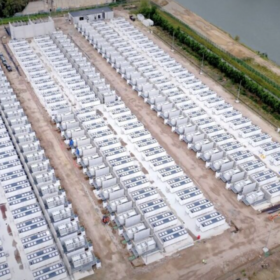
BloombergNEF confirms energy storage has reached the 100 GW era
A record year, and an incredibly strong outlook for the energy storage sector.
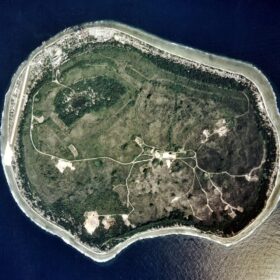
World’s smallest island nation advances 18 MW / 40 MWh solar-plus-storage project
In a bid to rid itself of diesel dependence, the world’s smallest island nation of Nauru has signed a landmark memorandum of understanding with Sydney-based Smart Commercial Energy to develop a clean energy solution.

How distributed energy resources can help India meet its 2030 clean energy targets faster
Distributed energy resources, rooftop solar, C&I open-access systems, behind-the-meter storage, solar agricultural pumps, microgrids, share one decisive advantage: deployment speed. And speed is not the only advantage. Power consumed where it is generated avoids the 15-22% aggregate technical and commercial losses in India’s distribution networks.
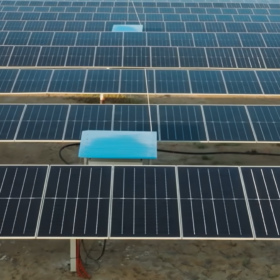
Adani Green commissions 150 MW solar capacity at Khavda
Adani Green Energy Ltd (AGEL) has commissioned a 150 MW solar power project at Khavda, taking its total operational renewable energy generation capacity to 19,735.8 MW and its operational battery energy storage system (BESS) capacity to 1,376 MWh.

The hidden engine: Why testing infrastructure is the real bottleneck in India’s green energy race
India’s 500 GW renewable energy target by 2030 dominates every policy conversation. Capacity additions, auction pipelines, transmission corridors; these are the metrics that make headlines. But there is a quieter, less glamorous constraint that could undermine all of it: the country’s under-investment in testing and certification infrastructure for clean energy equipment.
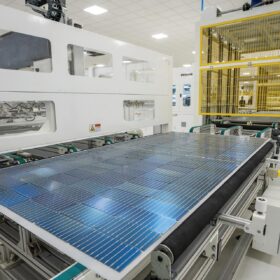
NTPC seeks solar modules for 1.2 GW PV projects at Khavda Renewable Energy Park
NTPC Renewable Energy Ltd (NTPC REL) has invited bids for the supply of solar PV modules for 1,200 MW of solar projects planned at the Khavda Renewable Energy Park – South Block in the Rann of Kutch, Gujarat.
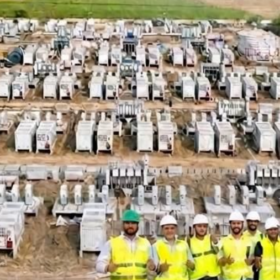
IndiGrid commissions 180 MW/360 MWh battery energy storage system project in Gujarat
Developed jointly by IndiGrid and EnerGrid, with Gujarat Urja Vikas Nigam Ltd (GUVNL) as the off-taker, the project is among India’s largest standalone utility-scale BESS installations at a single location.