Uma Gupta


Transforming the energy storage market
Ensuring pragmatic energy storage transformation is proportional to tweaking the current battery storage chemistry. Zinc battery technology is gaining traction, changing the prevailing energy storage dynamics.
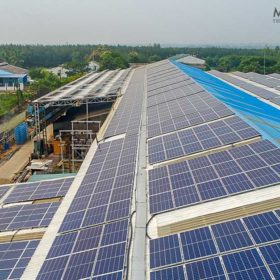
Delhi discom deploys digital data platform for solar energy management
BSES Yamuna Power Limited has deployed a digital solution pilot project that predicts the energy demand at consumption points like electric vehicle charging stations and energy generation capacity at solar rooftops. This will help the utility plan to store excess energy by considering the distribution congestion and commercial aspects.

Norway’s Statkraft, Aker Horizons partner to explore green hydrogen and ammonia production in India
Norwegian renewable energy developer Statkraft has partnered Norway’s green investment company Aker Horizons to explore fully-integrated renewable power generation and green hydrogen production in India, targeting local steel and fertilizer industries.
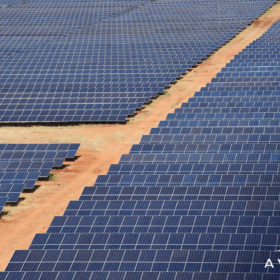
Linde raises 26% stake in 32.5 MW solar plant for self-consumption
The captive solar plant is developed by Avaada Group through a special purpose vehicle called Avaada MHYavat. The solar electricity generated will power energy-intensive air-separation operations of the industrial gas producer.

Larsen & Toubro, IIT Bombay partner on green hydrogen technology development
The Indian multinational EPC solutions provider has signed an agreement with the Indian Institute of Technology (IIT) Bombay to develop scalable and cost-effective solutions for green hydrogen production jointly.
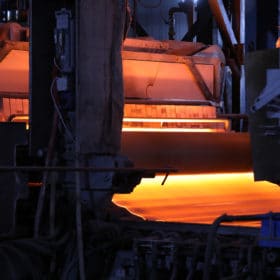
Borosil Renewables to acquire Europe’s largest solar glass maker Interfloat Group
With this acquisition, the Indian manufacturer’s solar glass output will grow to 750 tonnes per day (TPD) from the current 450 TPD.

Torrent Power acquires 50 MW solar plant from Canadian developer SkyPower
The solar plant, located in Telangana, benefits from a 25-year power purchase agreement (PPA) with the State discom at a fixed tariff of approx. INR 5.35/kWh. It has a remaining useful life of approx. 20 years.
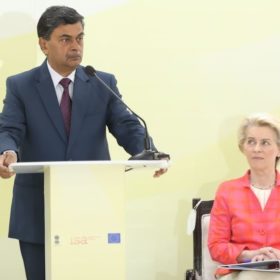
India calls for credit guarantee fund to drive solar adoption in electricity-deprived regions globally
RK Singh, India’s power minister, and president of the International Solar Alliance (ISA) Assembly, called on nations to support solar investments in developing and under-developed regions, including Africa, through low-cost finance and credit guarantee fund.
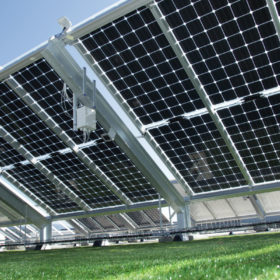
Solar module prices increased 38% in the last 20 months
Supply demand mismatch is the most crucial factor which is directly or indirectly leading to an increase in module prices. At present, demand (especially for poly-Si) far outstrips the supply. A balance between the supply and demand is essential for stabilization of solar module prices.
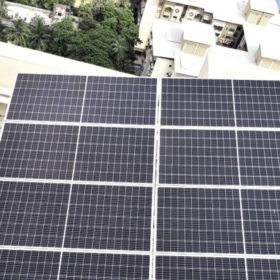
India added a record 13.5 GW of solar and wind capacity in 2021-22
The nation installed 12,438 MW of solar (10,217 MW utility-scale and 2,221 MW rooftop) and 1,111 MW wind during the 12 months ending March 31, 2022. The record addition was mainly due to the completion of projects delayed from the previous year.