Technologies revolutionizing solar energy
Advanced solar panels, inverters, batteries and plant monitoring technologies are revolutionizing the solar sector.
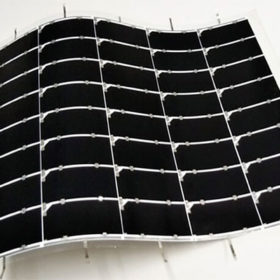
Sharp achieves conversion efficiency of 32.65% in flexible, lightweight solar module
The new prototype uses a triple-junction compound design, which sandwiches the solar cell between layers of film. The module is expected to be used in a variety of vehicles, an application that demands high efficiency and lightweight construction. Its conversion efficiency bests that of a similar Sharp module developed in 2016, which notched an efficiency of 31.17%, at the time a world record.
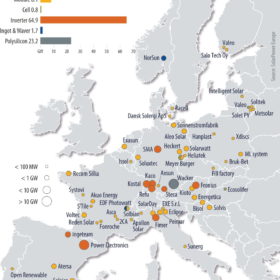
The great EU solar manufacturing reset
“We need to bring manufacturing back to Europe and the [European] Commission is willing to do whatever it takes to make it happen,” EU Energy Commissioner Kadri Simson said at the opening of SolarPower Summit 2022. Her words rocketed around the solar community, boosting share prices and invigorating the European solar industrial mission, writes SolarPower Europe CEO Walburga Hemetsberger, as she lays out the actions needed for solar-power EU energy independence.
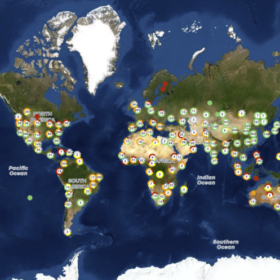
Global online database for solar parks above 20 MW
Global Energy Monitor (GEM) has launched a new open-source online tool that lists large-scale solar plants in 148 countries.

The long read: China’s PV industry reaches new heights
Against all odds, China’s gross domestic product grew by 8.1% in 2021, up 5.8% year on year. Electricity consumption grew by 10.3%, up 7.2%. Taking this into account, it’s no surprise that China’s PV industry also reached new heights. Frank Haugwitz, the founder of the Asia Europe Clean Energy (Solar) Advisory (AECEA), takes a closer look at what is still by far the world’s largest PV market.
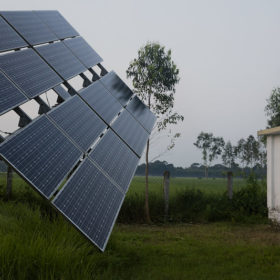
Solar developers buying up land in Bangladesh
A shortage of suitable sites is prompting companies to buy up land before deciding on the specifics of project construction, as a junior minister stated more solar is likely to be waved through by 2025.
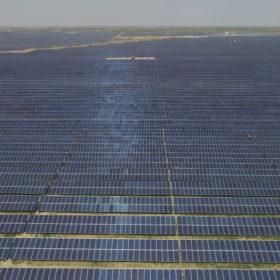
Higher solar module prices: rainy days ahead for developers?
CareEdge Ratings has analyzed the key drivers of rising PV module prices and the impact on projects in India. It has also assessed the tariffs expected in upcoming bids, to ensure that developers get the same returns they were previously getting.
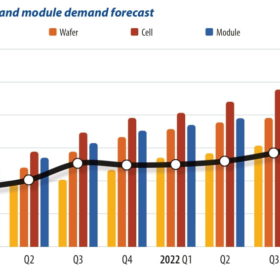
No end to solar supply/demand imbalance
The solar supply chain problems that began last year with high prices and polysilicon shortages are persisting into 2022. But we are already seeing a stark difference from earlier predictions that prices would decline gradually each quarter this year. PV Infolink’s Alan Tu probes the solar market situation and offers insights.
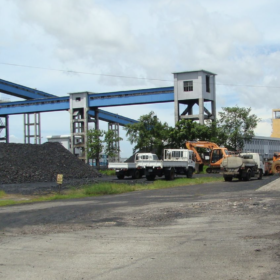
Rising costs weigh on solar deployment in Bangladesh
Rooftop and ground-mounted solar deployment is reportedly slowing down in Bangladesh due to rising prices of panels, inverters, and other PV system components.
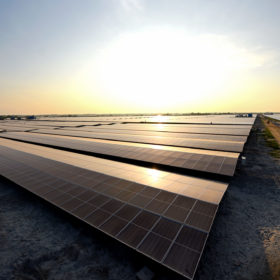
Bangladesh secures $200m from Asian Infrastructure Investment Bank to support renewables
The China-led Asian Infrastructure Investment Bank (AIIB) has extended a $200 million long-term credit facility to Bangladesh to finance a range of infrastructure projects, including renewable energy expansion.