





India’s Ministry of New and Renewable Energy (MNRE) has expanded the ALMM framework to include ingots and wafers, in a move aimed at strengthening supply chains, reducing import dependence and enhancing quality across the solar value chain. The ALMM requirement for solar wafers will be effective from June 1, 2028.
However, the ALMM List for wafers (ALMM List-III) will be issued only when at least three independent wafer manufacturing facilities are operational in India. These facilities should have a combined annual wafer manufacturing capacity of minimum 15 GW. Manufacturers seeking enlistment in ALMM List-III for wafers, must also have an equivalent ingot manufacturing capacity. Thus, the wafer manufacturing capacity enlisted in ALMM List-III shall actually reflect the manufacturing capacity of ingots and wafers.
The ALMM mechanism was originally introduced by MNRE to protect domestic manufacturers from the dumping of Chinese solar products. Under this framework, only MNRE-approved models and manufacturers listed in the ALMM are eligible for participation in government-backed solar projects.
Currently, ALMM is applicable to solar modules (ALMM List-I) and solar cells (ALMM List-II).
Under the ALMM implementation of wafers, all projects covered by ALMM must use PV modules enlisted in ALMM List-I. These modules, in turn, must be manufactured using cells enlisted in ALMM List-II, and those cells must use wafers sourced from manufacturers listed under ALMM List-III.
Projects that are exempt from using ALMM-listed solar cells will automatically be exempt from using ALMM-listed wafers.
The amendment introduces a 7-day cut-off window for ALMM wafer compliance.
Projects covered under ALMM—mandated to use solar PV modules from ALMM List-I and cells from ALMM List-II—and bid out on or before the cut-off date (set at seven days after the issuance of the first ALMM wafer list) are exempt from the requirement to use wafers from ALMM List-III, regardless of their commissioning timelines.
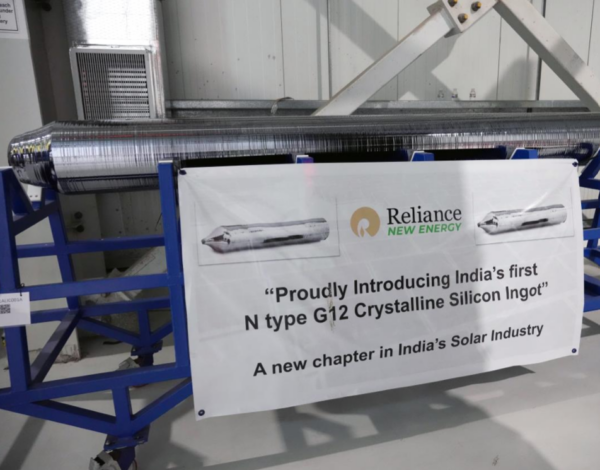
Reliance Industries Ltd
Projects covered under ALMM with bid submission deadlines falling after the cut-off date must mandatorily specify the use of ALMM List-III-compliant wafers in their tender documents.
Vinay Rustagi, Chief Business Officer, Premier Energies, said, “Bringing ingots and wafers under ALMM is highly desirable and logical next step in deepening India’s solar manufacturing sector. Currently 100% of our demand for solar wafers is met from imports making the sector highly prone to supply shocks, exchange rate volatility and trade disruption.”
He added that this segment could attract a total investment of around INR 50,000 crore over the next three years, bringing tens of thousands of jobs plus special tech know-how.
Premier Energies has already announced a plan to set up 10 GW ingot-wafer capacity costing INR 5,900 crore. “For the solar sector, the policy change means greater security of supply and self-sufficiency in these highly uncertain times,” said Rustagi.
Prashant Mathur, CEO, Saatvik Green Energy, said, “MNRE’s decision to extend ALMM to ingots and wafers marks a watershed moment in India’s solar journey. This policy vindicates the foresight of companies that invested early in integrated, end-to-end domestic manufacturing. It is more than a regulatory change; it is a bold affirmation that India is determined to own its solar supply chain, cut import dependencies, and generate high-quality manufacturing jobs at scale. Saatvik welcomes this move as a decisive step toward building a resilient, self-reliant solar ecosystem that powers India’s future.”
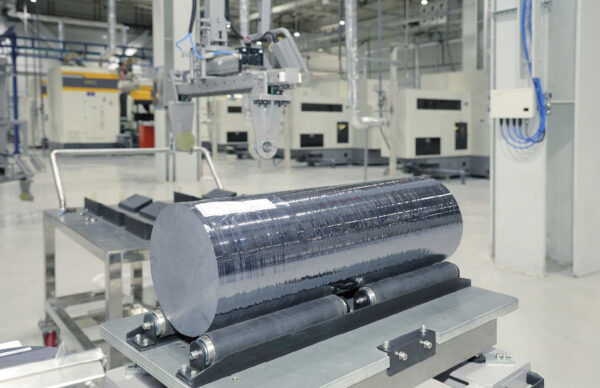
Photo: Adani Solar
This content is protected by copyright and may not be reused. If you want to cooperate with us and would like to reuse some of our content, please contact: editors@pv-magazine.com.




By submitting this form you agree to pv magazine using your data for the purposes of publishing your comment.
Your personal data will only be disclosed or otherwise transmitted to third parties for the purposes of spam filtering or if this is necessary for technical maintenance of the website. Any other transfer to third parties will not take place unless this is justified on the basis of applicable data protection regulations or if pv magazine is legally obliged to do so.
You may revoke this consent at any time with effect for the future, in which case your personal data will be deleted immediately. Otherwise, your data will be deleted if pv magazine has processed your request or the purpose of data storage is fulfilled.
Further information on data privacy can be found in our Data Protection Policy.