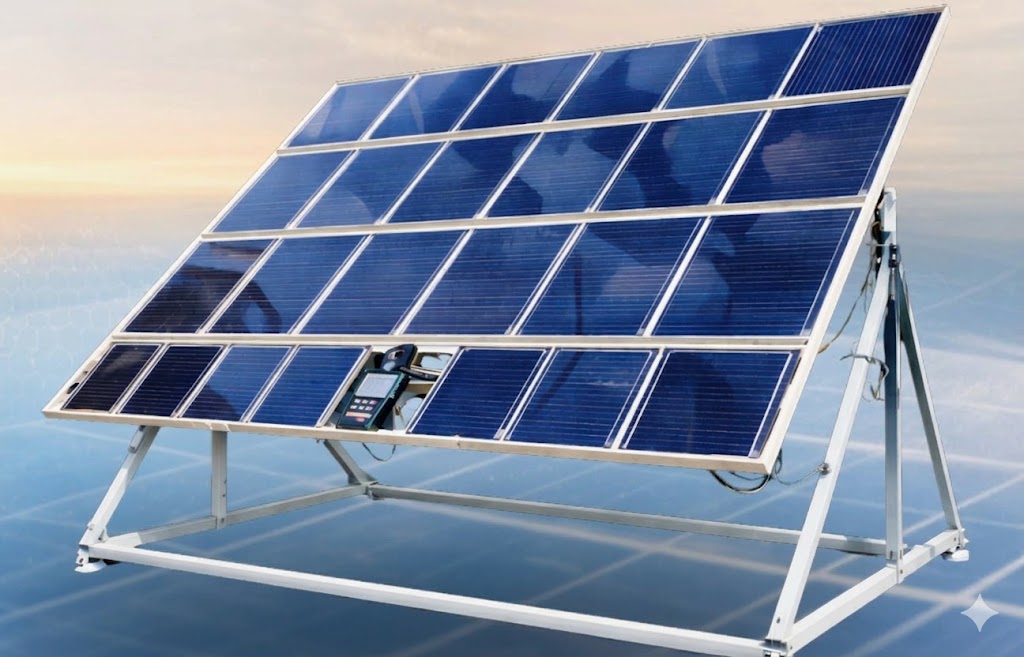





P3C Technology and Solutions has launched an industry-focused perovskite validation platform (P3SKYTM) designed to support PV manufacturers and technology developers working toward the commercialisation of next-generation solar technologies.
Perovskite solar technology has seen rapid progress in laboratory settings, demonstrating strong efficiency improvements and significant potential for tandem solar modules. However, one of the key challenges facing the industry remains the transition from research-scale breakthroughs to reliable, large-scale manufacturing.
“The newly launched platform aims to address this gap by enabling companies to test, validate, and generate performance data for perovskite modules under real-world operating conditions. By focusing on module-level validation, the platform seeks to help manufacturers better understand stability, reliability, and durability before committing to largescale production investments,” the company said.
“Perovskites represent one of the most promising developments in photovoltaic technology today,” said Sooraj Kumar, CEO of P3C Technology and Solutions. “However, moving from lab-scale results to industrial manufacturing requires rigorous validation. Our goal is to create a collaborative platform that helps the industry bridge this critical stage.”
The validation platform will initially work with a limited group of 40 pilot partners, including PV manufacturers, energy developers, and organizations exploring the integration of perovskite or tandem technology in future solar deployments.
This content is protected by copyright and may not be reused. If you want to cooperate with us and would like to reuse some of our content, please contact: editors@pv-magazine.com.






By submitting this form you agree to pv magazine using your data for the purposes of publishing your comment.
Your personal data will only be disclosed or otherwise transmitted to third parties for the purposes of spam filtering or if this is necessary for technical maintenance of the website. Any other transfer to third parties will not take place unless this is justified on the basis of applicable data protection regulations or if pv magazine is legally obliged to do so.
You may revoke this consent at any time with effect for the future, in which case your personal data will be deleted immediately. Otherwise, your data will be deleted if pv magazine has processed your request or the purpose of data storage is fulfilled.
Further information on data privacy can be found in our Data Protection Policy.