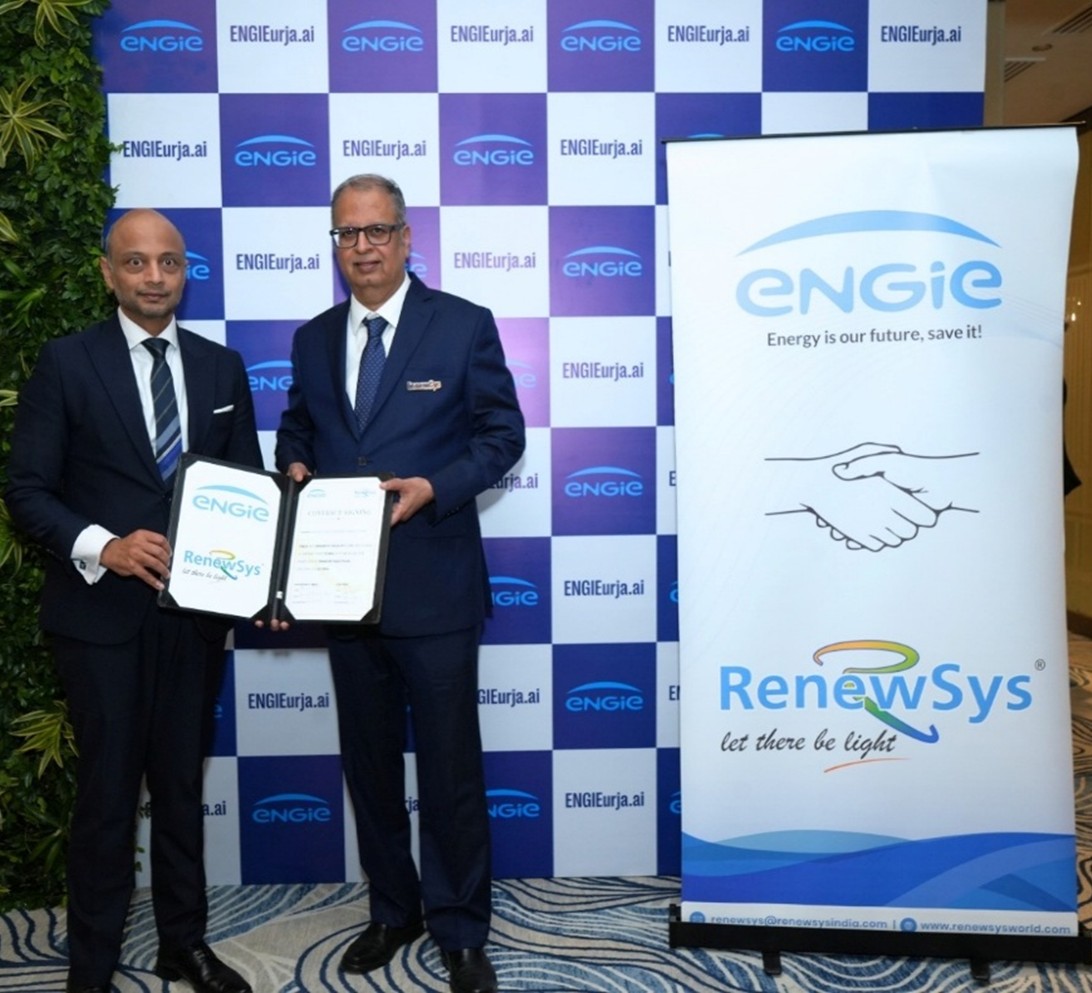





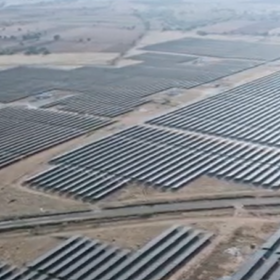
RenewSys India has signed a supplier agreement with ENGIE for the supply of 125 MWp of TOPCon solar PV modules, with deliveries scheduled between Feb. 2026 and April 2026. The modules will be deployed at ENGIE’s solar project in Bikaner, supporting the company’s expanding renewable energy portfolio in India.
As part of the agreement, RenewSys will supply its 132X G12R TOPCon Glass-to-Glass solar modules, designed to deliver high efficiency and robust performance under high-temperature conditions. The company said its modules feature a low temperature coefficient, resulting in reduced power loss at elevated temperatures and ensuring consistent electricity generation over the project’s operational life.
RenewSys is an integrated manufacturer of solar PV modules (5.5 GW) and key components, including backsheets (4 GW) and encapsulants (24 GW targeted by FY 2026–27). The company is also installing a new high-efficiency cell line with a targeted capacity of 5 GW by FY 2026–27. Headquartered in Mumbai, RenewSys is the renewable energy arm of the ENPEE Group.
This content is protected by copyright and may not be reused. If you want to cooperate with us and would like to reuse some of our content, please contact: editors@pv-magazine.com.




By submitting this form you agree to pv magazine using your data for the purposes of publishing your comment.
Your personal data will only be disclosed or otherwise transmitted to third parties for the purposes of spam filtering or if this is necessary for technical maintenance of the website. Any other transfer to third parties will not take place unless this is justified on the basis of applicable data protection regulations or if pv magazine is legally obliged to do so.
You may revoke this consent at any time with effect for the future, in which case your personal data will be deleted immediately. Otherwise, your data will be deleted if pv magazine has processed your request or the purpose of data storage is fulfilled.
Further information on data privacy can be found in our Data Protection Policy.