




Our nation’s sustainability story is no longer being driven by policy ambition or corporate ESG commitments alone. Its course will be decided by a significantly growing MSME sector which, apart from contributing roughly 30% of India’s GDP, is consistently under pressure to deliver higher productivity and more profits. From textile units and auto-component suppliers to food processors and small logistics operators, MSME’s now employ close to 60% of the total workforce and this is where real climate transition will face its true test before ultimately succeeding.
Post-Budget, India has a remarkable opportunity to accelerate sustainable lending as a mainstream economic lever. The next phase of green growth will depend on how quickly capital reaches businesses that are ready to modernize, become energy-efficient, and invest in cleaner production systems. The question is no longer whether sustainable lending will grow, it is how fast we can remove the barriers preventing it from scaling.
Sustainable lending is growing faster than traditional credit cycles
Across India’s financing ecosystem, sustainable lending is beginning to expand at a pace that is outstripping many conventional lending categories. While traditional credit often follows predictable economic cycles and sectoral demand patterns, sustainable lending is being driven by a far more urgent set of commercial pressures. Rising energy costs, increasing demand for responsibly created end products, and the increasing cost advantage of clean upgrades are accelerating demand far faster than the traditional pace of MSME credit adoption.
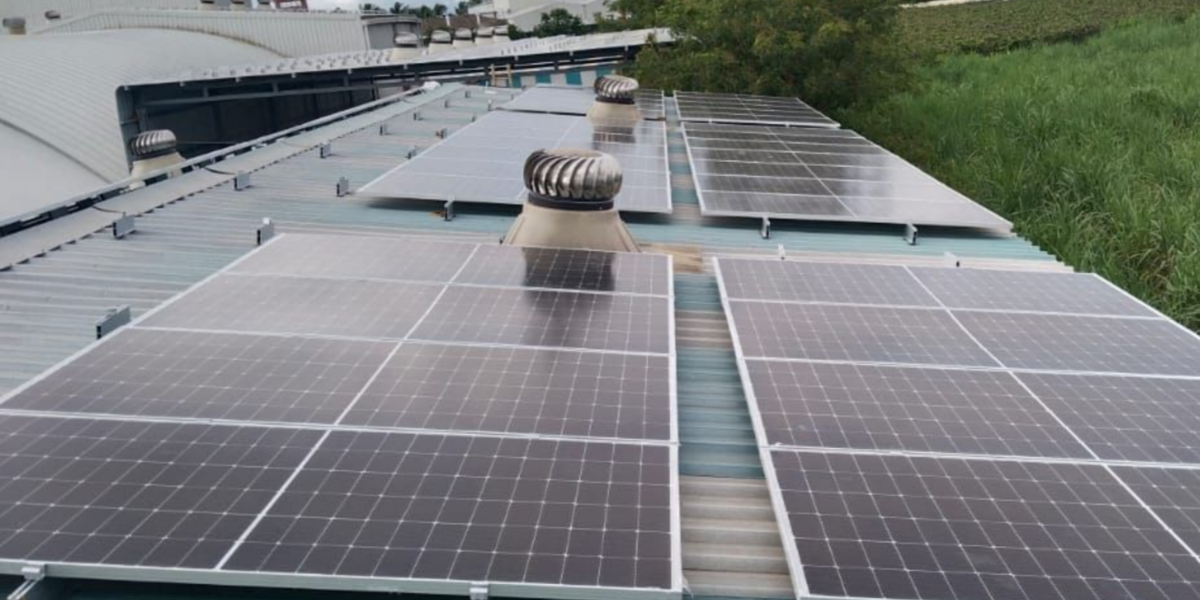
This is evident in how MSMEs are now approaching investments like rooftop solar. What was once viewed as an “environment-first” initiative is increasingly being treated as a hard financial decision. For many small manufacturers, energy is among the largest operating expenses, and solar adoption offers not just savings, but long-term stability and insulation from volatility in power costs.
But solar is only one part of the shift underway. The larger momentum is coming from sustainable upgrades across the MSME value chain, including energy-efficient equipment, electric mobility solutions, and supply chain financing models that support greener procurement. The more sustainability becomes linked to cost efficiency and competitiveness, the faster this lending category will continue to grow.
The Key Shift: Customer education is the missing bridge
One of the largest bottlenecks to sustainable lending is the lack of customer understanding. Many MSMEs still view sustainability investments as expensive upgrades with unclear returns. This is where financial institutions and green lenders must take a more active role in education, not just disbursement.
A simple example exists in everyday consumer behavior. When buying an air conditioner or refrigerator, many customers choose a 3-star rated appliance over a 5-star model purely because the upfront cost is lower, hence, seemingly a more cost-effective option. The long-term electricity savings and environmental impact often remain invisible in the buying decision.
The same mindset exists in business purchases. A factory owner may opt for a lower-cost machine without fully understanding that an energy-efficient alternative can deliver higher throughput, lower power bills, reduced maintenance costs, and better-quality output over time.
In this regard, only education can change such perceptions. Once customers understand the productivity benefits, sustainability becomes a rational decision, not a moral one.
Recognizing that sustainability is a critical productivity decision
For a segment that relies mostly on manual equipment and labor as a way to save cost instantly, the push toward sustainability has to be much larger than ideology alone. It needs to depend more on longer term productivity, by the simple need to run faster, leaner, and more efficiently. Old machines break down frequently, consume more power, deliver inconsistent quality, and limit output. In a competitive market, this is not just inefficient, it is commercially risky. Modern equipment, especially energy-efficient machinery, improves output consistency, reduces downtime, and lowers wastage. The initial cost may be higher, but the long-term gains are stronger.
This is why machine and equipment financing becomes critical. It enables MSMEs to acquire modern assets without impacting critical working capital needs. Rather than using cash reserves for a large upfront purchase, businesses can spread out the cost through structured repayments while continuing to invest in hiring, expansion, R&D, and raw material cycles. Equipment financing is not merely about funding machines, it is about funding operational resilience and long-term competitiveness.
Supply chain financing must evolve into sustainability-linked financing
MSME’s contribute close to 40% of the total exports. A single MSME supplier can influence the sustainability footprint of an entire large enterprise. Increasingly, large corporates are demanding compliance on energy usage, emissions, and waste management from their vendor networks. This creates a strong case for sustainability-linked supply chain financing, where MSMEs that adopt greener processes and cleaner equipment gain better credit access and better pricing.
Post-Budget, India needs stronger frameworks that encourage lenders to reward sustainability performance. Whether through interest rate incentives, credit enhancement mechanisms, or risk-sharing structures, the goal must be to make green adoption financially easier. If this ecosystem is built with scale, sustainability will stop being treated as a compliance burden and start being recognized as a competitive advantage across vendor networks.
What India needs now: a sustainable lending push with scale and intent
To accelerate sustainable lending meaningfully, three shifts are essential.
First, lenders must treat green finance as core MSME credit, not as a separate “impact” category. Solar, energy-efficient machinery, and clean mobility should be integrated into mainstream underwriting frameworks. Further, customer and workforce education awareness should be mandatory as they help disseminate consciousness around sustainability to future entrepreneurs and the next generation, thus creating a multiplier effect that eventually will get ingrained in practice.
Second, India needs stronger risk support systems. At present, close to 95% of MSMEs remain informal or semi-formal, which makes credit assessment challenging. Here, the evolution of UPI and the Digital Public Infrastructure (‘INDIA’) Stack, the initiative of Udhyam registration, have started to make some data available but not all and there is a need to hasten this digital transition if we wish to unlock larger volumes of sustainable lending without increasing systemic risk.
Last, sustainability lending must become simpler. Faster approvals, structured repayment models, and financing products designed around MSME cash flow realities will determine adoption rates.
Together, these shifts can ensure that sustainable lending becomes not a niche product, but a scalable financial movement aligned with India’s economic priorities.
A post-Budget opportunity India cannot afford to miss
India’s sustainability targets will not be achieved only through mega solar parks or large corporate transitions. It will be achieved when thousands of standalone MSMEs bring about a change in their understanding around sustainability and demonstrate clear action through initiatives such as upgradation of their equipment, adoption of Solar, and reduction as well as responsible disposal of waste amongst others. After all, sustainable lending is not just a financing tool but a proven economic multiplier.
The present budget with the Rs 10,000 crore SME Growth Fund, the Rs 2,000 crore top up to the Self Reliant Fund, a deeper integration of TReDS and GeM, continued CGTMSE support continues to enable MSME’s in the present. If India can now build an ecosystem where sustainable upgrades become easier to finance than inefficient legacy systems, the country will not only cut emissions, but also strengthen industrial competitiveness, improve productivity, and future-proof its growth engine. That is the post-Budget opportunity in front of us. The only question is how quickly we act on it.
The views and opinions expressed in this article are the author’s own, and do not necessarily reflect those held by pv magazine.
This content is protected by copyright and may not be reused. If you want to cooperate with us and would like to reuse some of our content, please contact: editors@pv-magazine.com.



By submitting this form you agree to pv magazine using your data for the purposes of publishing your comment.
Your personal data will only be disclosed or otherwise transmitted to third parties for the purposes of spam filtering or if this is necessary for technical maintenance of the website. Any other transfer to third parties will not take place unless this is justified on the basis of applicable data protection regulations or if pv magazine is legally obliged to do so.
You may revoke this consent at any time with effect for the future, in which case your personal data will be deleted immediately. Otherwise, your data will be deleted if pv magazine has processed your request or the purpose of data storage is fulfilled.
Further information on data privacy can be found in our Data Protection Policy.