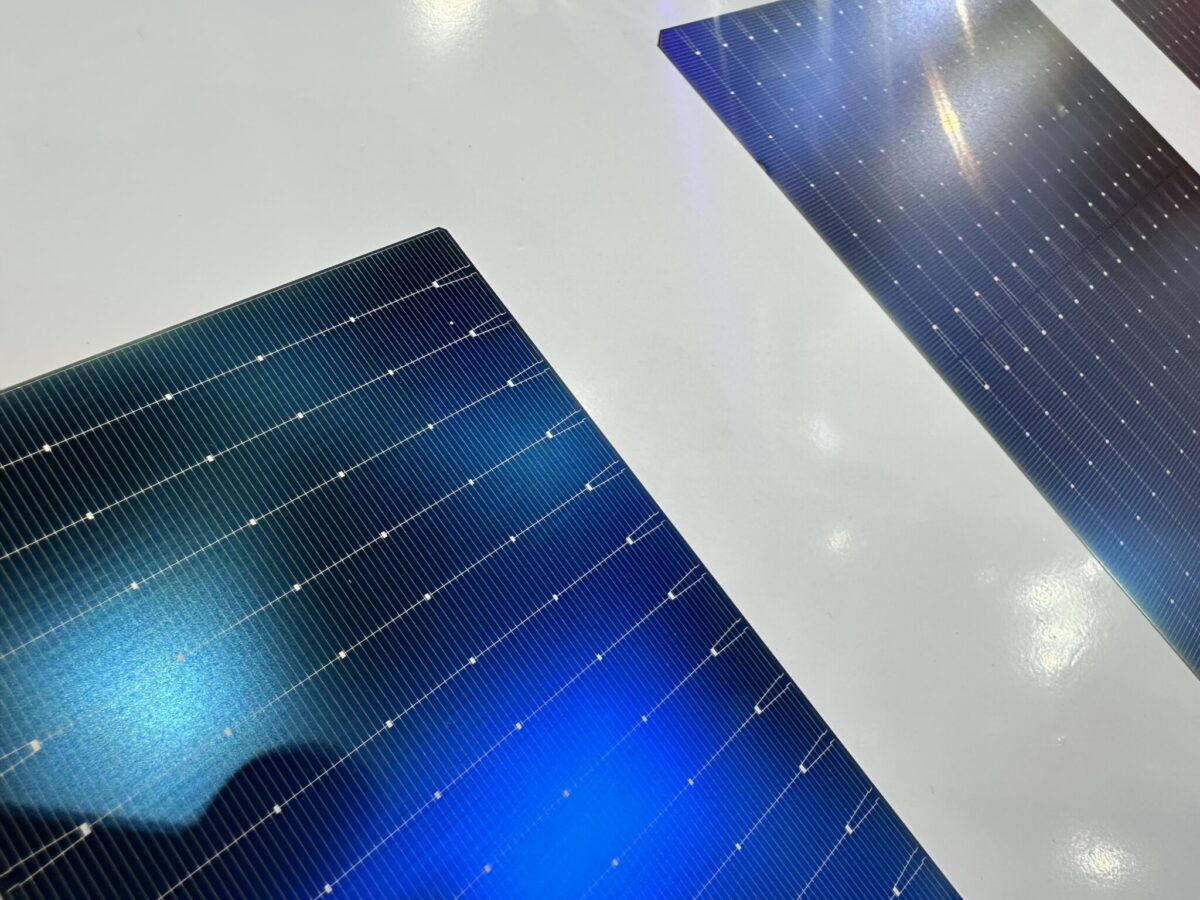





PV technology has advanced rapidly in recent years, with new solar cell architectures such as tunnel-oxide passivated contacts (TOPCon) having jumped directly from early development to gigawatt-scale mass production, outpacing traditional risk management frameworks. In 2024, after substantial TOPCon deployment, UVID was reported in several modules, surprising the industry as manufacturers had not fully anticipated this degradation mode.
Furthermore, the rapid pace of PV technology development has outpaced some IEC standards. For example, IEC 61215 tests modules for a UV dose of 15 kWh/m², whereas UVID typically appears only after approximately 60 kWh/m². In response, Munich Re tightened its underwriting and due diligence procedures in mid-2024, introducing the UV60 test as a mandatory requirement for all PV warranty partners. While this adds an extra step for potential partners, project owners, banks, and investors have welcomed it as an additional quality assurance measure.
The UV60 test was introduced as an additional stress test for photovoltaic modules to assess UV-induced degradation (UVID) risks before issuing long-term warranty insurance. The test exposes solar modules to high-intensity ultraviolet light, with a four times higher dose than the standard IEC 61215. After exposure, modules are inspected for physical damage, discoloration, delamination, and efficiency loss, providing a measure of their resistance to UV-induced degradation.
Munich Re’s portfolio of warranty-insured modules spans a wide range of products from most PV suppliers, deployed across all climate zones and owned by numerous project developers. With exposure exceeding $1.5 billion, covering more than $30 billion or 150 GW of PV modules, Munich Re is well-versed in managing PV technology risks.
PV warranty insurance from Munich Re covers all inherent failure and degradation modes, including UVID, potential-induced degradation (PID), light and elevated temperature-induced degradation (LeTID), spontaneous glass breakage, and more. To stay ahead of emerging risks, Munich Re collaborates with research institutes such as Fraunhofer ISE and quality assurance companies including Sinovoltaics, ISC Konstanz, PVEL Kiwa and CEA. These collaborations provided early warning signs of UVID in TOPCon modules.
By strengthening underwriting discipline, Munich Re not only reduces risk for its own portfolio and that of PV park owners but also helps establish the UV60 test as an insurance-driven industry standard, improving reliability and production quality across the whole PV supply chain.
In addition, solar cell production line inspections can complement rigorous module factory audits. This cell-level scrutiny addresses the diversity of commercial, mass-produced cell technologies currently on the market, including TOPCon, heterojunction, and back-contact cells, each with multiple variations.
Author: Ronald Sastrawan
Ronald Sastrawan is a Senior Risk Analyst and Senior Underwriter in the Green Tech Solutions unit at Munich Re, focusing on insuring long‑term risks for clean and solar technology projects. He has extensive experience in the solar industry and helped develop Munich Re’s PV Warranty Partner program to support solar investments.
The views and opinions expressed in this article are the author’s own, and do not necessarily reflect those held by pv magazine.
This content is protected by copyright and may not be reused. If you want to cooperate with us and would like to reuse some of our content, please contact: editors@pv-magazine.com.



By submitting this form you agree to pv magazine using your data for the purposes of publishing your comment.
Your personal data will only be disclosed or otherwise transmitted to third parties for the purposes of spam filtering or if this is necessary for technical maintenance of the website. Any other transfer to third parties will not take place unless this is justified on the basis of applicable data protection regulations or if pv magazine is legally obliged to do so.
You may revoke this consent at any time with effect for the future, in which case your personal data will be deleted immediately. Otherwise, your data will be deleted if pv magazine has processed your request or the purpose of data storage is fulfilled.
Further information on data privacy can be found in our Data Protection Policy.