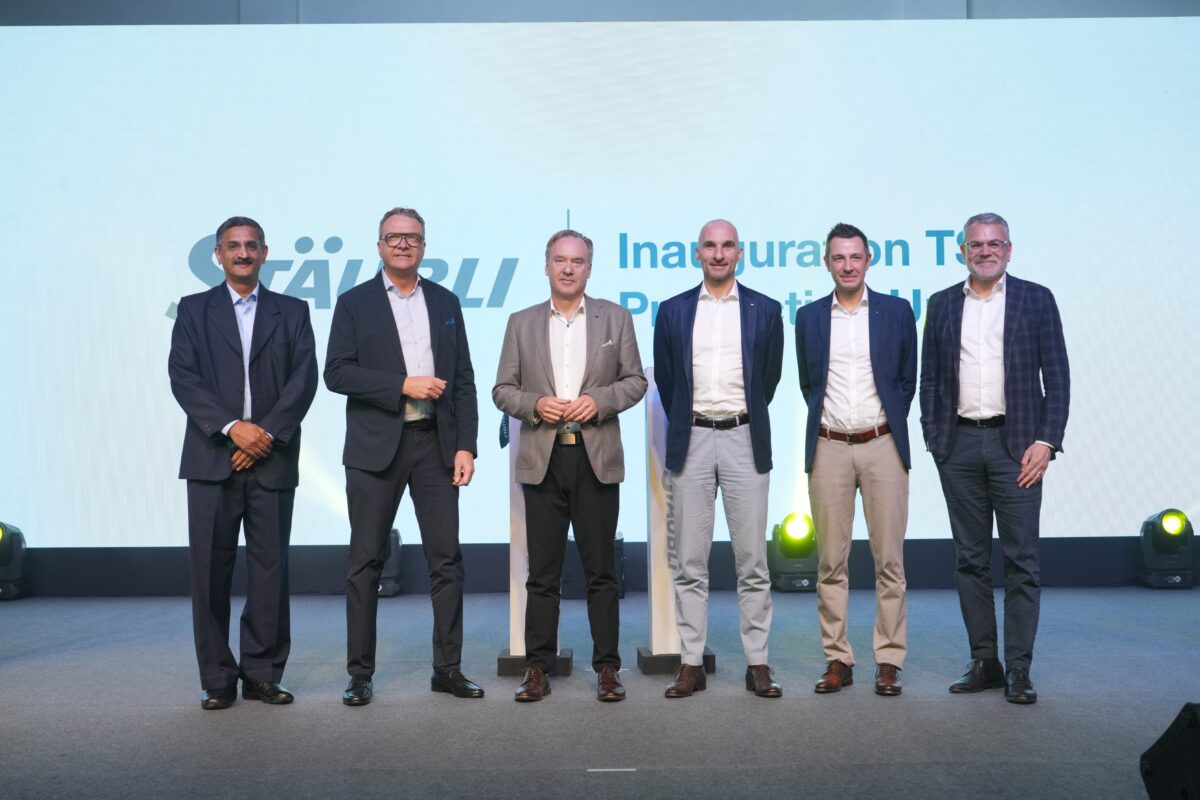





Swiss electrical connector manufacturer Stäubli has invested $10 million to expand its manufacturing facility in Bangalore, strengthening its position in India’s growing solar PV market and reinforcing its “Make in India” strategy.
The expanded facility will feature advanced, fully automated assembly lines and enhanced quality assurance systems to produce MC4-Evo1 and MC4-Evo2 PV connectors–critical components that connect solar modules to inverters and balance-of-system equipment. Stäubli says the expansion will support rising domestic demand while also contributing to its global supply chain.
According to the company, its PV connector assembly line in Bengaluru is built to Industry 4.0 standards and is capable of producing up to 26 million connector sets annually. Stäubli claims a global market share of around 50% in PV connectors and is targeting a similar share in India within the next two to three years.
“India is a key pillar in Stäubli’s global growth and manufacturing strategy,” said Gerald Vogt, Chief Executive Officer (CEO), Stäubli Group. “This investment strengthens our global supply capabilities and enables us to support customers worldwide with reliable, high-performance PV connector solutions produced to the highest quality and sustainability standards.”
Stäubli is also pursuing greater backward integration of its supply chain in India. The company plans to increase localization through the development of a domestic vendor base for renewable energy connector components.
“We are working with different levels of manufacturers,” said Gurupad Bhat, managing director, Stäubli Tec Systems India. “This includes panel manufacturers, for whom we have developed dedicated connectors for the local market. We are also engaging with asset owners to explain the importance of connectors in PV installations, as poor-quality connectors and cabling remain a major source of system risk, including fire hazards.”
From a quality and design perspective, Stäubli says its connectors undergo more than 150 quality checks across their lifecycle and are tested for extreme environmental conditions typical of the Indian market. The company plans a phased transfer of technology, with more than 25% localization through backward integration targeted by 2026.
“Several of our global suppliers already have a presence in India, which we will leverage,” Bhat said. “Over time, we plan to onboard MSMEs and expand our supply chain footprint to go beyond 50% localization.”
The expanded facility integrates energy-efficient manufacturing processes and operates as a zero-discharge plant, in line with stringent environmental standards. Stäubli said the additional capacity will help reduce lead times, improve supply chain resilience, and support OEMs, EPC contractors, and asset owners in India’s solar sector.
“This expansion underscores our long-term commitment to India’s renewable energy journey,” said Bhat. “By strengthening local manufacturing, engineering, and skill development, we are supporting the solar ecosystem with globally benchmarked solutions while contributing to job creation and industrial growth.”
Stäubli currently serves customers across key solar regions in India, including Delhi, Rajasthan, Gujarat, Tamil Nadu, and Karnataka. The Bangalore facility is expected to play an important role in the company’s global operations, supplying both established and emerging solar markets.
Production at the expanded facility is scheduled to commence in January 2026.
This content is protected by copyright and may not be reused. If you want to cooperate with us and would like to reuse some of our content, please contact: editors@pv-magazine.com.




By submitting this form you agree to pv magazine using your data for the purposes of publishing your comment.
Your personal data will only be disclosed or otherwise transmitted to third parties for the purposes of spam filtering or if this is necessary for technical maintenance of the website. Any other transfer to third parties will not take place unless this is justified on the basis of applicable data protection regulations or if pv magazine is legally obliged to do so.
You may revoke this consent at any time with effect for the future, in which case your personal data will be deleted immediately. Otherwise, your data will be deleted if pv magazine has processed your request or the purpose of data storage is fulfilled.
Further information on data privacy can be found in our Data Protection Policy.