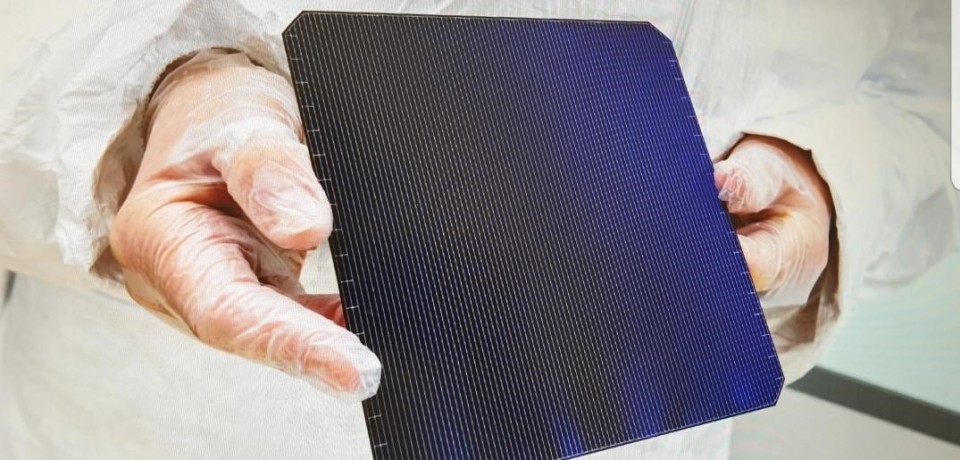





Researchers at new energy technologies and nanomaterials (Liten) branch of the French Alternative Energies and Atomic Energy Commission have investigated UV-induced degradation (UVID) pathways in heterojunction (HJT) solar cells and have found that light soaking treatments combining thermal and light activation can progressively restore selective layer conductivity.
“The novelty of this work lies primarily in the identification of the mechanism underlying a UV stability issue affecting the front-side selective layers of silicon HJT solar cells,” the research’s corresponding author, Hugo Lajoie, told pv magazine.
Using controlled UVA and UVB exposures calibrated to replicate realistic module-level UV doses, while accounting for the optical filtering effects of glass and encapsulants, the researchers identified hydrogenated amorphous silicon (a-Si:H) layers as the main contributors to UVID sensitivity in HJT solar cells.
“The front-side transparent conductive oxide (TCO) also contributes to these degradation through UVB transmission and its hydrogen content, but selective layer modifications exert a significantly stronger influence on UVID amplitude and dynamics, confirming its leading role in the degradation mechanism of the HJT stack,” Lajoie went on to say. “Experimental evidence shows that phosphine (PH₃) flow during plasma-enhanced chemical vapor deposition (PECVD) of the selective layer strongly governs UVID.”
The researchers also found that, after 60 kWh/m² of UVA exposure, HJT wafers processed with high PH₃ flow in the amorphous front n-type selective layer exhibited a relative carrier lifetime loss of 63.3%, compared with just 9.5% for undoped layers, measured at an injection level of 10¹⁵ cm⁻³.
According to the research team, these findings indicate that UVID in HJT cells cannot be explained solely by the loss of chemical passivation due to silicon–hydrogen (Si–Hₙ) bond breakage at the a-Si:H/c-Si interface, which has traditionally been considered the dominant degradation pathway, given that UV photons can exceed the dissociation energy of Si–Hₙ bonds.
“Instead, hydrogen migration, strongly influenced by doping level and free-carrier density, resulting from this cleavage emerges as a key driver, leading to the formation of electronically inactive P–Si–H–Si complexes in the front selective layer,” Lajoie explained. “This mechanism was indirectly evidenced by a UV-induced decrease in the electrical conductivity of doped selective layers. Such metastable defect configurations strongly limit carrier lifetime through a loss of field-effect passivation.”
The team also found that combined thermal and light activation through light soaking (LS) can progressively restore selective-layer conductivity, pointing to light-activated hydrogen reconfiguration processes. Their analysis showed that weakly bound hydrogen within the selective layer can migrate between Si–H–Si sites, promoting dopant activation and partial chemical repassivation of the a-Si:H/c-Si interface.
“FTIR measurements showed that LS appears to specifically regenerate high stretching mode Si–Hₙ bonds associated with void-rich environments, indicating targeted hydrogen rearrangement at defect-prone regions and restoring passivation quality to near-initial levels,” Lajoie emphasized. “Nevertheless, our results also suggest the existence of a photon-dose-dependent threshold beyond which UV damage becomes increasingly irreversible.”
The research’s findings were presented in “Understanding UV-Induced Degradation Mechanisms in SHJ Solar Cells and Their Reversibility: The Role of Hydrogen and Doping,” published in Progress in Photovoltaics.
“This work highlights the need for advanced multilayer selective-layer engineering alongside optimized UV filtering at the SHJ module level,” Lajoie concluded. “Precise control of hydrogen content, bonding configurations, and dopant activation offers a viable pathway to improve UV reliability without compromising passivation and emerges as a key lever to enhance the long-term durability of SHJ technology.”
This content is protected by copyright and may not be reused. If you want to cooperate with us and would like to reuse some of our content, please contact: editors@pv-magazine.com.




By submitting this form you agree to pv magazine using your data for the purposes of publishing your comment.
Your personal data will only be disclosed or otherwise transmitted to third parties for the purposes of spam filtering or if this is necessary for technical maintenance of the website. Any other transfer to third parties will not take place unless this is justified on the basis of applicable data protection regulations or if pv magazine is legally obliged to do so.
You may revoke this consent at any time with effect for the future, in which case your personal data will be deleted immediately. Otherwise, your data will be deleted if pv magazine has processed your request or the purpose of data storage is fulfilled.
Further information on data privacy can be found in our Data Protection Policy.