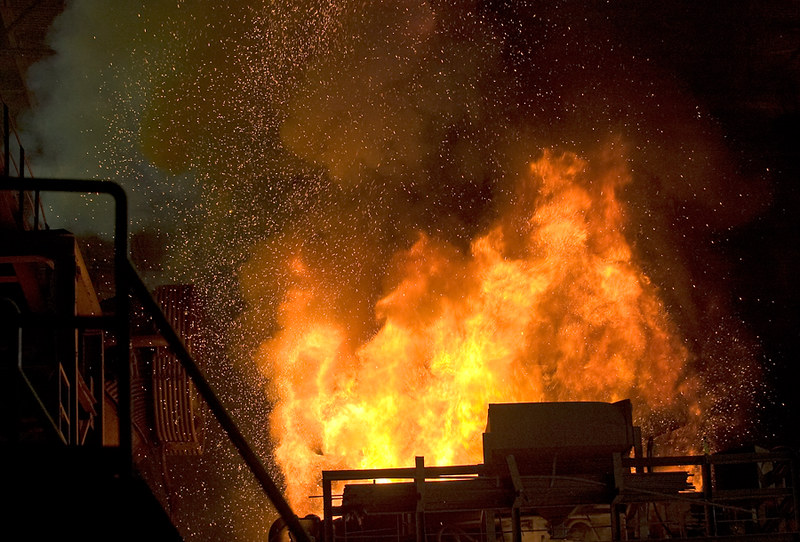





India’s steel industry is at the heart of its growth story. Steel finds use across sectors, from railways and renewable energy to infrastructure and housing. It forms the backbone of India’s overall development. According to the Press India Bureau, India is the world’s second-largest producer of steel and has manufactured more than 152 million tonnes of crude steel in FY25, with plans to expand the capacity to 300 million tonnes by 2030 and 500 million tonnes by 2047. However, along with powering the country’s financial growth, the industry must also come to terms with the fact that the global carbon budget has a limit.
What is the global carbon budget?
Under the Paris agreement, carbon budget represents the total amount of carbon dioxide that can be emitted without breaching the safe limits of global temperature, typically 1.5°C or 2°C above pre-industrial levels Under the latter scenario i.e. 2°C, the global carbon budget from 2020 onward was estimated at about 1,350 gigatonnes (Gt) of CO₂ according to the IPCC report. By 2024, approximately 280 Gt had already been exhausted from the baseline year (2020). If global emissions continue at the same pace as today, this remaining budget could be exhausted by around 2042.
There is also a more sustainable pathway where global emissions peak by 2030 and decline gradually thereafter. This could extend the timeline from 2042 to 2047. These estimates, based on modelling from the United Nations Environment Programme (UNEP) Emissions Gap Report and the IPCC’s 2°C pathway, are meant to contextualise urgency. They remind us that every major sector must contribute to reducing emissions. For India, The Press India Bureau states that steel is among the most critical, given that the sector accounts for 10–12 percent of India’s total emissions, with an average emission intensity of about 2.54 tonnes of CO₂ per tonne of crude steel (tCO₂/tcs).
The role of the steel sector from a global perspective
The global carbon budget is a shared resource, requiring all sectors worldwide to innovate. Per the World Steel Association (WSA), the steel sector is responsible for 7 to 9 percent of global CO2 emissions, thus creating urgency for the steel-producing nations to act collectively. In the Indian context, despite the anticipated reduction in emission intensity to 2.2 tCO₂ per tonne of crude steel (tcs) by 2030, the sector’s overall carbon emissions are projected to rise substantially due to the planned expansion in production capacity.
As mentioned earlier in the article, considering the expansion plans and production capacity targets, total CO₂ emissions from the Indian steel sector could reach around 561 million tCO₂ in 2030 and escalate to nearly 935 million tCO₂ by 2047 as reported by the Press India Bureau. This is if the emission intensity stabilises at 2.2 tCO₂/tcs. In this scenario, the sector could contribute a significant share of emissions, thus creating the need for focused and accelerated decarbonisation.
The transition towards a low-carbon future
It is encouraging that the move towards a future where carbon emissions are low, is well underway. The Ministry of Steel has established a Low-Carbon Transition Task Force to coordinate with stakeholders and identify technology pathways that align the sector with India’s climate goals. Also, the government has introduced a Green Steel Taxonomy, which sets emission-intensity benchmarks and recognises producers that meet them. In August 2025, three secondary steelmakers received the first-ever Green Steel Certificates for achieving intensities below 2.2 tCO₂e/tfs (tonnes of CO₂ equivalent per tonne of finished steel).
Policy mechanisms such as the Carbon Credit Trading Scheme (CCTS) are also coming into play. These allow steelmakers to monetise verified emission reductions. This, in turn, can help channel investment into cleaner technologies such as hydrogen-based steelmaking, electric arc furnaces (EAFs) that run on scrap and renewable-powered operations.
Technology and innovation at the core
Many of India’s leading steel producers are already piloting next-generation technologies, from hydrogen-based Direct Reduced Iron (DRI) and carbon capture, utilisation and storage (CCUS) to biochar-based coke substitutes and renewable energy integration. The use of Electric Arc Furnaces, which can process up to 100% scrap, offers a particularly promising route to lowering emissions.
However, significantly increasing the share of scrap in steelmaking, from 20% in FY23 to much higher levels over the next two decades will require major investments in scrap collection, segregation, and processing infrastructure, according to the S&P Global Commodity Insights. Robust policy support to enhance domestic scrap availability will be crucial in enabling this transition.
Challenges that need collective action
The path forward is not without hurdles. The limited availability of high-quality scrap, high costs of natural gas and declining iron-ore grades make it challenging to scale low-emission technologies. Many integrated steel plants also depend on captive coal-fired power, which adds to their emissions footprint.
These challenges require collaboration among government, industry and investors through concessional financing, public–private partnerships and long-term technology roadmaps that ensure India’s steel expansion aligns with its sustainability commitments.
A phased and practical roadmap
As outlined in a recent knowledge paper by Deloitte, on low-carbon steel, India’s decarbonisation pathway is envisioned to follow a phased approach, one that several producers have already started aligning with. In the near term (2025–2030), the focus will be on enhancing energy efficiency, recovering waste heat, and integrating renewable energy sources into operations. The subsequent decade (2030–2040) is expected to see the wider commercialisation of cleaner routes, such as hydrogen-based Direct Reduced Iron (DRI) and an expansion in scrap-based steelmaking. Beyond 2040, the sector can advance towards full decarbonisation by adopting mature low-carbon technologies, leveraging negative-emission solutions, and embedding circularity across the value chain.
Creating demand for green steel
Green steel demand creation is essential for economic viability. The government’s mandate to use green-rated steel in public sector projects is expected to significantly boost demand and domestic production of low-carbon steel. This initiative will encourage industries to adopt cleaner technologies, promote sustainable manufacturing practices and support India’s broader decarbonisation goals. By embedding green procurement into public infrastructure, the policy is poised to drive market transformation and accelerate the steel sector’s transition towards sustainability.
Forging a balanced path forward
India’s steel sector stands at a decisive moment. As the country pursues industrial growth, it must also demonstrate that development and decarbonisation can move together. The carbon budget framework offers not a constraint, but a compass, guiding industry toward innovation, resilience and global competitiveness.
With coordinated policy action, strategic investment and shared commitment, India can build a steel industry fuels its economic aspirations while also safeguarding its environmental future. The task is complex, but the opportunity is transformative, to forge a low-carbon growth model that the world can follow.
Authored by: Shailesh Tyagi, Partner, Sustainability & Climate Leader, Deloitte South Asia, and Shanmuganathan K, Associate Director, Sustainability & Climate, Deloitte India
The views and opinions expressed in this article are the author’s own, and do not necessarily reflect those held by pv magazine.
This content is protected by copyright and may not be reused. If you want to cooperate with us and would like to reuse some of our content, please contact: editors@pv-magazine.com.


By submitting this form you agree to pv magazine using your data for the purposes of publishing your comment.
Your personal data will only be disclosed or otherwise transmitted to third parties for the purposes of spam filtering or if this is necessary for technical maintenance of the website. Any other transfer to third parties will not take place unless this is justified on the basis of applicable data protection regulations or if pv magazine is legally obliged to do so.
You may revoke this consent at any time with effect for the future, in which case your personal data will be deleted immediately. Otherwise, your data will be deleted if pv magazine has processed your request or the purpose of data storage is fulfilled.
Further information on data privacy can be found in our Data Protection Policy.