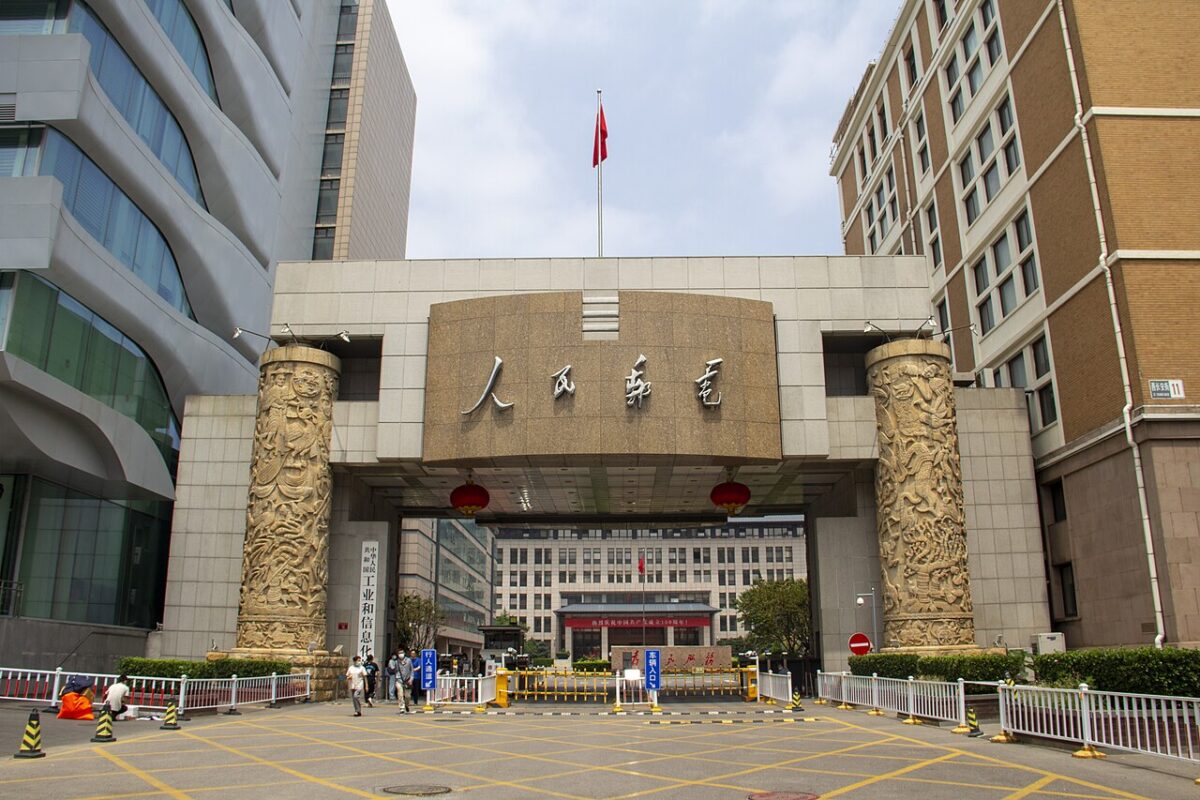





China’s National Intellectual Property Administration (CNIPA) and Ministry of Industry and Information Technology (MITT) have unveiled a package of policy measures designed to strengthen intellectual property (IP) protection in the country’s solar industry.
The two parties co-published a document that commits to strengthening IP protection in order to “effectively solve the problem of involution competition, continuously create a fair and orderly market environment and promote the healthy development of the photovoltaic industry.”
The document lists eleven key tasks, beginning with promoting high-quality patent filing. Enterprises are encouraged to accelerate technological advancements in TOPCon, back-contract (BC) and heterojunction (HJT) PV technologies and reserve basic patents for developing technologies such as perovskites and tandem.
Other key tasks include improving the efficiency of patent pre-examination, strengthening IP risk monitoring and improving the handling of administrative adjudication of disputes.
The document also commits to bettering collaborative protection of IP rights, the regulation of IP infringement in solar procurement schemes and the development of diversified dispute resolutions. It then lists the transformation and application of IP rights, strengthening overseas IP risk response, enhancing the IP capabilities of enterprises and strengthening trademark, brand building and protection as other key tasks.
CNIPA and MIIT say that by 2027, IP rights will have “significantly contributed to the healthy development of the photovoltaic industry” by deploying a number of high-value patents with competitive rights and increasing the sector’s ability to cope with IP risks.
The document ends with a commitment that IP management departments and industry and information technology authorities will work together to establish a coordination and consultation system for IP rights in China’s solar sector.
The system will strengthen overall guidance and form a regular communication mechanism, the document says, by exploring models of central-local government collaboration and regional cooperation.
The coordination and consultation system will also support solar businesses with IP management and utilization capabilities, establish specialized think tanks featuring experts in IP, industry, law, and public services and promote IP protection in China’s solar sector. This work will foster a “positive social atmosphere that respects IP rights and values innovation”, CNIPA and MITT conclude.
Last July, MITT committed to curbing “disorderly” competition in China’s solar sector by tackling low-price competition and excess capacity. In November, the ministry said it would address irrational competition in the country’s battery storage industry.
This content is protected by copyright and may not be reused. If you want to cooperate with us and would like to reuse some of our content, please contact: editors@pv-magazine.com.


By submitting this form you agree to pv magazine using your data for the purposes of publishing your comment.
Your personal data will only be disclosed or otherwise transmitted to third parties for the purposes of spam filtering or if this is necessary for technical maintenance of the website. Any other transfer to third parties will not take place unless this is justified on the basis of applicable data protection regulations or if pv magazine is legally obliged to do so.
You may revoke this consent at any time with effect for the future, in which case your personal data will be deleted immediately. Otherwise, your data will be deleted if pv magazine has processed your request or the purpose of data storage is fulfilled.
Further information on data privacy can be found in our Data Protection Policy.