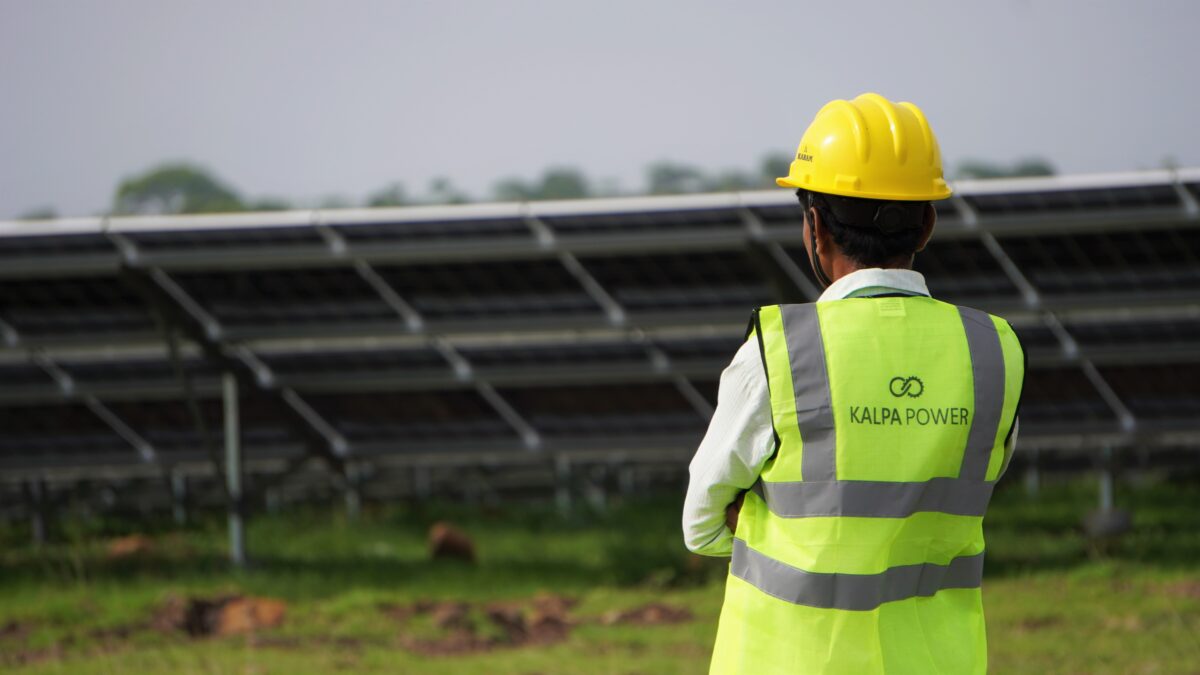





India’s renewable energy story has been one of remarkable ambition and execution. Our 2030 target of 500 GW of non-fossil fuel capacity is a commitment to reshaping our energy landscape and claiming leadership in the global clean energy transition.
Yet beneath this success story lies a challenge, a critical shortage of skilled workers. In 2023, India’s renewable energy sector employed approximately 1.02 million people across various segments—with hydropower and solar photovoltaic being the largest contributors, followed by biogas (85,000 jobs), solid biomass (58,000), wind power (52,000), liquid biofuels (35,000), and solar heating and cooling (17,000). While impressive, an estimated shortage of 1.7 million appropriately skilled workers across the value chain presents a bottleneck that capital alone cannot solve.
India isn’t facing an unemployment problem in renewable energy. We’re facing an under-skilling challenge. The difference is crucial.
The renewable energy sector creates significant employment density—approximately 10 times more workers per MW in solar and 3–4 times more in wind than in conventional power plants. This employment multiplication should be our competitive advantage. However, the skills gap is creating economic inefficiencies that compound across the sector.
When Indian renewable companies compare revenue per employee with global peers, they typically find themselves in the 20th to 30th percentile. We’re employing more people to generate the same revenue, which makes scaling more capital-intensive and reduces the overall efficiency that could attract further investment.
Three Core Challenges
The Curriculum-Industry Disconnect
The challenge begins at “finishing schools”. Engineering curricula haven’t evolved substantially in two decades, even as the industry has undergone four to five generational shifts in technology and delivery models.
Electrical engineering programs still emphasise motor assembly in detail, though nine out of ten graduates will never manually assemble a motor. Power engineering education features steam engine technology prominently, despite India’s last such installation being perhaps 15 years in the past. Meanwhile, the metro infrastructure transforming our cities uses pre-engineered components, knowledge that’s not always reflected in curricula.
The gap extends beyond technical skills. Industry needs people who understand basic financial literacy, accounting principles, and business fundamentals. Even institutions with curriculum flexibility find introducing these foundational skills challenging under existing time constraints.
Insufficient Recognition for Skill-Based Learning
While government initiatives have established skill development institutes, there’s a perception gap around vocational training versus traditional degrees. Not every role requires advanced mathematics or theoretical engineering, many excellent technicians, quality engineers, and fitters thrive with focused, practical training. Yet ITI programs and diploma certifications haven’t achieved the recognition that would make them attractive career paths at scale.
Germany offers an instructive model: three-year programs leading to diplomas hold equal or greater value than four-year degrees. This creates multiple pathways to skilled employment without forcing everyone through identical educational frameworks.
Limited Industry-Academia Collaboration
Companies often hesitate to engage deeply with educational institutions, concerned about time investment and uncertain returns. Yet Maharashtra alone produces lakhs of engineers annually.
Many industry leaders have attempted deeper engagement, offering employment opportunities while requesting targeted curriculum development. The response is typically positive in principle, but implementation remains challenging because institutions are stretched managing existing requirements. This creates a vacuum that online educational platforms fill, helpful, but not a substitute for systemic educational evolution.
These challenges are solvable. It requires coordinated action from industry, academia, and policymakers.
Structured Industry-Academia Partnerships
Industry advisory boards need real curriculum influence, meeting quarterly to review and update technical content. Semester-long industry projects should be integrated into final-year programs, giving students exposure to real-world applications. Industry-sponsored labs and workshops can bring current technology into educational settings, while faculty exchange programs allow industry professionals to teach specialised modules and academics to spend time in industry settings understanding evolving requirements.
Elevation of Alternative Credentials
We need systemic recognition of skill-based certifications that creates genuine career pathways. Government and industry must recognise standardised certifications that hold value in hiring and compensation decisions. Clear articulation of career progression paths for diploma holders and ITI graduates is essential, along with integration of these programs with formal education to allow lateral entry and upskilling. Public communication campaigns that celebrate skilled trades and technical expertise can shift perception from viewing these as “alternative” paths to recognising them as valuable careers.
On-the-Job Training Frameworks
Some companies are introducing internal training programs that bridge the gap effectively. The model involves hiring from local talent pools, engineering graduates from state institutions, and implementing structured 60-day to six-month programs focused on learn-on-the-job approaches.
These programs work because they align expectations with reality from day one. Participants understand what the work involves and receive targeted skill development for specific needs. While individual programs bring in 50-90 people annually, scaling this model across the industry could address thousands of positions while creating templates for effective training.
Curriculum Agility Mechanisms
Academic institutions need tools and frameworks for faster curriculum evolution. Modular curriculum design allows updating specific components without overhauling entire programs. Industry-validated skill modules can be integrated quickly as needs evolve, while digital learning resources enable more frequent updates than printed materials allow. Credit systems that recognise industry certifications and training within formal degree programs create bridges between traditional education and practical skill development.
Over the last decade, India has shifted global perception from a country that commits more than it delivers to one that executes when properly channelized. The renewable energy sector itself demonstrates this: installed capacity has grown dramatically, manufacturing capabilities have expanded, and project execution timelines have improved.
Closing the skills gap is the next evolution in this journey, and the timing couldn’t be more opportune. India stands at a perfect trifecta: surging energy demand, a massive employable workforce, and the opportunity to deliver higher standards of living through clean energy.
By 2035, our electricity consumption is projected to reach approximately 4,041 TWh—nearly three times the 2023 level. Our installed capacity could reach 1,056 GW by 2040, with government targets of 500 GW of non-fossil capacity by 2030, scaling to 2,100 GW by 2047. Meanwhile, India’s workforce will grow from 480 million today to over 950 million by 2040, one of the world’s largest labour pools, with 69% of the population in the workforce by 2035.
The time to train this workforce is now. Beyond traditional renewable energy, India can lead the transition to green hydrogen and meet the explosive growth in data centers, both requiring skilled employment at scale to power innovation in healthcare, medicine, and infrastructure development.
The views and opinions expressed in this article are the author’s own, and do not necessarily reflect those held by pv magazine.
This content is protected by copyright and may not be reused. If you want to cooperate with us and would like to reuse some of our content, please contact: editors@pv-magazine.com.






By submitting this form you agree to pv magazine using your data for the purposes of publishing your comment.
Your personal data will only be disclosed or otherwise transmitted to third parties for the purposes of spam filtering or if this is necessary for technical maintenance of the website. Any other transfer to third parties will not take place unless this is justified on the basis of applicable data protection regulations or if pv magazine is legally obliged to do so.
You may revoke this consent at any time with effect for the future, in which case your personal data will be deleted immediately. Otherwise, your data will be deleted if pv magazine has processed your request or the purpose of data storage is fulfilled.
Further information on data privacy can be found in our Data Protection Policy.