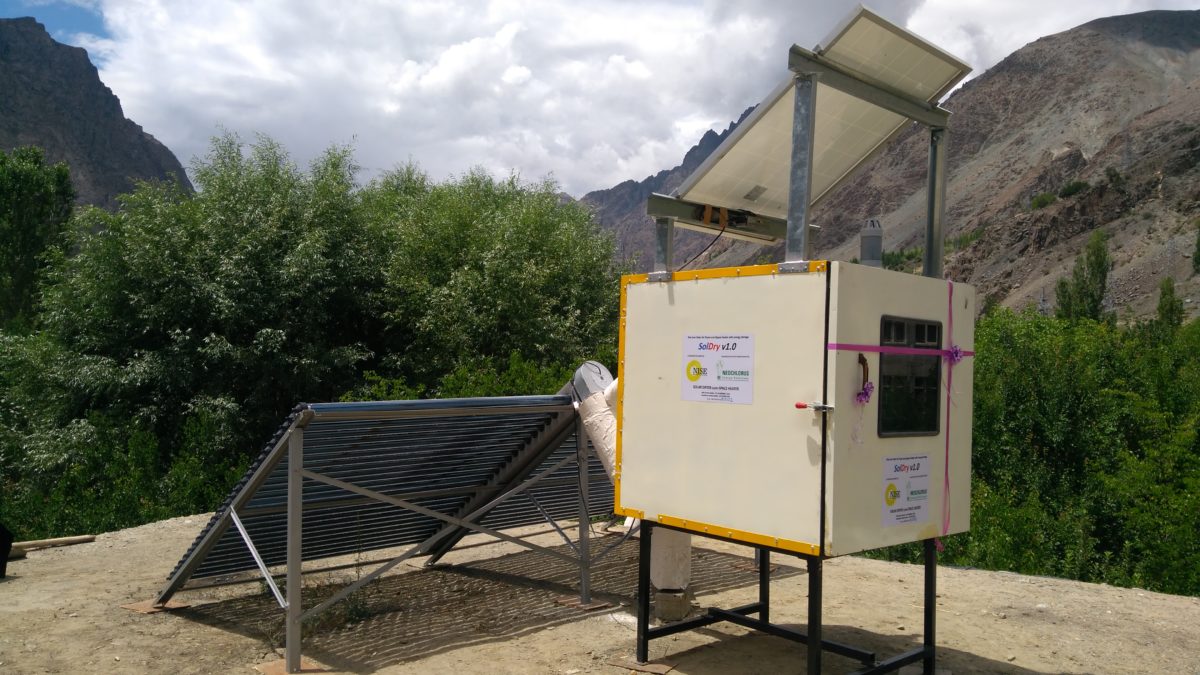





A new report by CEEW and Villgro states solar-powered pumps (higher capacity and micro-pumps) have the maximum deployment potential among all mature decentralized renewable energy (DRE) livelihood technologies in India, followed by solar-powered vertical fodder growing units and solar dryers.
Collectively, these technologies have a market potential of $32.1 billion (solar pumps $28 billion, solar dryers $2.3 billion, solar vertical fodder growing units $1.8 billion) and can impact around 27 million livelihoods.
The analysts studied twelve mature DRE livelihood technologies for their market potential and the impact on the number of livelihoods (in million). These technologies included vertical fodder grow units, higher capacity pumps, cold storage, micro pumps, dryers, grain milling machines, looms, small refrigerators/deep freezers, small horticulture processors, charkhas, bulk milk chillers, and silk reeling machines.
The report stated these twelve mature DRE livelihood technologies collectively have the potential to impact 37 million livelihoods. This livelihood impact potential translates into a revenue opportunity worth $48 billion for enterprises deploying and commercializing such technologies.
The DRE livelihood technologies have the greatest impact opportunity in Uttar Pradesh, the state with the highest population in the country. It is followed by West Bengal, Bihar, Gujarat, Maharashtra, Madhya Pradesh, and Karnataka.
Additionally, the relative market for each DRE livelihood technology varies across states. For example, micro solar pumps have the largest market in West Bengal, whereas solar dryers have the largest market in Maharashtra.
This content is protected by copyright and may not be reused. If you want to cooperate with us and would like to reuse some of our content, please contact: editors@pv-magazine.com.




By submitting this form you agree to pv magazine using your data for the purposes of publishing your comment.
Your personal data will only be disclosed or otherwise transmitted to third parties for the purposes of spam filtering or if this is necessary for technical maintenance of the website. Any other transfer to third parties will not take place unless this is justified on the basis of applicable data protection regulations or if pv magazine is legally obliged to do so.
You may revoke this consent at any time with effect for the future, in which case your personal data will be deleted immediately. Otherwise, your data will be deleted if pv magazine has processed your request or the purpose of data storage is fulfilled.
Further information on data privacy can be found in our Data Protection Policy.