Research & Development

As India scales up solar deployment, innovation is critical to address climate conditions, grid variability, and cost targets. This category features R&D efforts by institutions like NISE, IITs, and CSIR, along with startups and corporate labs pushing the boundaries of PV technology. Topics include improvements in perovskite and TOPCon cells, localized durability testing, AI-based performance analytics, and grid-friendly energy storage systems. We also cover collaborative international research, pilot projects, and innovations tailored to India’s tropical climate, monsoon challenges, and rural electrification needs—laying the groundwork for a resilient, efficient solar future.
Advertisement
Advertisement
Advertisement
Latest News
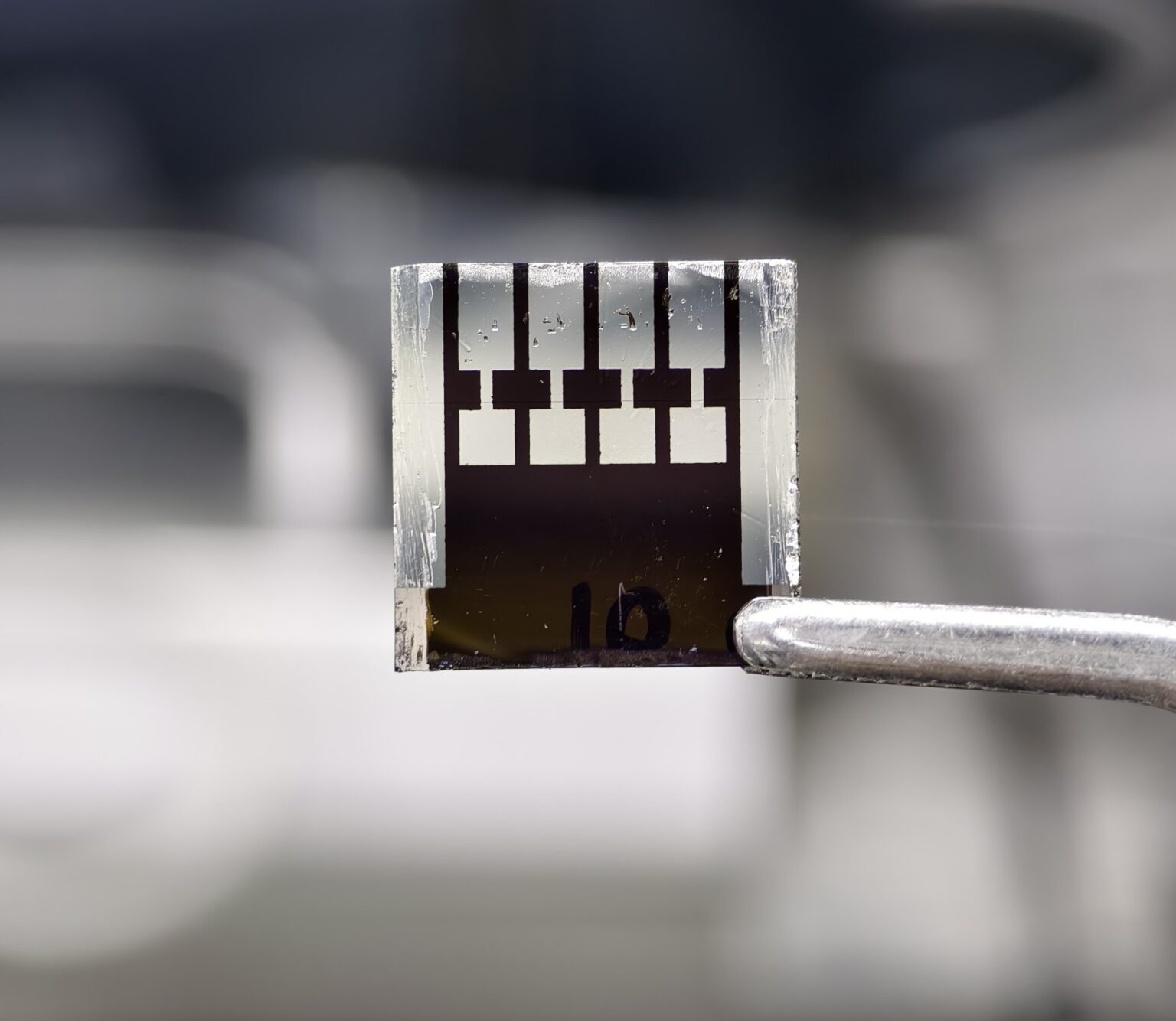
Chinese scientists achieve record-breaking 27.35% efficiency for perovskite-organic tandem solar cell
Nanjing University researchers developed a perovskite-organic tandem solar cell using a novel low-bandgap acceptor to boost near-infrared light harvesting and improve photocurrent matching. The device achieved a 27.35% efficiency, while retaining 80% of its initial performance after 744 hours of continuous illumination.
Sep 14, 2026
Advertisement
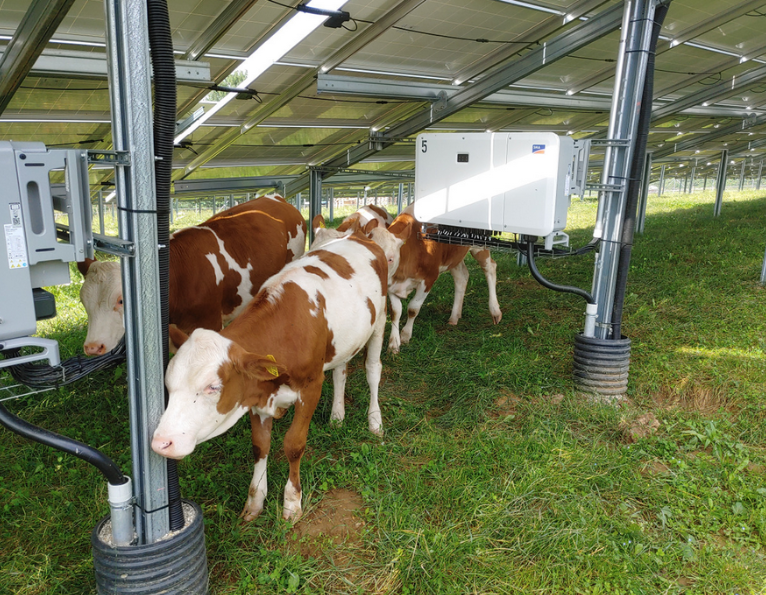
Reliability risks emerge across BIPV, floating PV and agrivoltaics
A new IEA PVPS Task 13 report identifies distinct reliability risks across BIPV, floating PV and agrivoltaics, from heat and partial shading to wave loads, ammonia exposure and soiling. It argues that existing PV qualification standards do not fully capture these application-specific stresses, requiring adapted testing, design practices and performance metrics.
Can India’s solar farms become living laboratories for clean-tech innovation?
Indian startups and university laboratories develop promising clean-energy technologies, but stall before reaching commercial adoption because they cannot produce multi-year, multi-megawatt operational data from active field sites. India can resolve this impasse by treating solar plants not merely as generation assets, but as living testbeds for clean-tech engineering.
Perovskite solar cell based on seed crystals achieves 23.51% efficiency
Researchers have developed a seed-assisted crystallization strategy to produce pure α-phase FAPbI3 perovskite without conventional chemical stabilizers. The resulting device reached 23.51% efficiency and retained 99% of its initial performance after 3,000 hours of unencapsulated operation.
Lab confirms negligible LeTID degradation in TOPCon solar cells
U.S. researchers have found that light- and elevated-temperature-induced degradation (LeTID) has a limited impact on n-type TOPCon solar cells compared with earlier p-type PERC technology. Optimized firing conditions and laser-enhanced contact optimization (LECO) can further suppress degradation, with industrial TOPCon cells showing efficiency losses within acceptable warranty tolerances.
India, Finland should deepen cooperation on critical battery materials, green hydrogen: Dr Antti Herlevi
Finland and India could deepen cooperation on critical battery materials, environment friendly mining, green hydrogen and smart-grid technologies as both countries expand their clean energy sectors, according to Dr Antti Herlevi, counselor for trade and investments (Water, Forest and Circular Economy) at the Embassy of Finland in New Delhi.
Aug 24, 2026

UNSW launches grid protection project for inverter-based power systems
Researchers at the University of New South Wales have launched a three-and-a-half-year project to examine how inverter-based resources interact with grid protection systems. The AUD 12.9 million initiative will use modeling, simulation and hardware-in-the-loop testing to assess fault-current behavior and protection requirements.
Advertisement
All Research & Development news
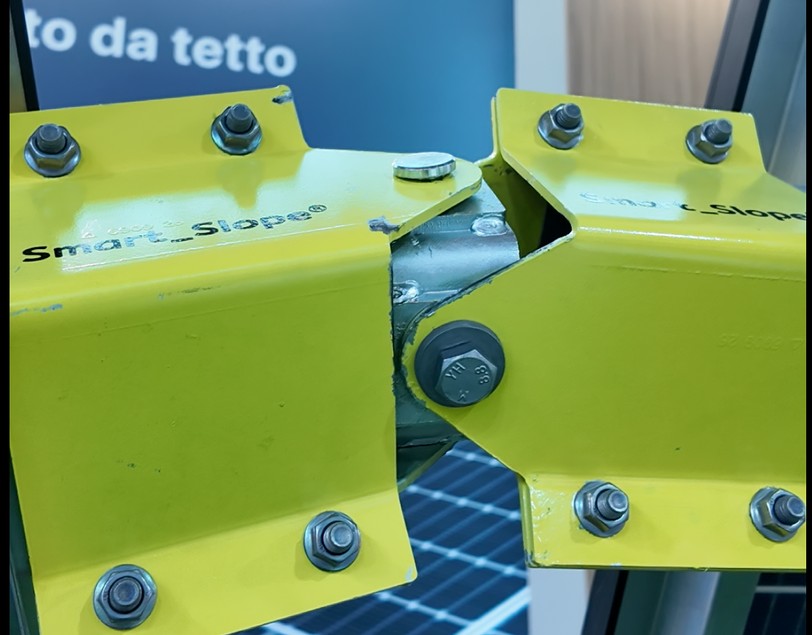
AlphaTracker launches hydraulic mechanism that locks trackers during strong wind gusts
The Portuguese manufacturer unveiled Maxi-Lock, an autonomous hydraulic mechanism that locks solar trackers during strong wind gusts or high-amplitude vibrations, and Smart-Slope, a universal joint-style system designed for uneven terrain. The company claims the technologies can reduce supply and maintenance costs, lower component counts, improve plant availability, and enable higher PV module integration in both conventional and agrivoltaic projects.

New technique measures water ingress in PV modules without disconnecting them
A German research team has developed a nondestructive, on-site method to quantify water ingress in photovoltaic modules using near-infrared absorption (NIRA) spectroscopy calibrated with Karl–Fischer titration (KFT). The approach enables precise measurement of absolute moisture content in sealed modules without disassembly, improving inspection, failure analysis, and lifetime prediction.

Advertisement
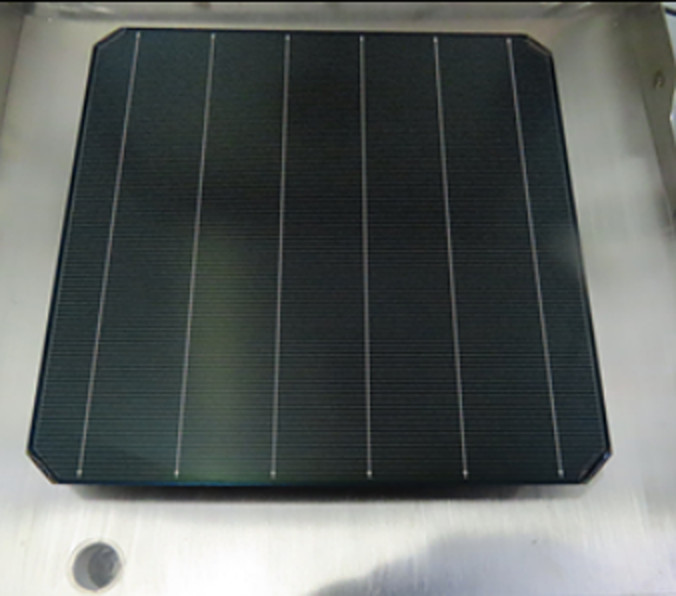

Japanese scientists build all-perovskite tandem solar cell with 30.2% efficiency
The four-terminal tandem device relies on FAPbI₃ nanoparticles and a spectral splitting design, combining a 24.4% wide-bandgap top cell and a 21.5% narrow-bandgap bottom cell to reach 30.2% efficiency. The system improves light utilization by directing different wavelengths to optimized subcells.

Perovskite–silicon tandem solar cells using zinc-doped tin oxide achieve comparable performance to indium tin oxide counterparts
Fraunhofer ISE-led researchers demonstrated zinc-doped tin oxide (ZTO) as an indium-free alternative to indium tin oxide (ITO) for recombination layers in fully textured perovskite–silicon tandem solar cells. ZTO delivers comparable device efficiencies of 27–28% under current-matching conditions, offering a scalable, indium-free pathway for high-performance tandem photovoltaics without efficiency loss.
Apr 20, 2026
Advertisement


AI-enabled hacks expose remote shutdown risk in microinverters
IT security firm Jakkaru has identified a vulnerability in microinverters from AP Systems that could enable a “kill switch” scenario, potentially shutting down tens of thousands of inverters simultaneously and disrupting grid operations.

Beyond the trilemma: Why the Global South needs a new energy framework
For decades, the “energy trilemma” – balancing energy security, affordability, and environmental sustainability – has shaped how nations think about energy strategy. For much of the Global South, it has served as a practical compass. But today, that compass may no longer be sufficient.
Advertisement