Research & Development

As India scales up solar deployment, innovation is critical to address climate conditions, grid variability, and cost targets. This category features R&D efforts by institutions like NISE, IITs, and CSIR, along with startups and corporate labs pushing the boundaries of PV technology. Topics include improvements in perovskite and TOPCon cells, localized durability testing, AI-based performance analytics, and grid-friendly energy storage systems. We also cover collaborative international research, pilot projects, and innovations tailored to India’s tropical climate, monsoon challenges, and rural electrification needs—laying the groundwork for a resilient, efficient solar future.
Advertisement
Advertisement
Advertisement
Latest News
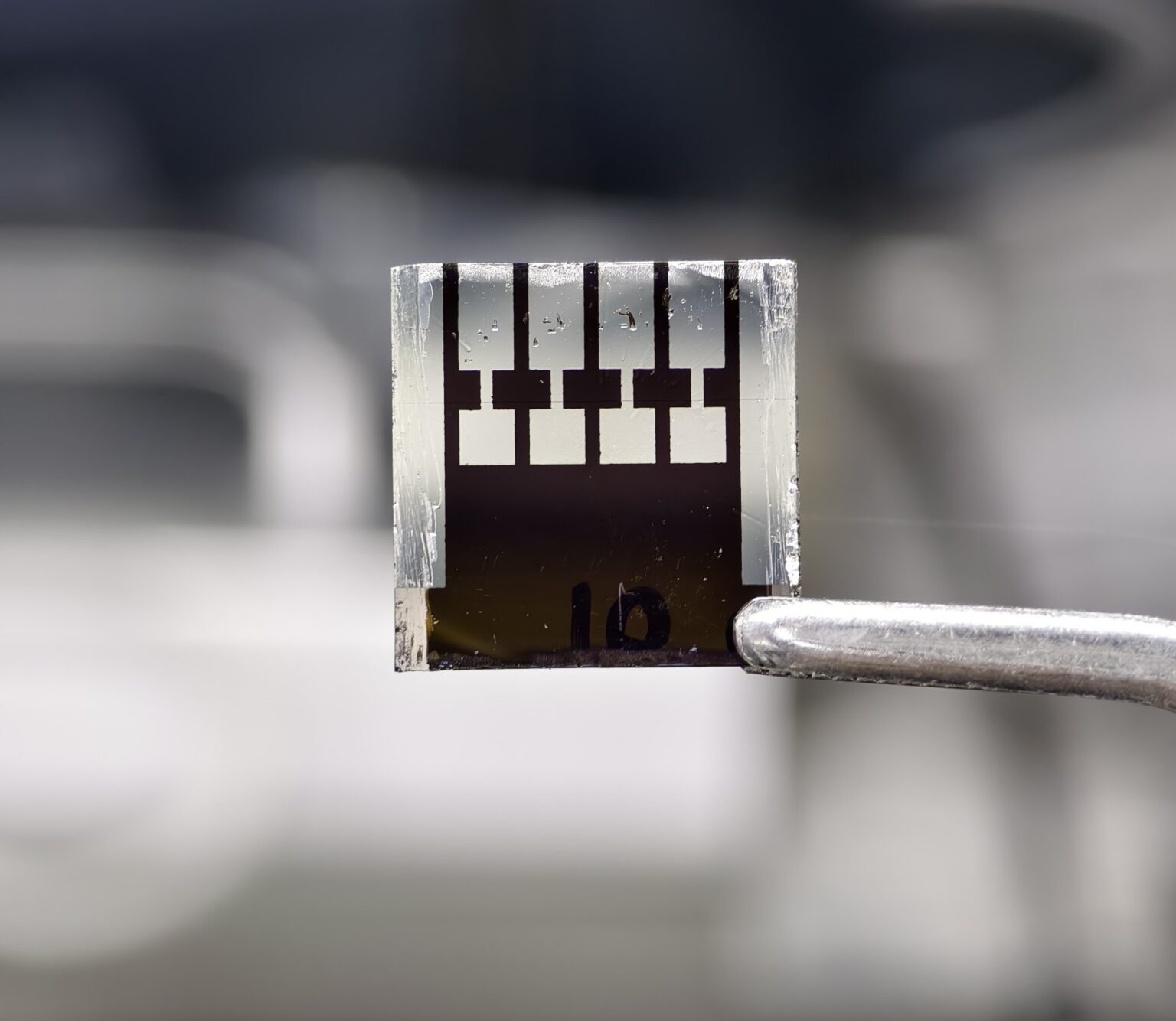
Chinese scientists achieve record-breaking 27.35% efficiency for perovskite-organic tandem solar cell
Nanjing University researchers developed a perovskite-organic tandem solar cell using a novel low-bandgap acceptor to boost near-infrared light harvesting and improve photocurrent matching. The device achieved a 27.35% efficiency, while retaining 80% of its initial performance after 744 hours of continuous illumination.
Sep 14, 2026
Advertisement
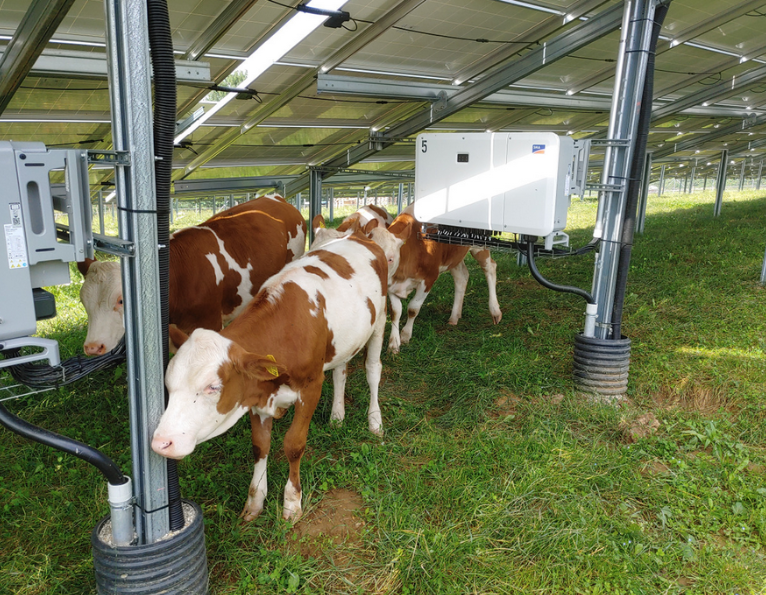
Reliability risks emerge across BIPV, floating PV and agrivoltaics
A new IEA PVPS Task 13 report identifies distinct reliability risks across BIPV, floating PV and agrivoltaics, from heat and partial shading to wave loads, ammonia exposure and soiling. It argues that existing PV qualification standards do not fully capture these application-specific stresses, requiring adapted testing, design practices and performance metrics.
Can India’s solar farms become living laboratories for clean-tech innovation?
Indian startups and university laboratories develop promising clean-energy technologies, but stall before reaching commercial adoption because they cannot produce multi-year, multi-megawatt operational data from active field sites. India can resolve this impasse by treating solar plants not merely as generation assets, but as living testbeds for clean-tech engineering.
Perovskite solar cell based on seed crystals achieves 23.51% efficiency
Researchers have developed a seed-assisted crystallization strategy to produce pure α-phase FAPbI3 perovskite without conventional chemical stabilizers. The resulting device reached 23.51% efficiency and retained 99% of its initial performance after 3,000 hours of unencapsulated operation.
Lab confirms negligible LeTID degradation in TOPCon solar cells
U.S. researchers have found that light- and elevated-temperature-induced degradation (LeTID) has a limited impact on n-type TOPCon solar cells compared with earlier p-type PERC technology. Optimized firing conditions and laser-enhanced contact optimization (LECO) can further suppress degradation, with industrial TOPCon cells showing efficiency losses within acceptable warranty tolerances.
India, Finland should deepen cooperation on critical battery materials, green hydrogen: Dr Antti Herlevi
Finland and India could deepen cooperation on critical battery materials, environment friendly mining, green hydrogen and smart-grid technologies as both countries expand their clean energy sectors, according to Dr Antti Herlevi, counselor for trade and investments (Water, Forest and Circular Economy) at the Embassy of Finland in New Delhi.
Aug 24, 2026

UNSW launches grid protection project for inverter-based power systems
Researchers at the University of New South Wales have launched a three-and-a-half-year project to examine how inverter-based resources interact with grid protection systems. The AUD 12.9 million initiative will use modeling, simulation and hardware-in-the-loop testing to assess fault-current behavior and protection requirements.
Advertisement
All Research & Development news

Solar above 60° North: The Arctic as PV’s next frontier
An IEA-PVPS report finds that solar power above 60° North is not only viable but rapidly expanding, driven by cold-climate performance gains, bifacial technologies, and rising energy security needs. While challenges like extreme seasonality, snow, permafrost, and scarce data remain, Arctic PV is emerging as a critical—and technically distinct—frontier for global solar deployment.

Electrospray cooling can boost PV panel performance with minimal water use
Researchers in Turkey optimized electrospray cooling for PV panels, achieving optimal power output with minimal water use and a compact, energy-efficient setup. Their study identified irradiance, flow rate, voltage, and nozzle distance as ideal parameters.
Apr 02, 2026

Advertisement

Japanese researchers achieve world record efficiency of 12.28% for copper gallium selenide solar cell
Researchers in Japan have achieved a 12.28% efficiency in a copper gallium selenide solar cell, the highest reported for indium-free wide-bandgap chalcogenide absorbers in the 1.65–1.75 eV range. The device uses aluminum-engineered films with a back-surface field and optimized cadmium sulfide buffer layers to enhance voltage, reduce recombination, and improve overall performance.

Design-led innovation: Enabling widespread and reliable solar PV adoption
Energy requirements evolve over time, and solar systems must be designed with adaptability in mind. Design-led innovation supports scalability through modular architectures that allow systems to expand or integrate complementary technologies such as energy storage.

Delta Electronics India, TNSDC launch a Centre of Excellence in Robotics & PLC Automation
Delta Electronics India, in collaboration with the Tamil Nadu Skill Development Corp. (TNSDC), has inaugurated a Centre of Excellence (CoE) in Robotics and PLC Automation at the College of Engineering, Bargur, in Krishnagiri district, Tamil Nadu.
Advertisement

Indian researchers build transparent perovskite-silicon tandem solar cell with 30.2% efficiency
The transparent four-terminal perovskite solar cell employs an ion-modulated spiro-MeOTAD hole transport layer, which passivates interfacial defects, enhances carrier dynamics, and allows for a tunable work function in wide-bandgap perovskites. When integrated into mechanically stacked 4T tandems with an n-TOPCon cell, the device achieved an overall efficiency of 28.4–30.2%, along with improved open-circuit voltage and fill factor.
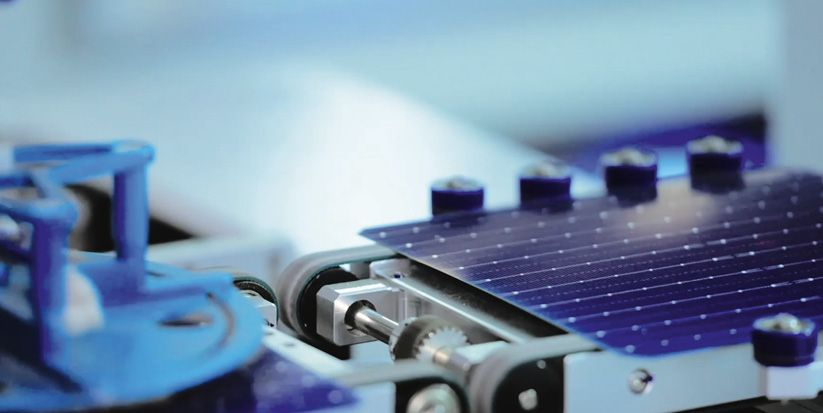
JinkoSolar achieves record-breaking 26.66% efficiency for TOPCon solar cell based on M10-size wafer
The Chinese manufacturer claims the new efficiency result sets a world record for industrial-scale TOPCon solar cells on M10-size wafers. The achievement was verified by an undisclosed independent third-party organization in China.

TEXMiN, Russia’s GIREDMET ink pact on rare earth and critical mineral technologies
The TEXMiN Foundation, IIT (ISM) Dhanbad, has signed an MoU with GIREDMET State Research and Design Institute of Rare Metal Industry, Russia, to collaborate on rare earth processing, critical minerals, advanced materials, and translational research across the mining value chain. The partnership will also focus on hydrometallurgical recycling technologies for lithium-ion batteries to recover valuable metals.
Advertisement