What 11 islands reveal about the real bottleneck in renewable mini-grids
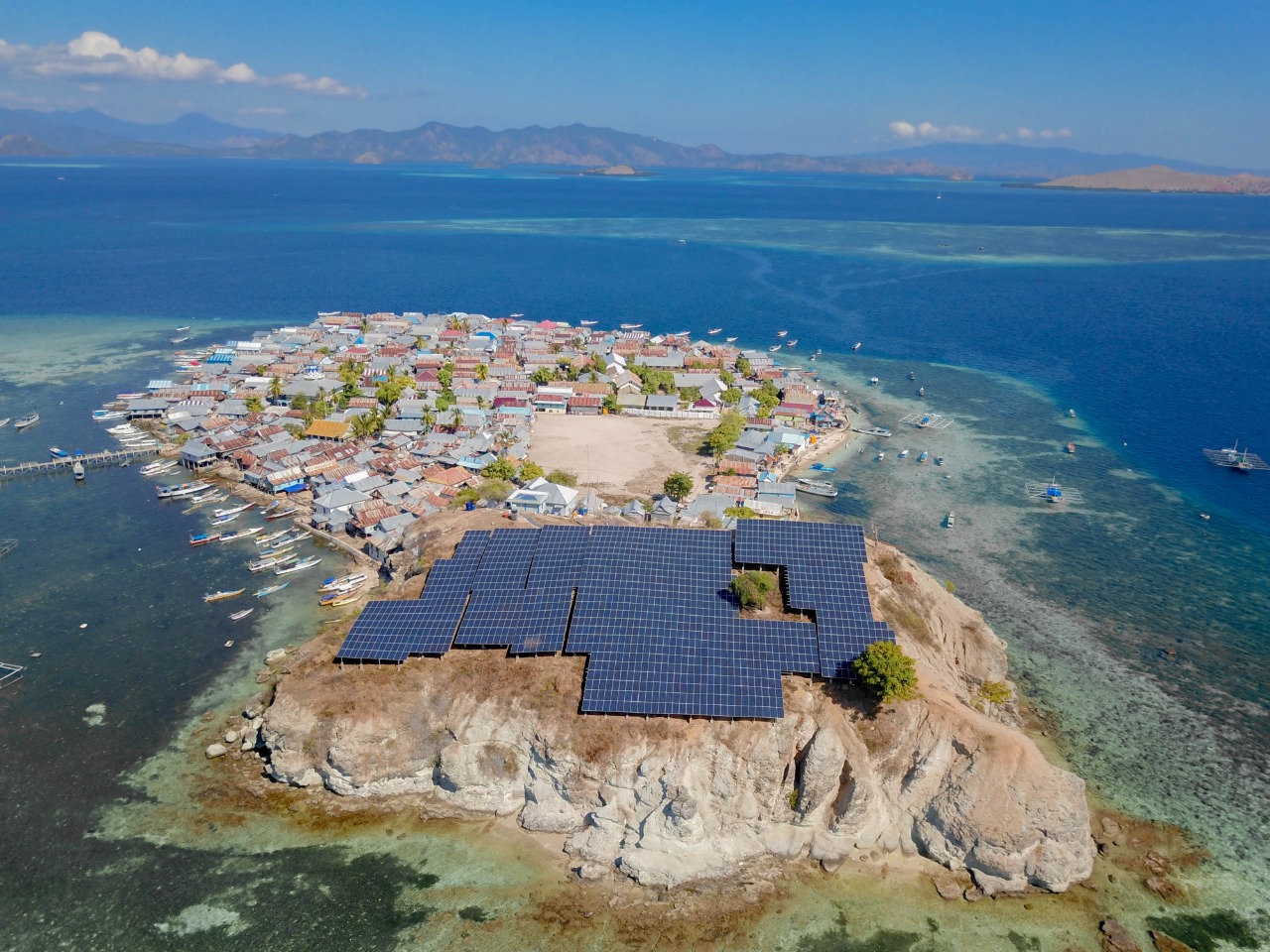
Islands are frequently held up as the proving ground for 100% renewable electricity — contained systems, clear stakeholder lines, and in most cases no main grid to fall back on. A new IEA PVPS Task 18 report puts that reputation to the test, examining 11 islands that have already reached, or come close to, very high renewable shares, from the 88-person village of Apolima in Samoa to Lolland in Denmark, home to more than 57,000 people and connected to the wider Danish grid. What is clear is that the technology to run an island almost entirely on renewables already exists and works in wildly different configurations. What determines whether a project actually gets there is overwhelmingly social, political and organisational, not technical not technology alone, but how well it is combined with the right social, political, economic and organisational conditions.
Eleven islands, no single template
The report’s strongest evidence for this is that there is no single definition of what “success” looks like in practice. Kodiak Island in Alaska runs on a hydro-wind hybrid under a member-owned utility with an advanced operations culture, reaching 99-100% renewable supply. Samsø in Denmark gets there almost entirely through community-owned wind turbines and citizen investment, and, being connected to the Danish grid, does not depend on local storage . Yakushima in Japan reaches 100% renewable electricity using nothing but small hydropower simply because its mountainous terrain and rainfall happen to match demand. Apolima runs on a standalone solar system with no storage at all, because the village is small enough that it doesn’t need any. Tokelau’s fully solar, battery-backed system exists because of sustained New Zealand aid funding, while in Spain’s Canary Islands, El Hierro combines wind power with pumped hydro storage, and La Graciosa runs a wind-PV-battery hybrid whose dispatch strategies are still being actively optimised during operation.
The report treats this variety as the central finding rather than a footnote: there is no universal guideline. A hybrid wind-pumped-hydro system that works for El Hierro would be overbuilt for Apolima; a donor-financed model that got Tokelau to full solar supply wouldn’t translate to a utility-led island like Kodiak. What does recur across all eleven, regardless of technology mix or island size, is a specific set of non-technical conditions.
Preparation is the key, not construction
To find those conditions, the authors built a four-phase, five-category success-factor matrix formed by Preparation, Design, Implementation, and Monitoring & Evaluation crossed with Social, Political, Technical, Economic and Environmental dimensions, and then populated it using a literature review of more than 60 academic publications, case study analysis, and five in-depth interviews with island practitioners. That process surfaced 111 distinct success factors, and the single clearest pattern in the data is where they cluster: nearly half of all identified success factors sit in the preparation phase, before a single turbine or panel goes up.
The report describes this as community education and awareness campaigns, resource and grid assessments, early political alignment, and financing groundwork all happening in parallel, well ahead of system design. Islands that invested heavily here — Lolland, Samsø, El Hierro — built the shared understanding and institutional readiness that made later phases smoother. What should developers and donors learn from this? Under-resourcing the planning and engagement phase is one of the clearest predictable causes of later friction, even when the technical design itself is sound.
Four factors show up almost everywhere
Of the 111 factors identified, 13 were marked as key success factors based on how often they recurred across multiple interviews, and four stand out as close to universal – two social and political, two technical. The first is the presence of local champions or leadership figures, people who mobilise community support, maintain momentum across years-long timelines, and sit at the intersection of community, political and technical actors. Samsø’s transition is presented as a textbook case of this, cited as the connective tissue between local identity, citizen investment and the eventual wind build-out. The second is stakeholder engagement sustained across the entire project lifecycle, not just at the planning stage. The report is explicit that this factor appears in every phase it tracked, making it one of the most cross-cutting success factors in the dataset. Even highly technical decisions, the authors note, such as which generation technology to select or where to reinforce the grid, ultimately depend on stakeholder trust to be accepted and to stick.
The technical backbone
None of this means engineering is secondary. Technical factors make up the largest single category in the dataset, at 41 of the 111 total, and the two remaining near-universal factors are technical – in fact the most frequently mentioned ones: long-term system planning, and grid strengthening specifically for variable renewable energy integration. The report also credits concrete operational practices for sustaining high renewable shares once systems are running, such as Kodiak’s real-time balancing of wind and hydro output and King Island’s use of flywheels and dynamic resistors to stabilise a wind-PV-battery-diesel hybrid. The report calls technical robustness and tailored system design the backbone of successful island transitions. But technology alone does not decide the outcome: what separates islands that reach and sustain high renewable shares from those that stall is whether a sound technical design is matched by the social, political and financial conditions that allow it to be built and operated as intended.
A caveat on replicability
However, the report’s final section makes clear that its own findings are not a plug-and-play checklist. The authors note that the underlying preconditions behind their 13 key success factors — such as a local institution able to sustain planning over several years, stakeholders with enough continuity to stay engaged throughout a multi-year process, and financing that isn’t entirely dependent on short-term donor cycles — are themselves unevenly distributed. Where those preconditions are weak the same interventions tend to stall rather than fail outright: stakeholder engagement loses momentum without a champion to sustain it, tariff reforms struggle to attract investment under unstable regulation, and technical designs proven on well-resourced islands are hard to replicate without reliable supply chains or trained O&M staff.
The authors are explicit that this replication gap is likely to hit hardest on smaller, more remote, lower-income islands, and disproportionately in the Global South, where the institutional and financial foundations underlying this report’s own case studies are least likely to already exist.
Author: Ignacio Landivar
The report can be downloaded at this link.
This article is part of a monthly column by the IEA PVPS programme. It was contributed by IEA PVPS Task 18, which examines how digital tools can be strategically deployed throughout the entire off-grid project value chain.
The views and opinions expressed in this article are the author’s own, and do not necessarily reflect those held by pv magazine.
This content is protected by copyright and may not be reused. If you want to cooperate with us and would like to reuse some of our content, please contact: [email protected].
Please login to comment