The U.S. market is writing its own sodium-ion spec
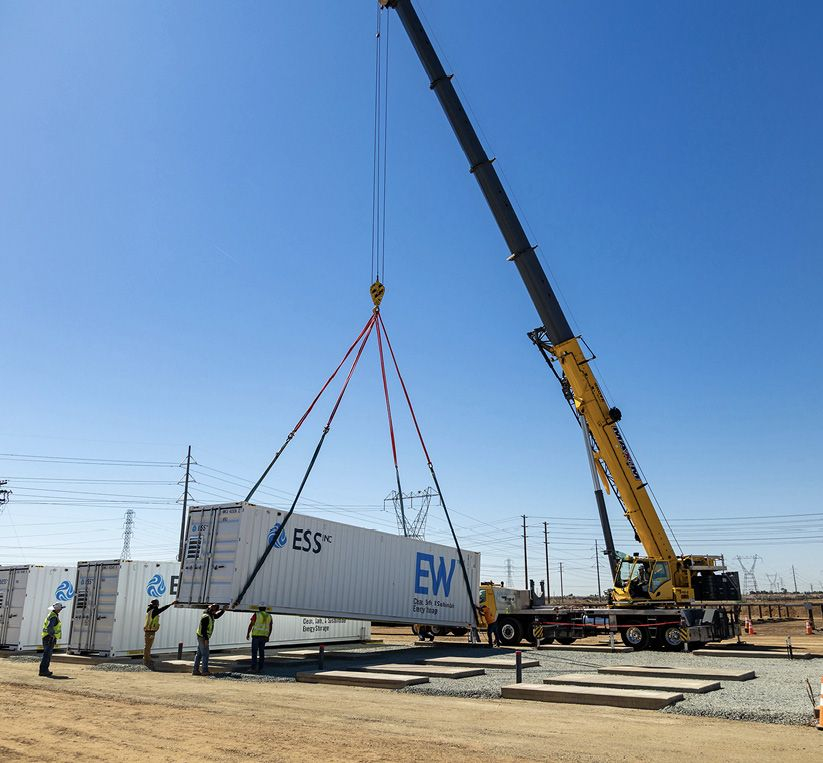
Sodium-ion battery cells are manufactured on largely the same equipment and process steps as lithium cells, which has helped scale production faster than alternative chemistries like flow batteries or nickel-hydrogen. As cell capacity increases, projects are now validating the applicability and value of the non-lithium chemistry.
But, while capacity was built, American project requirements changed. Domestic content thresholds and foreign-entity-of-concern restrictions now heavily influence what a developer can use, while optimizing project economics. Duration and dispatch requirements have long determined technology and engineering choices, but new requirements, coupled with an increased focused on safety, permitting, and general risk assessment, are creating a new model for evaluating battery energy storage. Duration and dispatch profiles are set by the project now, and the equipment has to be designed for them.
What the domestic math says
Domestic content requirements, Bulk-Power orders, and FEOC restrictions have turned procurement documentation into a complex evaluation balancing engineering, procurement, economic, and safety deliverables. Developers need to trace cell origin, the cathode/anode material sourcing, the location of cell finishing and system integration, PCS, and the corporate ownership of every entity along that chain.
Sodium-ion has structural advantages here, because it sidesteps concentrated mineral supply chains that otherwise constrain lithium, nickel, cobalt, and manganese sourcing. Sodium itself is plentiful and is available from North American suppliers. Onshoring sodium cell production is thus a fraction of the undertaking of onshoring an equivalent lithium capacity, and it’s that reason why there’s been an increase in U.S. manufacturers opening or announcing new sodium-ion lines specifically to fit on the right side of that policy line.
Developers, for their part, are learning to ask the sourcing question earlier, because doing that later in the game is expensive and harder to fix. Changing a cell supplier after a project’s been engineered around a specific enclosure footprint, or thermal design, isn’t usually just a swap of equal parts.
And that’s where integrators play a key role in developing finished products that address domestic content and country of origin requirements. U.S.-based integrators are responsible for developing system solutions that address both long-standing requirements and the ever-changing ones the industry is now addressing following Executive Order 14421, which is impacting the Bulk Power System.
Safety data is showing up in the site plan
Safety is another area where sourcing and integration play a critical role in technology choice. Specific sodium chemistries vary widely and treating them as one category has become a diligence error. For example, some sodium cells behave similarly to lithium under abuse testing, and others stay out of thermal runaway under conditions where lithium cells produce visible flaming at the cell level. UL 9540A test data turns those differences into engineering. Test data at the cell, module, unit, and installation levels drives deflagration venting, suppression sizing, setbacks to lot lines and occupied structures, and the fire service response plan. Each of those carries cost and schedule, and a chemistry that clears cell-level testing without flaming gives the authority having jurisdiction and insurer something concrete to work from (and the developer a site plan that fits).
Developers evaluating sodium proposals right now must ask which test levels were run and request the report itself, not just a summary. A pair of systems sharing a chemistry can produce vastly different balance-of-plant scopes, and differences tend to be worth more on constrained urban or data center sites than just about any other line in the proposal.
Stationary projects buy systems
A U.S. utility or data center project buys an integrated system. Developers need something they can source, install, certify, service, and operate under the policy and sourcing conditions of the market they are building in. Product architecture designed for stationary storage from the start behaves differently in the field than architecture ported over from lab origins. Variables like cycling profiles, thermal management, and service access all flow from decisions made at the system level, and they’re difficult retrofits once the cell format is fixed.
Duration also belongs in this conversation, because how a system performs at the duration a project requires is inherently among the first questions a developer asks. A solution built around stationary duty can answer it against the project’s own dispatch profile.
What that adds up to for a developer
Sodium-ion that works for an American project is manufactured domestically, integrated locally, and documented well enough to clear domestic content reviews. It also must be tested to a safety standard that shortens the balance-of-plant scope, and delivered as a system that a utility or data center operator can put into service on schedule.
That narrows the field considerably more than the global sodium-ion capacity figures might suggest. But the combination exists, and developers are contracting for it. Juniper Energy, for example, signed an agreement this year covering 500 MWh+ of sodium-ion deployments, starting with an 80 MWh project in California targeted for commercial operation in 2027. Procurement frameworks of that nature can be realized when suppliers can answer the domestic content and safety questions in the same document, and when the technology is part of a deployable system and not a “promising cell.”
The global cell volume has settled whether sodium-ion can be manufactured, so it’s now a question of whether American projects can resolve the narrower questions of how and which sodium-ion can be built, permitted, insured, and operated here. Developers sorting proposals on that basis will be finding a smaller field than the headline capacity numbers imply, albeit a considerably easier one to evaluate.
Randy Selesky is the Chief Commercial Officer at ESS, Inc., a provider of non-lithium energy storage solutions. Previously, Selesky held executive positions at VoltStorage, EnerVenue, and Enernet Global.
The views and opinions expressed in this article are the author’s own, and do not necessarily reflect those held by pv magazine.
This content is protected by copyright and may not be reused. If you want to cooperate with us and would like to reuse some of our content, please contact: [email protected].
Please login to comment