Silver prices find $50 floor as solar industry seeks to accelerate shift toward copper

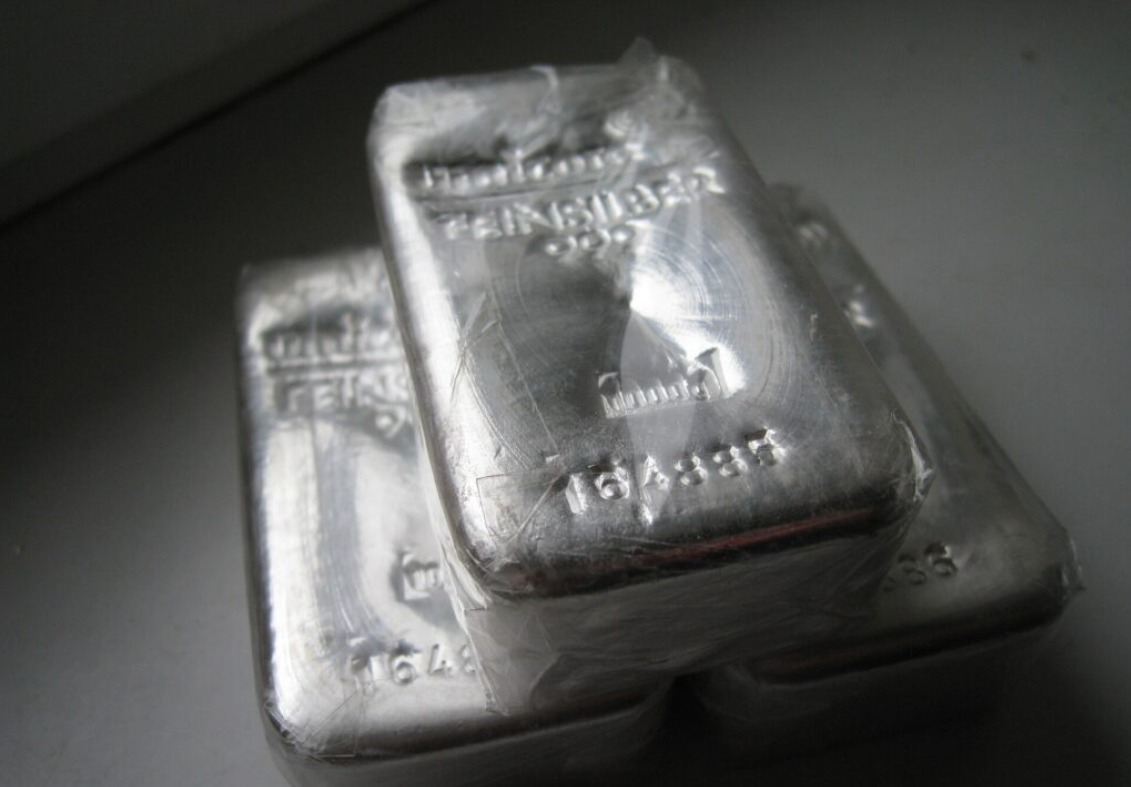
Silver prices appear to have stabilized around $50 per ounce following an exceptionally volatile year, but the photovoltaic industry should not expect a return to the much lower prices of previous decades, according to Philip Newman, managing director of Metals Focus.
“I think the price, the floor seems quite strong, but I think you’re still going to see more volatility,” Newman told pv magazine. “Could prices dip below 50? Of course they can. But I think the 50 still seems like a decent floor.”
His comments follow the publication of new silver market estimates by the Silver Institute and Metals Focus on November 13. The organizations expect the global silver market to record its sixth consecutive annual deficit in 2026, with demand exceeding supply by 35 million ounces.
Silver reached an all-time high of $121.65 per ounce on January 26, driven by strong investment demand and tight physical liquidity in London. It subsequently retreated to approximately $52 by November 4, as shifting US interest rate expectations, a stronger dollar and rising bond yields weighed on precious metals.
Despite the correction, prices remain exceptionally high. The annual average was approximately $40 in 2025, while Newman suggested the 2026 average could exceed $70 per ounce.
Thrifting
The impact of elevated prices is particularly apparent in photovoltaics, where manufacturers are accelerating efforts to reduce silver consumption.
According to Metals Focus, global industrial silver demand is expected to decline by 3% to 640 million ounces in 2026. Industrial consumption outside photovoltaics is forecast to grow by 4.5% to 492 million ounces, but this will be more than offset by weaker demand from solar cells.
The consultancy attributes the decline to slower-than-expected PV installations, particularly in China, and accelerated silver thrifting and substitution.
Newman said the industry’s response to higher prices has evolved significantly over the past year. When silver first exceeded $50 in late 2025, manufacturers focused on extending silver-coated copper metallization, already used in heterojunction (HJT) cells, to tunnel oxide passivated contact (TOPCon) technology.
Replacing silver entirely with copper was still regarded as a longer-term objective because of potential performance trade-offs. However, January’s price surge changed the discussion.
“Let’s move to copper and we can think about the trade-off afterwards and improve the efficiency,” Newman said, describing the industry’s initial reaction.
Since then, the transition has become more measured, with manufacturers considering not only conversion efficiency but also long-term reliability.
“I think the move to copper has now become more measured,” Newman said, pointing to growing attention to “the shelf life, the longevity of these cells.”
Manufacturers and buyers have different priorities
According to Newman, the transition is also shaped by diverging interests among manufacturers and module buyers.
For manufacturers facing overcapacity and intense price competition, reducing silver consumption represents an opportunity to lower costs. Developers and installers, however, may hesitate to adopt new metallization technologies without sufficient evidence of long-term reliability.
“From the panel manufacturer, to your point about overcapacity and the pressure on costs, they would really like to move to copper quite quickly,” Newman said. “On the other side, the companies that are buying those panels and installing them, I think there’s a lot more hesitancy, more reticence, more cautiousness about doing so.”
This divergence could encourage manufacturers to offer conventional high-silver modules alongside alternatives with reduced silver content or potentially silver-free metallization.
Although research into copper metallization has intensified, fully copper-based solutions have yet to become mainstream in commercial TOPCon products. Intermediate approaches involving silver-coated copper or lower silver loadings appear more realistic in the near term.
The economic incentive remains substantial even after the recent price correction.
Newman estimated that at $60 per ounce, silver accounts for approximately 17% of TOPCon module costs. At $50, the proportion falls to around 14%, compared with roughly 11% when silver traded at $40.
Metals Focus expects global PV installations to decline modestly in 2026 before returning to growth in 2027. Nevertheless, Newman expects silver thrifting to continue, even if prices stabilize.
Silver shortages unlikely
Despite the sixth consecutive annual market deficit, Newman does not anticipate a physical shortage that would materially disrupt photovoltaic manufacturing.
“No, not really,” he said when asked about potential supply problems.
He pointed to China’s substantial silver imports in 2026, continued availability of silver powder from Japan, and gradually recovering inventories in London.
The Silver Institute expects total silver supply to decline by 3% to approximately 1.045 billion ounces in 2026. Mine production should remain broadly stable at 834 million ounces, while recycling is forecast to increase by 6% to 210 million ounces.
The overall deficit is expected to narrow from 54 million ounces in 2025 to 35 million ounces in 2026, bringing the cumulative shortfall since 2021 to approximately 746 million ounces.
Newman acknowledged that sudden increases in investment demand could generate temporary physical market tightness.
“I don’t think you would ever say never, but I think it’s unlikely,” he said when asked about a repetition of the severe market tightness experienced in October 2025.
He added that metal could be transported from CME inventories to London to relieve pressure, even if renewed investment demand temporarily pushed silver lease rates higher.
The role of interest rates
Looking beyond photovoltaics, Newman believes monetary policy and investor expectations will remain major influences on silver prices.
Geopolitical tensions can support precious metals through safe-haven demand, but rising energy prices can also reinforce inflation concerns and expectations of higher US interest rates.
“I think you’re going to look at each on a case-by-case basis,” Newman said, referring to the impact of geopolitical crises such as the war in Iran.
Silver’s outlook also remains closely linked to gold, which Newman expects to face continued pressure until Federal Reserve policy becomes clearer.
“I think gold will remain under pressure until we have clarity from the Fed,” he said, although he believes the $4,000-per-ounce level could hold.
Metals Focus‘ central scenario assumes tensions surrounding Iran will gradually de-escalate sufficiently to ease inflation expectations and limit further US interest rate increases. Under those conditions, investment demand for precious metals could strengthen again in 2027.
“Maybe it doesn’t happen that early next year. But maybe by the summer, prices for gold and silver are considerably higher than we see today,” Newman said.
For the photovoltaic industry, such a scenario would reinforce the case for reducing silver consumption, even if the recent price correction has eased immediate cost pressures. The central challenge remains balancing the savings offered by copper-based metallization against the efficiency and long-term reliability requirements of commercial solar modules.
This content is protected by copyright and may not be reused. If you want to cooperate with us and would like to reuse some of our content, please contact: [email protected].

Please login to comment