China wafer prices fall as August rally fades, polysilicon outlook remains uncertain
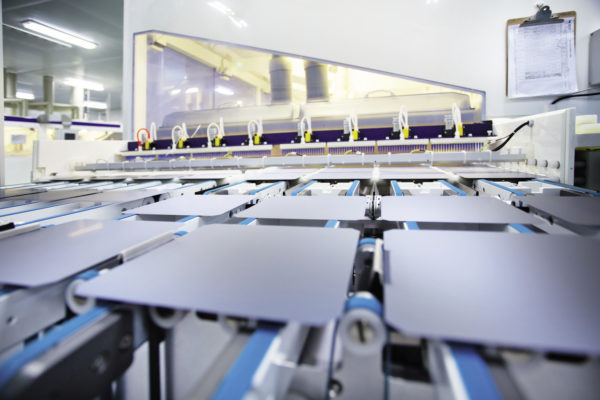
According to the OPIS Global Solar Markets Report released on Sept. 8, Free-On-Board (FOB) China M10 and 210R wafer prices fell to $0.149/pc and $0.156/pc, respectively, down 1.97% and 2.50% week on week.
The wafer price rally seen in mid-August has failed to sustain momentum, with prices returning to a downward trend.
Industry sources said n-type 183 wafers, which had risen notably on a temporary surge in overseas demand and reached transaction prices above CNY 1.10 ($0.164)/pc at the peak, fell back to around CNY 1/pc this week, with some transactions reportedly below that level.
One trade participant attributed the decline primarily to weakening downstream demand, which has left wafer suppliers with little choice but to lower prices to facilitate sales. Another pointed to suppliers’ weak negotiating position, noting that buyers now commonly close deals several cents per piece below manufacturers’ initial offers.
Despite the weaker market, operating rates across wafer producers have remained largely unchanged, as the market watches how the upstream polysilicon market develops following last week’s reported production-cut agreement, according to a specialized wafer manufacturer.
The agreement refers to an industry meeting held in Sichuan last week involving the China Photovoltaic Industry Association and major polysilicon manufacturers, which industry sources said was aimed at launching a production-control initiative. The initiative reportedly targets total 2026 polysilicon output of 1.0-1.1 million metric tons (MT), an approximate 20% reduction from 2025 output, with the same target maintained for 2027.
The meeting reportedly also called for around 500,000 MT of capacity across Sichuan, Yunnan and Qinghai to suspend production and undergo technological upgrades in the fourth quarter, with participating manufacturers required to sign agreements committing to production cuts. Although a source at a leading polysilicon manufacturer confirmed that the meeting took place, its specific details and outcomes have not been officially verified.
Another source questioned the likely effectiveness of the initiative, noting that the agreement’s legal enforceability remains uncertain and that the reported annual output target would still be sufficient to meet end-market demand. The source added that the planned fourth-quarter suspensions and upgrades are primarily aimed at reducing energy consumption to comply with national standards. Without actual capacity exit, the source said, the other efforts appear somewhat superficial.
With the polysilicon price outlook still uncertain, some wafer manufacturers are seeking to lower raw-material costs by sourcing material for near-term delivery from the futures market at around CNY 37/kg and supplementing it with lower-grade spot material, industry sources said.
Polysilicon production, meanwhile, continues to rise. Domestic output reached around 118,900 MT in August, up 13.1% month over month, according to the Silicon Branch of the China Nonferrous Metals Industry Association. Based on manufacturers’ production plans, September output is expected to rise further to around 124,000 MT, up approximately 4.4%.
The high-water season in major production regions is nearing its end, however, bringing a period of abundant hydropower and lower electricity costs to a close. One market source said this makes September the final opportunity for polysilicon producers to increase output and build inventories ahead of the low-water season. Industry sources said some wafer manufacturers may also be forced to reduce production as the low-water season begins in October.
According to industry feedback, operating rates at leading wafer manufacturers are currently around 50%, compared with nearly 70% at major specialized producers. Second-tier manufacturers are generally operating at around 30%-40%.
Leading wafer manufacturers are currently making only modest price reductions, one industry source said, but output cuts in the fourth quarter could give them more leverage to support prices.
OPIS, a Dow Jones company, provides energy prices, news, data, and analysis on gasoline, diesel, jet fuel, LPG/NGL, coal, metals, and chemicals, as well as renewable fuels and environmental commodities. It acquired pricing data assets from Singapore Solar Exchange in 2022 and now publishes the OPIS APAC Solar Weekly Report.
The views and opinions expressed in this article are the author’s own, and do not necessarily reflect those held by pv magazine.
This content is protected by copyright and may not be reused. If you want to cooperate with us and would like to reuse some of our content, please contact: [email protected].
Please login to comment