Cells & modules
All Cells & modules news
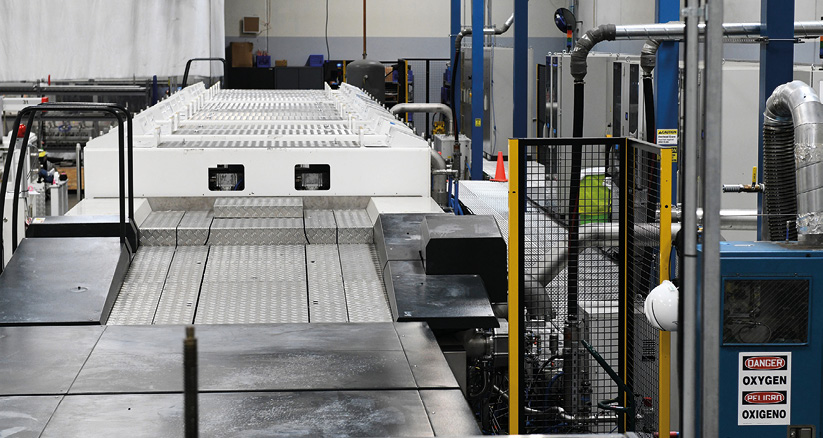
Scaling perovskite tandems’ U.S. prospects
Three US manufacturers actively working to commercialize their respective perovskite-silicon tandem technologies make the case for tandem modules. CubicPV, Caelux and Swift Solar argue a commercial future for perovskites is inevitable, and they tell pv magazine the current policy environment could work in the technology’s favor.
Sep 18, 2025
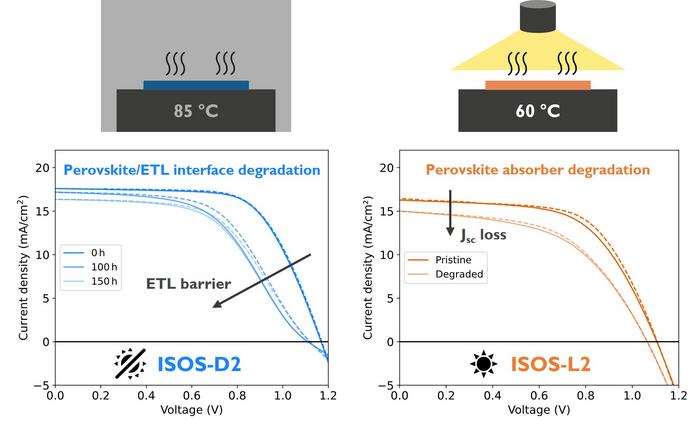
Researchers identify main source of wide-bandgap solar perovskite degradation
Scientists in Belgium have investigated how perovskite absorbers used in solar cell degrade under three different stress test types and have found that the interface between the perovskite layer and the electron transport layer suffers from weak thermomechanical stability, which creates the conditions for performance losses.

Advertisement


Inside perovskite solar cell durability and performance testing
Accurately measuring the performance of perovskite solar cells and modules requires significant modifications to long-established testing standards used in silicon PV. Researchers are settling on methods that rely on up to several minutes of constant light exposure and other time-consuming procedures. These may be fine for the laboratory setting, but those looking to produce this technology at scale need standardized methods that can characterize cells and modules at a much faster rate.

Advertisement


Tongwei achieves 31.4% efficiency for perovskite-silicon tandem solar cell
Chinese researchers, led by a research team from PV Technology Center of Tongwei Co., Ltd, used a sequential annealing process in the fabrication of tandem solar cells, featuring a wide bandgap perovskite top cell on a fully-textured commercial crystalline silicon heterojunction bottom cell. The resulting device had a certified power conversion efficiency of 31.4%, outperforming a 29.43%-efficient control cell.

First attempt to build lead-free perovskite-CIGS tandem solar cells
Indian researchers simulated a novel pairing of a CsGeI3 lead-free halide perovskite top cell with a copper-indium-gallium-selenide bottom cell. The resulting tandem device has the potential to achieve a power conversion efficiency of 26.06%
Advertisement
Advertisement
Advertisement
Advertisement


Advertisement