Author

Erica Johnson
Erica joined the pv magazine team in April 2019 as managing editor. In addition to leading the global editorial team alongside Jonathan and Becky, she focused on solar+storage content and managed the special publications business. She had over a decade of experience working in the PV industry, supporting the energy transition across the public, private, academic, and non-profit sectors.
Advertisement
Articles written by Erica Johnson

New turf for thin films
Thin-film technologies have long promised to make a major impact on the solar industry but have largely been constrained to niche applications and research labs if they were not shredded by the market. After several false starts, current trade dynamics and promising research programs may help solar thin films find their place in the sun.
May 03, 2023
2

The long read: What does India’s National Wind-Solar Hybrid Policy mean?
In May 2018, India’s Ministry of New and Renewable Energy adopted the National Wind-Solar Hybrid Policy. Though paltry when it comes to offering incentives or preferential treatment to solar-wind-hybrid (SWH) projects, the policy aims to enable more SWH projects to efficiently utilize transmission infrastructure and land, as well as reducing variability in renewable generation and thus improving grid stability.
The long read: Farming the southern sun
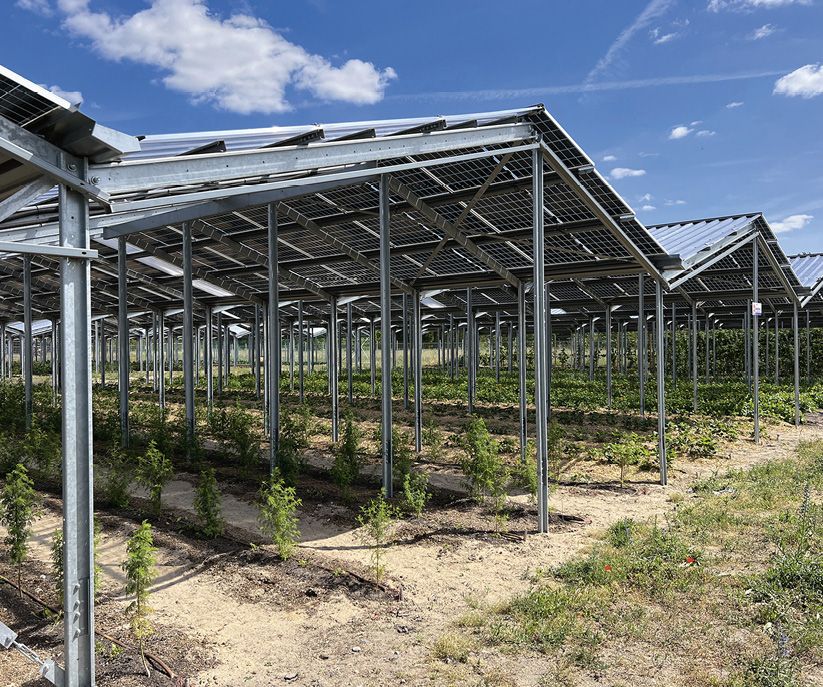
Sunfarming is taking the lead when it comes to agriPV project development and investment in Germany. And in South Africa, Sunfarming’s Food and Energy and the Food Education Energy Development (FEED) program has developed two unique concepts through which it can share its agriPV expertise. pv magazine sat down with Sunfarming director of international projects, Edith Brasche, to talk about the company’s South African projects.
Aug 05, 2022
Advertisement

The long read: Solar support in hazardous locations
In some of the world’s most hazardous locations, a resilient and autonomous common denominator is often found – solar energy. From offshore oil rigs to remote mine sites and the frontlines of conflict zones, solar power functions where others fail, and it does so without the need of refuelling or regular maintenance. But what makes solar such a ‘no-brainer’ that even the oil and gas industry must turn to it? And what other hazardous locations can be electrified with solar? Blake Matich reports.

Solar panels based on biosourced materials
French solar energy institute INES has developed new PV modules with thermoplastics and natural fibers sourced in Europe, such as flax and basalt. The scientists aim to reduce the environmental footprint and weight of solar panels, while improving recycling.
Jun 20, 2022

The long read: Canal-top solar solutions
Climate change is exacerbating water scarcity in many parts of the world, and while renewable energy is a long-term solution, in many cases it is a short-term solution, too. One such case in the energy-water nexus is that of canal-top solar, which was pioneered in India a decade ago, when the first canal-top solar array was installed in Gujarat. And new findings from the University of California and the resulting Project Nexus are now shining attention on a symbiotic application: saving water, while generating solar energy, without occupying arable land.
Jun 10, 2022
Advertisement


The long read: Sky-scraping solar
As people have gradually migrated to the world’s cities, urban areas have migrated upward to scrape the sky. And yet, while one of the first principles of power generation is to generate as close as possible to the point of consumption, energy systems have long been designed to deliver electricity to major cities from distant hubs. But now, thanks to recent advances in solar panel energy density and building-integrated PV, vertical cities could soon be standing tall under their own power.

Invasion of Ukraine an inadvertent boost for green hydrogen
Rystad Energy has joined BloombergNEF with a significant forecast for gray and blue hydrogen off the back of Russia’s invasion of Ukraine. According to the analysts, the impact of the war has sent prices of fossil fuel-tied forms of hydrogen production surging, leaving the gradual but consistent downward price trend of green hydrogen now looking remarkably competitive.
Advertisement