Odisha needs INR1.1 lakh crore to expand renewable energy, storage, and grid infrastructure
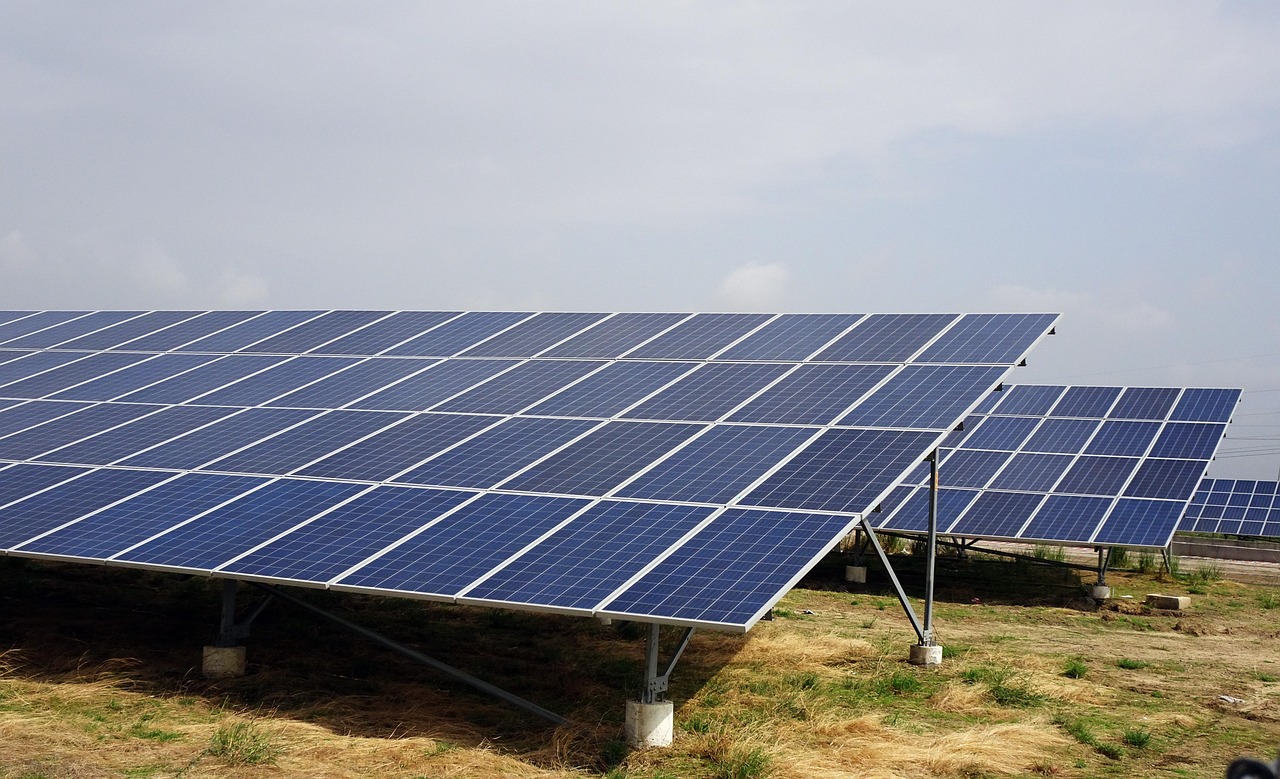
Odisha has an opportunity to build a more diversified and resilient growth model by scaling up clean energy. However, doing so will require around INR1.1 lakh crore of investment in renewable energy, storage, and transmission over the next decade, according to a new report by the Institute for Energy Economics and Financial Analysis (IEEFA).
The report, titled Sustainable finance for a just transition in Odisha, estimates that the state will need to add about 10.7 gigawatts (GW) of renewable energy capacity between financial year (FY) 2025–2026 and FY2035–2036. This is alongside 2.7 GW of pumped storage, 0.13 GW of battery storage, and intra-state transmission upgrades, based on the Resource Adequacy Report of the Central Electricity Authority. The total estimated investment requirement is INR 1,09,980 crore, or nearly INR 1.1 lakh crore. Renewable energy accounts for 67% of this requirement, storage for 21% and grid infrastructure for 12%. Annual investment needs vary with the timing of capacity additions, peaking at approximately INR20,827 crore in FY2029–30.
Odisha’s clean energy transition is both an investment challenge and an opportunity to strengthen the state’s long-term economic resilience. A coordinated financing approach can help match projects with appropriate sources of capital, mobilise private investment and support workers and communities affected by the shift away from fossil fuels–Gaurav Upadhyay, Lead Energy Specialist, Transition Finance, South Asia, IEEFA, and the author of the report
The state has substantial untapped potential to close this gap. Odisha has an estimated 139.5GW of solar potential, of which about 0.82GW, or less than 1%, has been installed. It has 12.13GW of wind potential and no grid-connected wind capacity yet. Hydropower has reached about 2.2GW of an estimated 7.6GW. With appropriate investment in generation, storage, and grid infrastructure, Odisha could also play a larger role in supplying renewable electricity to other states.
At present, the state’s power system remains heavily coal dependent. Its finances are similarly linked to fossil fuels. In FY2024–2025, Odisha received an estimated INR14,148 crore from coal and petroleum resources, equal to 13.1% of its own tax and non-tax revenue, down from 16.2% in FY2022–2023. The report finds that this decline does not only reflect growth in alternative revenue streams. It also reflects stagnation in overall fossil-fuel revenues and a sharp fall in coal-related receipts. Fossil-fuel-linked sectors also account for about a third of the state’s gross value added.
Financing needs extend well beyond the power sector, to industrial decarbonisation, green hydrogen, electric mobility, energy-efficient buildings, and just transition measures such as worker reskilling, mine closure and land restoration, and economic diversification in coal-dependent districts.
To meet these needs, the report proposes a three-pronged strategy: assess the full cost of transition across sectors; develop a sustainable finance framework that matches projects with suitable sources of capital; and establish a dedicated transition fund that pools government, multilateral, climate, and private finance to de-risk projects and support just transition priorities.
The views and opinions expressed in this article are the author’s own, and do not necessarily reflect those held by pv magazine.
This content is protected by copyright and may not be reused. If you want to cooperate with us and would like to reuse some of our content, please contact: [email protected].
Please login to comment