India’s energy security challenge is no longer about supply, it’s about resilience
For years, India’s energy security debate has centred on ensuring adequate supplies to support economic growth. That remains fundamental. But as electricity demand rises and renewable generation expands, supply is only one part of the equation. The bigger question is how reliably the system can respond when demand shifts, generation fluctuates or infrastructure comes under stress. India’s next phase of energy security will depend on building resilience across the power system and the industries that depend on it.
Demand and generation are becoming harder to balance
The scale of the challenge is clear. The International Energy Agency (IEA) expects India’s electricity demand to grow by an average 6.4% annually between 2026 and 2030, adding more than 570 TWh to annual consumption. Peak demand reached 250 GW in 2024, compared with 162 GW in 2017. In May 2026, it rose further to 270 GW, with cooling demand contributing increasingly during evening hours, when solar generation begins to decline. This highlights a fundamental shift. The challenge is not simply to generate more electricity, but to match supply and demand at the right time.
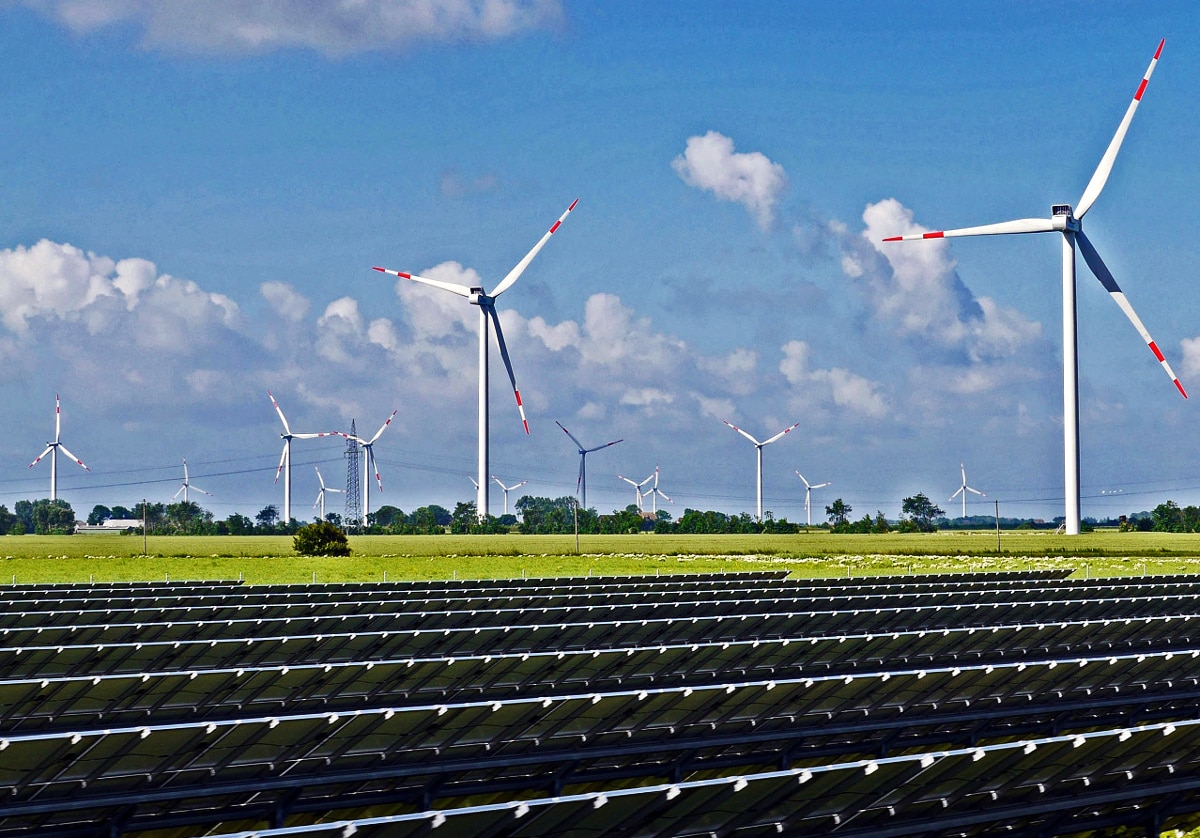
India has made significant progress in expanding its generation base, with non-fossil fuel sources accounting for 54.18% of installed power capacity as of June 2026. As renewable capacity grows, however, variability becomes more important. Storage, flexible generation, stronger transmission networks and responsive grid controls will increasingly determine how reliably power can be delivered while grid stability is maintained.
This shift is also making the grid more complex. Solar, wind, batteries and distributed generation introduce more assets, technologies and data points into the system. Managing them effectively requires trusted, real-time visibility and the ability to act on that information through coordinated control, particularly when generation changes quickly. Battery storage can help absorb fluctuations and eliminate the gap between demand and supply, while advanced controls can coordinate different sources and respond to changing grid conditions. Resilience therefore becomes an operational capability, not simply a function of installed capacity.
As more consumers also adopt rooftop solar, batteries and distributed resources, the boundary between producer and consumer is becoming less rigid. That makes coordination across the system even more important, especially during periods of high demand or disruption.
Resilience must extend to industry
The implications do not stop at the grid. For continuous-process industries, an energy disruption can affect production, asset performance, process safety and product quality. As operating environments become more complex, industrial resilience will depend on how effectively organisations understand and respond to changing conditions.
This makes asset visibility and reliability increasingly important. Renewable-energy operations, for example, often involve diverse assets, multiple systems and large volumes of operational data. Ageing control technologies, fragmented systems and poor data quality can make it harder to identify performance issues early. Asset-performance management, condition monitoring and predictive maintenance can help detect deterioration before it develops into a larger operational problem.
The same principle applies inside industrial facilities. Energy management is becoming less about monitoring consumption in isolation and more about connecting energy use with production, process conditions and equipment performance. For industry, resilience is therefore not only an infrastructure concern; it is increasingly a business imperative, with direct implications for operational continuity, competitiveness and growth. Better measurement, control and optimisation can help operators respond to changing conditions while managing energy consumption. Industrial AI can strengthen this capability by analysing large volumes of data, identifying patterns and flagging deviations that may require intervention. Its role is to support experienced operators with better information, not replace them.
Efficiency is also a resilience measure
Energy efficiency is often viewed primarily through the lens of sustainability, but it is equally relevant to energy security. The IEA estimates that if all new air conditioners sold in India through 2030 were highly efficient, the increase in peak electricity load could be around 20% lower. Reducing avoidable consumption across homes and industries can therefore ease pressure on the wider system.
India will continue to need investment in generation, fuels, transmission and storage. But capacity alone cannot eliminate every source of disruption. Extreme weather, equipment failures, demand spikes and digital risks will continue to test infrastructure. The priority should be to build an energy system that can anticipate stress, absorb shocks and recover quickly.
That is the shift from supply security to resilience – ensuring that energy systems remain reliable, responsive and adaptable as conditions become less predictable. For India’s next phase of growth, that ability to respond may be as important as the ability to produce energy at sufficient scale.
Yuki Furuya is Deputy Head of the Energy & Sustainability Management Unit and Head of Corporate Sales at Yokogawa India Limited. He has over 16 years of experience at Yokogawa Electric Corporation across international business development, sales and project management in power, renewable energy and green hydrogen.
The views and opinions expressed in this article are the author’s own, and do not necessarily reflect those held by pv magazine.
This content is protected by copyright and may not be reused. If you want to cooperate with us and would like to reuse some of our content, please contact: [email protected].
Please login to comment